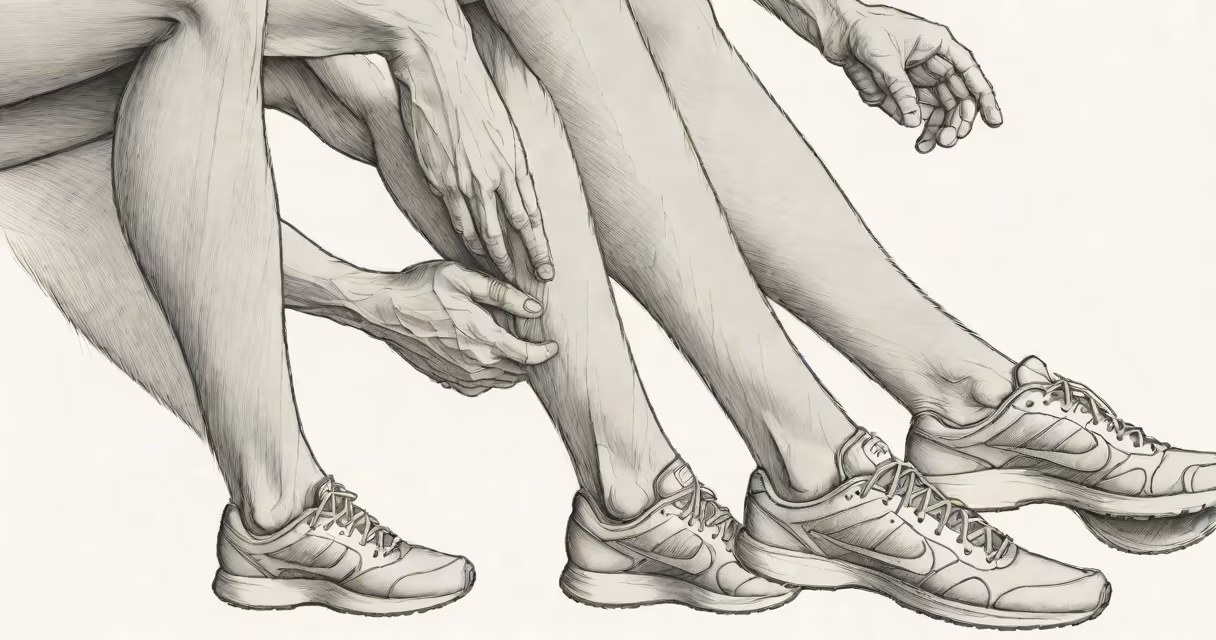
Side of knee hurts when running typically results from iliotibial band syndrome (ITBS), a condition where the thick band of tissue running along the outside of the thigh becomes inflamed due to repetitive friction against the femur during stride cycles. This occurs most frequently in runners who increase mileage too quickly or run on uneven surfaces.
ITBS accounts for 12-16% of all running injuries, according to the American Journal of Sports Medicine. The iliotibial (IT) band originates at the hip, runs down the outer thigh, and attaches just below the knee. During running, it stabilizes the knee and absorbs impact. When overused, it rubs against the lateral epicondyle-a bony prominence on the femur-causing sharp or burning pain on the outer knee, especially during downhill running or when pushing off.
A 2020 study in the British Journal of Sports Medicine found that 78% of runners with lateral knee pain had ITBS confirmed via ultrasound imaging. Pain usually begins gradually, worsens with continued running, and may radiate up the thigh or down toward the shin. Early signs include a snapping sensation on the outer knee during foot strike, which can progress to persistent discomfort requiring rest.
The IT band functions as a changing stabilizer during running. With each step, it contracts and slides over the lateral femoral epicondyle. Over time, excessive repetition-especially with poor biomechanics-leads to microtrauma and inflammation. Factors that increase risk include weak hip abductors, tight hamstrings, leg-length discrepancies, and improper footwear.
Runners who train on banked tracks or consistently run in one direction (e.g., clockwise loops) place uneven stress on the IT band. A 2019 study in the Journal of Orthopaedic & Sports Physical Therapy showed that runners with weak gluteus medius muscles were 2.3 times more likely to develop ITBS. This muscle controls hip stability during single-leg stance, and its failure leads to increased internal rotation of the femur, increasing strain on the IT band.
Non-runners can also develop ITBS through activities involving repetitive knee flexion and extension, such as cycling, hiking, or weightlifting. However, it remains most prevalent among endurance athletes, particularly those training for marathons or long-distance events.
Side of knee hurts when running is often mistaken for patellar tendinitis (jumper's knee), which causes pain just below the kneecap and worsens with jumping. Unlike ITBS, patellar tendinitis pain is centralized under the kneecap and increases with squatting or stair climbing. A key differentiator: ITBS pain appears at heel strike and improves with rest, while patellar tendinitis pain intensifies during push-off phases.
Another confusion arises with meniscus tears, which cause pain on the inner or outer joint line depending on the tear location. Meniscal pain tends to be deeper, may involve catching or locking, and often follows a twisting injury. ITBS pain is superficial and localized to the outer knee, rarely associated with mechanical symptoms like clicking or giving way.
ITBS pain does not typically worsen with prolonged sitting. In contrast, conditions like bursitis or osteoarthritis may cause stiffness after inactivity. If pain persists beyond 2-3 days of rest, or if swelling or redness develops, medical evaluation is needed to rule out infection or structural damage.
Initial management focuses on reducing inflammation and breaking the cycle of irritation. Rest from running for 3-7 days, apply ice to the outer knee for 15 minutes twice daily, and avoid downhill running or stairs. Nonsteroidal anti-inflammatory drugs (NSAIDs) like ibuprofen can reduce pain and swelling, though they do not address the root cause.
Once acute pain subsides, targeted strengthening and stretching are essential. Perform clamshells (lying on side, lifting top leg while keeping feet together) for 3 sets of 15 reps daily to activate the gluteus medius. Use a foam roller on the outer thigh for 1-2 minutes per session, focusing on the area between the hip and knee. A 2021 randomized controlled trial in the Journal of Athletic Training found that runners who completed a 6-week program of hip-strengthening exercises reduced ITBS recurrence by 60% compared to controls.
Return to running should follow a graduated progression. Start with walking intervals, then alternate 1 minute of jogging with 2 minutes of walking. Increase running time by no more than 10% per week. Use a treadmill with a slight incline to reduce lateral shear forces. If pain returns, stop and reassess form or footwear.
For persistent cases, physical therapy referral is recommended. A therapist can assess gait mechanics, correct stride length, and prescribe individualized exercises. In rare cases, corticosteroid injections or surgical release may be considered-but these are last resorts after conservative care fails.
Pain lasting longer than two weeks despite rest and home care warrants evaluation. Seek immediate attention if the knee swells rapidly, gives way during walking, or locks in place. These signs suggest a ligament tear, cartilage damage, or loose body in the joint.
One runner I treated reported sharp pain on the outer knee after completing a half-marathon. He had ignored early warning signs-mild discomfort after long runs-and continued training. After three weeks of rest and physical therapy, he returned to running pain-free. His recovery was faster because he addressed weakness in his hip abductors early.
| Pain Location | Most Likely Cause | Key Trigger | Distinguishing Feature |
|---|---|---|---|
| Outer knee | Iliotibial band syndrome | Downhill running, increasing mileage | Pain at heel strike, improves with rest |
| Front of knee | Patellofemoral pain syndrome | Squatting, stair climbing, prolonged sitting | Deep ache behind kneecap, worse after sitting |
| Back of knee | Baker's cyst or hamstring strain | Hyperextension, sudden stops | Swelling behind knee, may feel like a bulge |