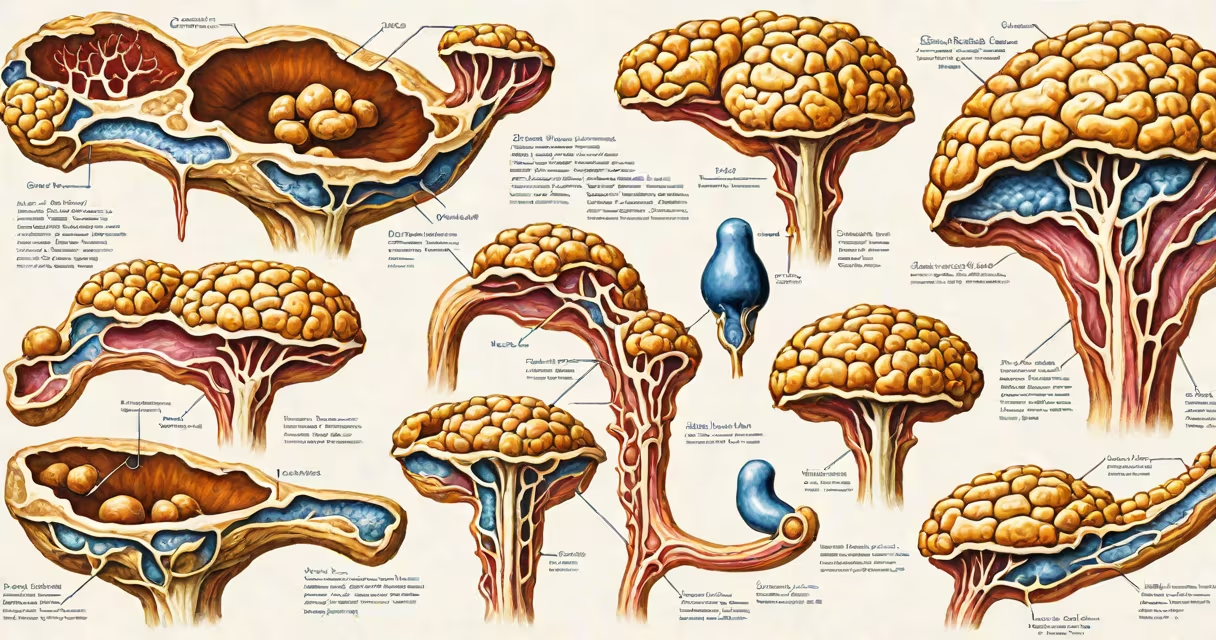
Stages of prostate cancer describe how far the disease has progressed, based on tumor size, lymph node involvement, and whether it has spread beyond the prostate. This staging guides treatment decisions and predicts outcomes.
The clinical staging system most widely used is the TNM classification-T for tumor size, N for lymph node status, and M for distant metastasis. A stage is assigned after imaging, biopsy results, and pathology reports are reviewed. Stages range from I (localized, small tumor) to IV (spread to bones or distant organs).
Prostate cancer staging combines anatomical extent with histological grade. The Gleason score, derived from biopsy tissue patterns, measures aggressiveness. A score of 6 indicates low-grade cancer; 8-10 shows high-grade, fast-growing tumors. These scores are paired with TNM findings to assign a stage.
Doctors assess the stage using physical exams, blood tests (like PSA levels), biopsies, and imaging such as MRI, CT scans, or bone scans. The process begins with a diagnosis of prostate cancer via biopsy. After confirming cancer cells, the pathologist evaluates the Gleason score.
Next, imaging determines if the tumor has grown beyond the prostate capsule (T category), whether lymph nodes are involved (N), and if cancer has reached bones or other organs (M). For example, a patient with a tumor confined to one side of the prostate, no lymph node involvement, and no distant spread is classified as T1c, N0, M0-stage I.
PSA levels above 10 ng/mL increase the likelihood of higher-stage disease. A PSA level under 10 with a Gleason score of 6 and tumor confined to one lobe suggests stage I. If the tumor extends beyond the capsule but hasn't invaded nearby structures, it's stage II. Stage III involves invasion into seminal vesicles. Stage IV includes lymph node spread (N1) or distant metastasis (M1).
Stage I: Cancer is small, confined within the prostate, and not detectable by exam or imaging. PSA is typically below 10. Gleason score ≤6. Survival rates exceed 99% at 10 years.
Stage II: Tumor is larger or detected during a digital rectal exam. Still confined to the prostate. PSA ranges from 10-20. Gleason score 7. Five-year survival near 100%. Treatment often includes radiation or surgery.
Stage III: Cancer has spread beyond the prostate capsule into surrounding tissues, such as the seminal vesicles. PSA may be elevated. Gleason score ≥8. Localized but aggressive. Treatment usually involves hormone therapy combined with radiation.
Stage IV: Cancer has spread to regional lymph nodes (N1) or distant sites like bones or lungs (M1). PSA is typically high. Gleason score ≥8. Median survival drops to 3-5 years without treatment. Hormone therapy is standard, sometimes with chemotherapy or targeted drugs.
| Stage | T Category | N Category | M Category | Common Features |
|---|---|---|---|---|
| I | T1c | N0 | M0 | Small tumor, PSA <10, Gleason ≤6 |
| II | T2a-b | N0 | M0 | Tumor in one lobe, PSA 10-20, Gleason 7 |
| III | T3a-b | N0 | M0 | Invasion into seminal vesicles, no nodal spread |
| IV | T4 | N1 or M1 | M1 | Lymph node or distant metastasis confirmed |
Stage IV is further subdivided: M1a (bone metastases), M1b (other sites), M1c (both). This detail matters because treatments differ. For example, patients with M1a may respond better to abiraterone plus prednisone than those with M1b.
Many assume that a high Gleason score automatically means advanced stage. That's incorrect. A Gleason 9 tumor confined to the prostate is still stage II. Conversely, a Gleason 6 tumor with positive lymph nodes is stage III. Grade and stage are independent but complementary.
Another common error is thinking that stage I cancer cannot progress. While low-risk, it can grow. One study found that 15% of men with stage I disease developed biochemical recurrence (rising PSA) within five years-even without treatment.
Some believe imaging like CT or bone scan detects all metastases. But bone scans miss early lesions. PSMA PET/CT, a newer imaging tool, detects metastases earlier than traditional methods. A 2022 study showed PSMA PET identified metastatic disease in 28% of patients previously classified as stage II.
A 67-year-old man presents with a PSA of 14.5 ng/mL. Digital rectal exam reveals a firm nodule on the left lobe. Biopsy confirms adenocarcinoma with a Gleason score of 8 (4+4). MRI shows tumor extending beyond the capsule into the right seminal vesicle. CT scan shows no enlarged lymph nodes. Bone scan is negative.
Based on this: T3b (tumor invades seminal vesicles), N0 (no lymph node involvement), M0 (no distant spread). This is stage III. Treatment options include external beam radiation with hormone therapy, or radical prostatectomy with pelvic lymph node dissection. The choice depends on life expectancy and patient preference.
During follow-up, his PSA remains stable for 18 months. At 24 months, it rises to 2.1. Repeat PSMA PET shows uptake in the right iliac lymph node. This confirms nodal metastasis-now stage IV (N1).
He starts enzalutamide, a hormone therapy agent. His PSA drops to 0.3 within six months. He continues on treatment with regular monitoring. This case illustrates how staging evolves with time and new data.
Staging determines treatment intensity. Low-risk stage I cancers may be managed with active surveillance-monitoring without immediate intervention. High-risk stage III or IV cancers require aggressive therapy.
Survival estimates vary by stage. According to the American Cancer Society, 10-year relative survival is 99% for localized disease (stages I-II), 91% for regional spread (III), and 30% for distant metastasis (IV).
When deciding between surgery, radiation, or watchful waiting, doctors rely on stage. A stage I patient with a Gleason 6 tumor and PSA <10 may safely avoid treatment. A stage II patient with a Gleason 8 tumor and PSA 18 is more likely to benefit from surgery or radiation.
For patients considering clinical trials, staging is essential. Trials for novel agents like PARP inhibitors require specific stage and biomarker criteria. A patient with stage IV prostate cancer and BRCA2 mutation may qualify for olaparib, but not someone with stage I disease.
Understanding stages of prostate cancer is not just academic-it shapes real-world care. It's not enough to know "I have cancer." You must know where it is, how fast it grows, and what options exist.