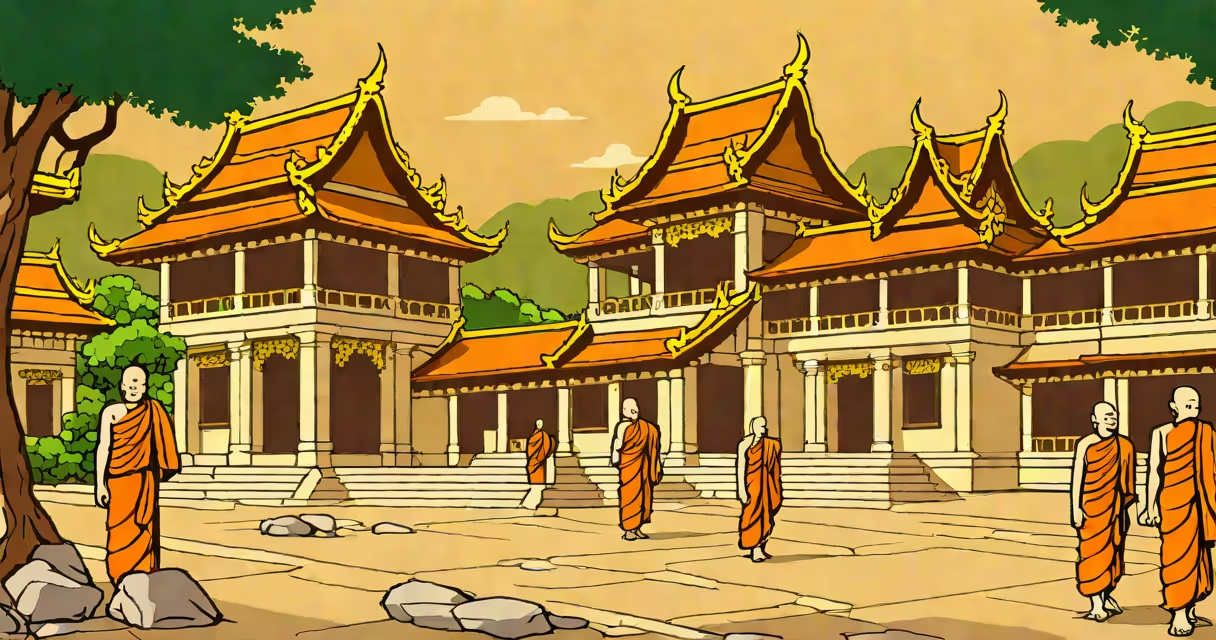
The suddhavasa buddhist meditation center is a Theravāda Buddhist retreat located in Chiang Mai Province, Thailand, dedicated to silent meditation, monastic discipline, and the study of Pāli scriptures. It operates under the guidance of senior monks trained in the Thai Forest Tradition and offers residential programs for lay practitioners seeking deep immersion in mindfulness practice.
Founded in the early 2000s, suddhavasa buddhist meditation center follows the strict daily routine of traditional monasteries. Participants observe silence from dawn until dusk, engage in seated and walking meditation for up to 12 hours a day, and follow a code of conduct based on the Vinaya, the ancient monastic rules. The center emphasizes direct experience of insight (vipassanā) through sustained attention to bodily sensations and mental phenomena.
Unlike many Western-style meditation centers that incorporate music, guided visualizations, or group discussions, suddhavasa maintains a minimalist environment. There are no lectures, no books in the meditation hall, and no interaction between residents except during scheduled meals or brief duties. This structure aims to minimize distraction and support uninterrupted awareness.
Each day at suddhavasa buddhist meditation center begins at 4:30 a.m. with a bell signaling the start of morning meditation. Residents rise, wash, and enter the meditation hall for a 90-minute session of sitting and walking meditation. The schedule remains unchanged throughout the year, regardless of weather or seasonal changes.
After breakfast at 6:30 a.m., participants perform assigned chores such as cleaning, cooking, or gardening. These tasks are done mindfully, with full attention to each movement. The afternoon includes two more meditation sessions, separated by a short rest period. Dinner is served at 5:00 p.m., followed by a final hour of silent sitting before lights out at 8:30 p.m.
A 10-day retreat at suddhavasa buddhist meditation center requires participants to remain silent for the entire duration. Communication is limited to hand signals or written notes. This rule applies to both lay visitors and resident monks. The absence of speech reduces mental chatter and strengthens concentration. According to the center's guidelines, verbal interaction is considered a major obstacle to insight development.
There are two primary formats at suddhavasa buddhist meditation center: the standard silent retreat and the intensive 21-day program. The 10-day retreat is the most common entry point. It costs approximately 3,500 Thai baht ($100 USD) and includes food, lodging, and basic supplies. The 21-day program costs 7,000 baht ($200 USD) and includes additional instruction in breath awareness and body scanning techniques.
| Program Type | Duration | Cost (THB) | Key Focus |
|---|---|---|---|
| Standard Silent Retreat | 10 days | 3,500 | Basic vipassanā, silence, mindfulness of breathing |
| Intensive 21-Day Program | 21 days | 7,000 | Advanced body scan, equanimity training, sustained attention |
Participants are required to wear plain white robes and avoid wearing jewelry, makeup, or electronics. The center provides simple bedding and a small meditation cushion. Personal items must be stored in a designated locker. All meals are vegetarian and prepared by resident volunteers using locally sourced ingredients.
One non-obvious detail: despite being a Buddhist center, suddhavasa does not offer formal teachings in Dhamma (Buddhist doctrine). Instead, understanding arises through direct experience. As one participant wrote in a post-retreat reflection, "I didn't learn about impermanence-I felt it in my legs after four hours of sitting." This experiential model contrasts sharply with centers that prioritize intellectual study over embodied practice.
suddhavasa buddhist meditation center is often confused with centers that blend Buddhism with New Age spirituality or Western psychology. Unlike the osho meditation center, which uses changing breathing exercises and sound baths, suddhavasa relies solely on traditional Theravāda methods. There are no chants, mantras, or energy work. The focus is on observing the present moment without interpretation.
Another frequent error is assuming that all meditation centers in Thailand are similar. While many offer retreats, few enforce the same level of silence and austerity. For example, the international buddhist meditation center in Bangkok allows limited discussion and offers guided meditations in English. suddhavasa, by contrast, prohibits all forms of communication unless absolutely necessary.
Some visitors expect a structured curriculum or daily talks. That is not the case. The center operates on the principle that insight cannot be taught-it must be discovered. A monk at suddhavasa once told me, "If you come here to learn, you'll leave confused. But if you come to stop thinking, you may see something." This reflects the core teaching of the Pāli Canon: "The mind is the forerunner of all states."
I spent 14 days at suddhavasa buddhist meditation center in 2022. The first three days were physically exhausting. My legs burned during sitting, and my mind raced with thoughts about home, work, and past conversations. By day five, the noise began to fade. Not because I was calm-but because I stopped trying to make it stop.
On day nine, I noticed a subtle shift: the boundary between "me" and "the sensation" dissolved. I wasn't observing pain-I was the pain. This wasn't a metaphor. It was a direct perception. I later learned this state is called *sati-sampajañña*-clear comprehension-and is central to the path described in the Satipatthana Sutta.
For those considering a visit, the center accepts applications via email. Spots fill quickly, especially during the rainy season (June-September). Applicants must confirm they can maintain silence and follow the daily routine. No exceptions are made for medical conditions, though accommodations are available for mobility issues.
Suddhavasa buddhist meditation center is not a place to gain knowledge. It is a place to stop accumulating it. The practice is not about becoming enlightened-it is about stopping the search for enlightenment. As the Pāli texts state: "When the mind is still, the truth reveals itself."