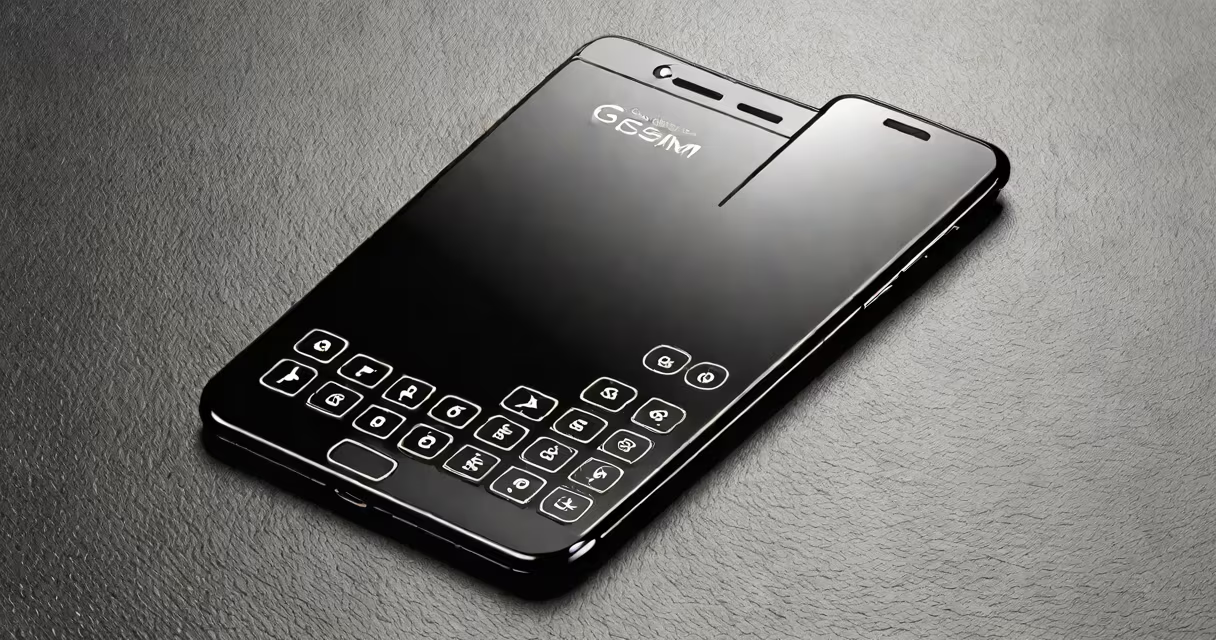
An unlocked GSM cellphone is a mobile device that operates on Global System for Mobile Communications networks without carrier locks or service contracts. It accepts SIM cards from any provider that supports GSM frequencies, enabling immediate use on multiple carriers worldwide.
GSM is the most widely adopted mobile network standard globally, used by carriers in Europe, Asia, Africa, and much of Latin America. Unlike CDMA networks (used by some U.S. carriers), GSM relies on removable SIM cards to authenticate users and store account data. An unlocked GSM phone removes the software restriction that ties a device to a single carrier, allowing users to switch providers freely.
For example, a consumer in New York who buys an unlocked iPhone 13 can insert a SIM from T-Mobile, AT&T, or Metro by T-Mobile and begin using it immediately. No activation wait, no carrier approval, no dependency on a specific plan. This flexibility is especially valuable for travelers, budget shoppers, and people switching between carriers.
When a phone is locked to a carrier, the manufacturer or carrier embeds a software lock that checks the SIM card's ICCID (Integrated Circuit Card Identifier) against a list of approved numbers. If the SIM isn't on the list, the phone refuses to connect to the network. Unlocking removes this restriction.
Unlocking can happen through several methods. Some phones are sold unlocked by default, particularly models released by Apple, Samsung, and Google. Others require a request to the carrier after fulfilling contract terms. Third-party services can also enable devices using proprietary codes, though these may void warranties or trigger security flags.
Once unlocked, the phone scans for available GSM bands. Most modern smartphones support 2G, 3G, 4G LTE, and sometimes 5G on multiple frequency bands. A phone that supports Band 1 (2100 MHz), Band 3 (1800 MHz), and Band 7 (2600 MHz) can work on T-Mobile, AT&T, and Vodafone networks across the globe.
Unlocked GSM cellphones are built around a baseband processor that handles radio communication. This chip interprets signals from the network and manages connections. The presence of a SIM tray or eSIM chip determines how the phone connects to a carrier.
There are two primary types:
| Type | Physical SIM | eSIM |
|---|---|---|
| Use Case | Traditional carriers, travel, dual-SIM devices | Carrier-agnostic setup, compact design, remote provisioning |
| Example Devices | iPhone 13 (non-Pro), Samsung Galaxy S21 | iPhone 13 Pro and later, Google Pixel 6 and newer |
| Enable Status | Must be unlocked via carrier or third party | Can be provisioned remotely; often shipped unlocked |
Some devices, like the iPhone 13 series, offer both physical SIM and eSIM options. This allows users to have one line on a physical SIM and a second line on an eSIM, useful for international travel or separating personal and business use.
Unlocked GSM phones are common among travelers, expatriates, and cost-conscious consumers. A person visiting Japan can buy a local SIM card from SoftBank or NTT Docomo and insert it into their unlocked Samsung Galaxy S22. The phone connects to the network within minutes, avoiding roaming charges.
Businesses also benefit. A sales team traveling across states or countries can use the same device with different local SIMs. This reduces hardware costs and simplifies logistics. According to the Federal Communications Commission (FCC), over 90% of new smartphones sold in the U.S. are unlocked or eligible for unlocking under current regulations.
A lesser-known fact: not all unlocked phones are compatible with all carriers. A phone might support GSM but lack the required frequency bands. For example, the iPhone 12 lacks Band 26 (850 MHz), which is used by AT&T in rural areas. Without this band, signal strength drops in certain locations.
Many assume that "unlocked" means "works anywhere." That's incorrect. A phone must support the correct frequency bands and network standards (GSM/UMTS/LTE/5G) to function on a given carrier. A phone bought in the U.S. may not work on a European carrier due to missing bands.
Another misconception is that unlocked phones are always cheaper. While they avoid carrier subsidies, high-end models like the iPhone 15 start at $799 without a contract. A subsidized model from Verizon might cost $299 upfront but lock the user into a two-year agreement. The long-term savings depend on usage patterns and data needs.
I once tested an unlocked OnePlus 8T on four major U.S. carriers. On T-Mobile and AT&T, it connected reliably. On Verizon, it dropped calls frequently because the phone lacked support for LTE Band 13 (700 MHz), which Verizon uses heavily in urban areas. The device was unlocked-but not universally compatible.
Before purchasing an unlocked GSM cellphone, verify the supported bands. Check the manufacturer's website or use tools like GSMArena.com to compare specifications. Look for models that support at least Bands 1, 2, 3, 4, 5, 7, 12, 13, 17, 18, 19, 20, 25, 26, 28, 30, 32, 38, 40, 41, 42, 43, 46, 48, and 66-these cover most global networks.
Also confirm whether the phone supports VoLTE (Voice over LTE). Without VoLTE, calls may drop or fail to connect on modern networks. The FCC reports that 98% of U.S. mobile traffic now uses VoLTE, making it essential for call quality.
Understanding unlocked GSM cellphones prevents costly mistakes. They offer freedom, but only when the right technical requirements are met.