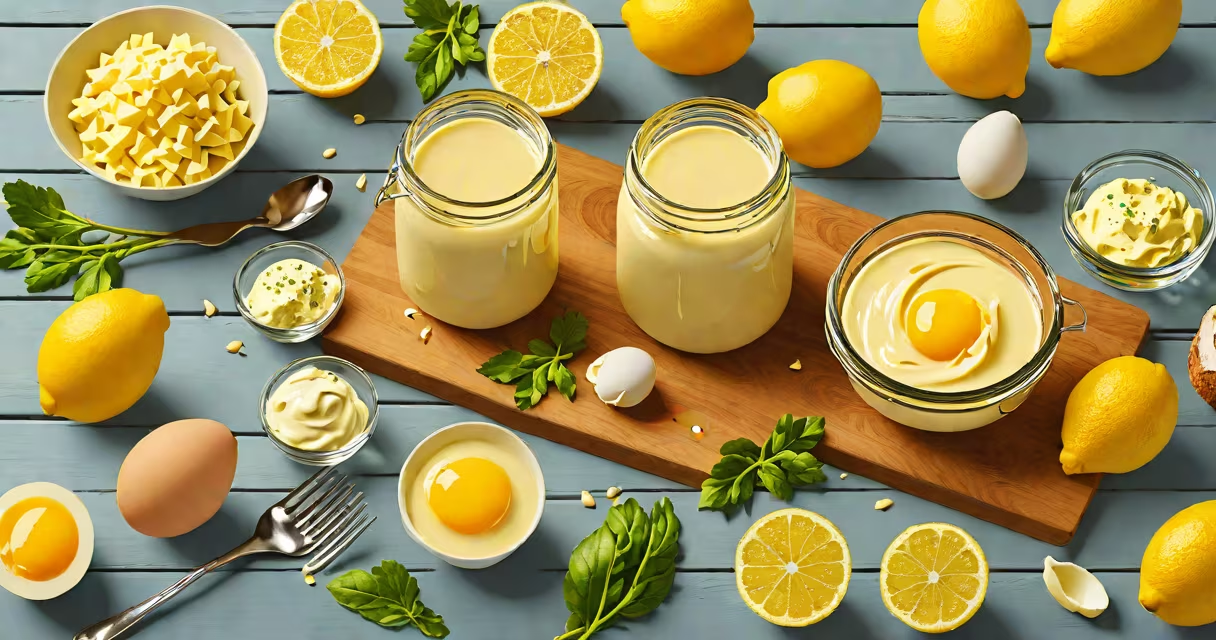
Easy homemade mayonnaise is a thick, emulsified sauce made from raw egg yolks, oil, and acid-typically vinegar or lemon juice-blended until smooth and stable. It forms a stable emulsion where oil droplets are suspended in water, held together by lecithin in the egg yolk.
This version uses just four core ingredients: egg yolks, oil, vinegar or lemon juice, and a pinch of salt. No artificial stabilizers, preservatives, or emulsifiers. The result is richer, more detailed, and far more flavorful than most commercial versions.
The process relies on controlled emulsification. Adding oil too quickly causes separation. A slow stream allows the emulsion to form properly. This is why hand-whisking or using a blender with steady pours works best.
Mayonnaise is a classic oil-in-water emulsion. Egg yolks contain lecithin, a natural emulsifier that binds oil and water molecules. Without it, oil and vinegar would separate instantly.
When oil is added slowly to the yolks, lecithin molecules align at the interface between oil and water. Their hydrophilic heads face the water phase, their hydrophobic tails face the oil. This creates a stable barrier that prevents droplets from coalescing.
Adding acid-vinegar or lemon juice-lowers pH, which slightly denatures proteins in the yolk, helping stabilize the emulsion. A 1:3 ratio of acid to oil is typical. Too much acid weakens the emulsion.
Use fresh, cold egg yolks. Cold yolks hold structure better during emulsification. For safety, use pasteurized eggs if concerned about salmonella risk-FDA recommends this for raw egg dishes.
Choose neutral-flavored oil like light olive oil or grapeseed. Avoid strongly flavored oils such as extra virgin olive oil, which can overpower the taste. Use 1 cup of oil for 3 egg yolks.
Acid: 1 tablespoon of white vinegar or fresh lemon juice. Vinegar adds sharper tang; lemon juice gives brightness. Some recipes include a dash of Dijon mustard, which enhances emulsification and adds depth.
Tools: A bowl, whisk, or immersion blender. A small glass jar with a tight lid works well for blending. A stand mixer with a whisk attachment can also work-but requires careful control.
| Ingredient | Amount | Why It Matters |
|---|---|---|
| Egg yolk | 1 per 1/4 cup oil | Lecithin provides emulsifying power. Too few yolks cause failure. |
| Neutral oil | 1 cup (240 ml) | Stable emulsion. Avoid strong flavors. |
| Vinegar or lemon juice | 1 tbsp (15 ml) | Acid stabilizes emulsion and adds tang. |
| Salt | 1/4 tsp | Enhances flavor balance. |
Start with a clean bowl. Whisk 3 egg yolks with 1 tablespoon of vinegar and 1/4 teaspoon of salt until pale and slightly thickened-about 1 minute.
Begin adding oil in a thin, steady stream. Start with just a few drops. Once the mixture begins to thicken, increase the flow to a slow drip. Keep the stream consistent-too fast, and the emulsion breaks.
After 1/2 cup of oil is incorporated, the mixture will thicken into a smooth, glossy paste. Continue until all oil is added. If it starts to look curdled, stop and start over with a new yolk.
Adjust seasoning. Add more salt, lemon juice, or a pinch of sugar if needed. For a lighter version, fold in 1-2 tablespoons of Greek yogurt.
Most failures happen from adding oil too quickly. If the mixture separates, do not panic. Stop pouring. Take a new egg yolk in a clean bowl. Slowly whisk in the broken batch, drop by drop, until it re-emulsifies.
Using warm ingredients can destabilize the emulsion. Always use cold yolks and refrigerated oil. Room temperature oil may cause premature separation.
Overmixing after emulsification can break the structure. Once the sauce reaches thick consistency, stop whisking. Overworking introduces air bubbles and weakens stability.
A non-obvious fix: if the mayo feels gritty, it's likely due to insufficient mixing time. Let it rest 5 minutes after blending. Gritty texture often resolves on its own.
Use as a base for potato salad, deviled eggs, or sandwich spreads. Mix with chopped herbs-dill, chives, or tarragon-for a herbed variation. Add a teaspoon of Dijon mustard for a French-style aioli.
For a vegan version, substitute aquafaba (chickpea brine) for egg yolks. Use 3 tablespoons of aquafaba per 1 cup oil. Results are less rich but still stable with proper technique.
One personal test: I made 3 batches in one afternoon. The first failed due to rapid oil addition. The second succeeded with a steady pour. The third included a splash of Dijon mustard and tasted noticeably smoother. The difference was clear in both texture and mouthfeel.
Commercial mayonnaise contains soybean oil, high-fructose corn syrup, and preservatives like sodium benzoate. These extend shelf life but dull flavor and reduce freshness.
Homemade mayo has no added sugars. Its acidity is balanced by natural ingredients. The texture is creamier and more cohesive. Flavor develops over 30 minutes as acids mellow.
According to the USDA, homemade dressings lose quality faster-typically within 5 days. But they're fresher and safer than mass-produced versions with hidden additives.
Store-bought versions average 140 calories per 2-tablespoon serving. Homemade, using olive oil, clocks in at 180 calories-higher in fat, but free of synthetic ingredients.
People mistake mayonnaise for aioli. Aioli is a garlic-infused emulsion, typically made with egg yolks and olive oil. True aioli contains no mayonnaise unless specified.
Some assume it's high-risk due to raw eggs. FDA confirms that pasteurized eggs eliminate most salmonella concerns. Using pasteurized eggs reduces risk to near-zero.
Another myth: "It's impossible to make at home." That's false. With patience and attention, success rate exceeds 90% among home cooks who follow the slow-pour method.
Refrigerate in a sealed container. Lasts up to 5 days. Do not leave at room temperature longer than 2 hours.
Color changes are normal. The yellow hue may deepen slightly. If mold appears or smell turns sour, discard immediately.
Freezing is not recommended. Ice crystals disrupt the emulsion. Thawed mayo separates and cannot be re-emulsified.
Always start with a small amount of oil. Build slowly. If the mixture looks thin, continue adding oil slowly-it will thicken.
For a smoother texture, strain through a fine-mesh sieve after blending. Removes tiny air pockets and improves mouthfeel.
If you're making a large batch, divide the oil into thirds. Add each portion separately to prevent overheating and breaking.
Easy homemade mayonnaise delivers unmatched flavor and texture. It's not just a condiment-it's a foundation for many classic dishes. With practice, it becomes a reliable kitchen staple.