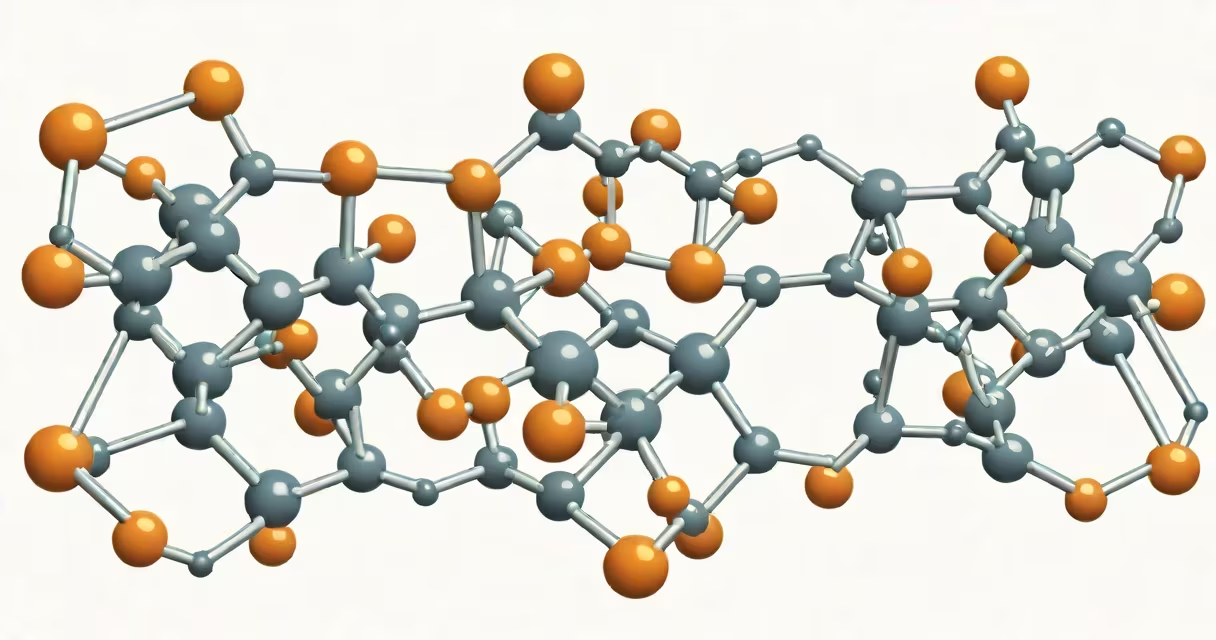
Unsaturated organic compounds are molecules containing at least one double or triple bond between carbon atoms, reducing the number of hydrogen atoms compared to saturated analogs. These bonds increase reactivity and define key classes like alkenes and alkynes.
These compounds form when carbon atoms share more than one pair of electrons. A double bond consists of one sigma and one pi bond; a triple bond includes one sigma and two pi bonds. Pi bonds restrict rotation and create planar geometry around the bonded carbons. This rigidity affects molecular shape and biological function.
According to the U.S. National Library of Medicine's PubChem database, unsaturated compounds make up over 60% of known organic molecules with industrial relevance. Their reactivity enables synthesis of polymers, pharmaceuticals, and agrochemicals.
Double and triple bonds alter electron distribution. The pi bond's electron cloud lies above and below the molecular plane, making it accessible to electrophiles. This makes unsaturated compounds prone to addition reactions-where atoms add across the bond-rather than substitution.
For example, ethene (C₂H₄) undergoes electrophilic addition with bromine (Br₂). The reaction produces 1,2-dibromoethane. The mechanism begins with Br₂ approaching the pi bond, forming a cyclic bromonium ion intermediate. Water then attacks the more substituted carbon, yielding the product. This reaction is used to test for unsaturation in labs.
Alkynes behave similarly but can undergo two rounds of addition. Acetylene (C₂H₂), for instance, adds H₂ to form ethene, then ethane under catalytic conditions. Industrial processes use this stepwise conversion to produce plastics and solvents.
Unsaturated organic compounds fall into two main categories based on bond type:
| Type | Bond Count | General Formula | Example | Common Use |
|---|---|---|---|---|
| Alkenes | One double bond | CnH2n | Propene (C₃H₆) | Plastic production (polypropylene) |
| Alkynes | One triple bond | CnH2n−2 | 1-Butyne (C₄H₆) | Synthetic rubber, solvents |
Alkenes like propene are feedstocks for polyolefins. Propene polymerizes via coordination catalysis to form polypropylene-a material used in food containers, textiles, and automotive parts. Over 100 million tons of polypropylene are produced annually worldwide, according to the American Chemistry Council.
Alkynes such as acetylene have high energy density due to the triple bond. Historically, acetylene was used in welding torches because it burns at ~3,500°C. Modern applications include synthesis of vitamins and fragrances, where controlled addition reactions build complex structures.
Unsaturated compounds serve as intermediates in manufacturing. Ethylene (C₂H₄), the simplest alkene, is a top 10 industrial chemical by volume. Global production exceeds 150 million metric tons per year, primarily for polyethylene and ethylene oxide.
In biology, unsaturated fats have double bonds that introduce kinks in fatty acid chains. This prevents tight packing, keeping oils liquid at room temperature. Linoleic acid (an omega-6 fatty acid) contains two cis double bonds. Its structure influences membrane fluidity and is essential for human health, per NIH guidelines.
One non-obvious fact: cis double bonds cause greater molecular distortion than trans. This difference impacts drug design. For example, the anti-cancer drug Taxol contains multiple cis double bonds that stabilize its active conformation. Altering bond geometry reduces efficacy.
Many assume all unsaturated compounds are reactive. While true generally, some conjugated systems like benzene exhibit aromatic stability despite having alternating double bonds. Benzene (C₆H₆) resists addition reactions due to delocalized pi electrons across the ring.
Another misconception: "unsaturated" implies higher toxicity. Not all unsaturated compounds are harmful. Ethylene is a plant hormone regulating fruit ripening. Commercially, it's used to ripen bananas during transport. The EPA classifies it as low hazard when handled properly.
I once observed a lab experiment where students misidentified a compound as unsaturated based on decolorizing bromine water. The sample contained a phenol group, which reacts slowly with Br₂ via electrophilic substitution. The false positive led to incorrect structural assignment. This highlights the need for confirmatory tests like IR spectroscopy.
Unsaturated organic compounds differ from saturated ones in bonding and behavior:
For example, methane (CH₄) undergoes halogenation with Cl₂ under UV light to form chloromethane. But ethene (C₂H₄) adds Cl₂ directly to yield 1,2-dichloroethane. The reaction proceeds without light or heat-indicating different mechanisms.
Consider the synthesis of 1,2-dibromopropane from propene:
This reaction demonstrates stereospecificity-bromine atoms add from opposite faces. The result is a racemic mixture unless chiral catalysts are used. This principle applies in drug synthesis where stereochemistry determines biological activity.
Understanding unsaturated organic compounds is essential for fields ranging from materials science to medicine. Their reactivity enables targeted transformations critical in industrial and biological contexts.