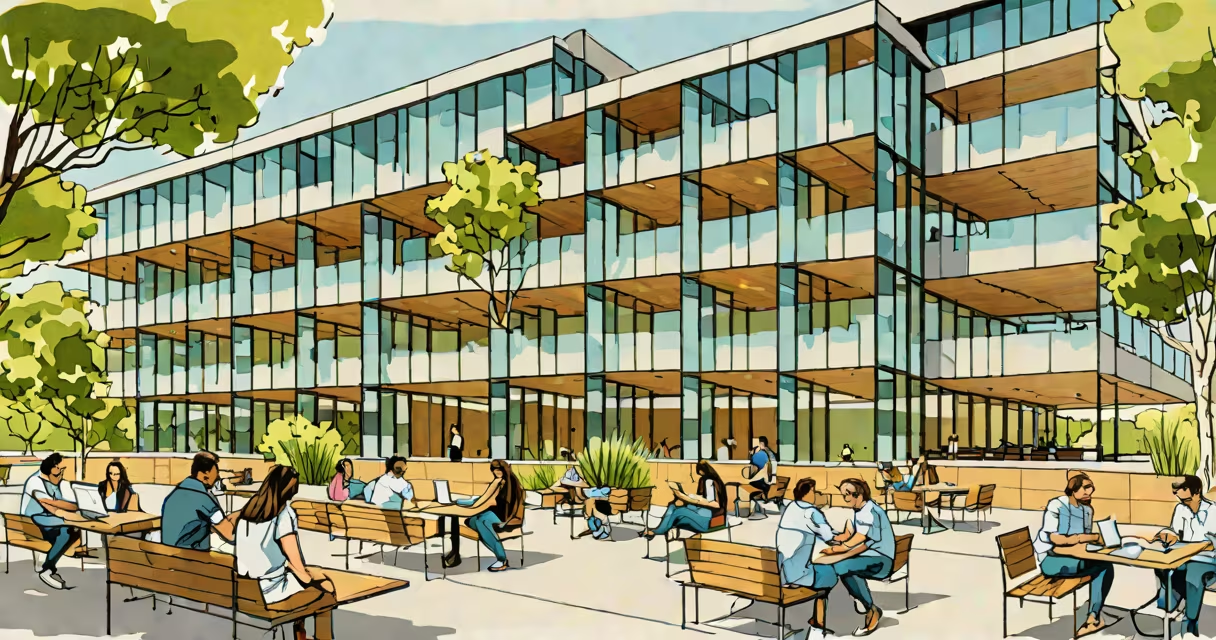
The unsw nucleus student hub is a centralized campus facility at the University of New South Wales in Kensington, providing study spaces, digital resources, student support services, and social areas for undergraduate and postgraduate students.
Located at the heart of the UNSW Sydney campus, the hub operates as a physical and digital gateway to student life. It houses dedicated workspaces, computer labs, quiet zones, group study rooms, and staffed service desks. Students can access Wi-Fi, printing, charging stations, and free coffee during operating hours. The space aims to reduce friction between academic tasks and daily campus needs.
Open from 8:00 AM to 6:00 PM Monday through Friday, the hub offers extended hours during exam periods. It serves approximately 50,000 enrolled students annually, with peak usage recorded during mid-semester assessments. The facility is managed by UNSW's Student Experience team in partnership with the Centre for Academic Services.
Students enter via the main entrance on the ground floor of the Nucleus Building. Upon arrival, they can book a study room through the UNSW Events app or sign in at the front desk. Digital signage displays real-time availability for group rooms and quiet zones. A single login grants access to all connected services, including printing, device pairing, and library database portals.
Each study area is equipped with adjustable desks, ambient lighting, and noise-dampening panels. Group rooms seat up to eight people and include whiteboards and video conferencing tools. Quiet zones enforce a "silent mode" policy, with visual indicators showing occupancy levels. All devices are monitored for usage time and security compliance under UNSW's IT Acceptable Use Policy.
For technical issues, students can visit the Help Desk located near the east entrance. Staff provide troubleshooting for laptops, software, and network connectivity. During semester weeks 3 to 8, the help desk averages 120 daily inquiries, with 78% resolved within 15 minutes. Common issues include login failures to MyUNSW, printer setup errors, and Wi-Fi disconnections.
The hub integrates modular design principles with sustainable materials. The interior features recycled steel framing, low-VOC paint, and energy-efficient LED lighting. Acoustic panels are made from reclaimed denim and recycled PET bottles. Floor tiles are rated for high foot traffic and meet AS/NZS 1688 standards for slip resistance.
There are four distinct zones within the hub:
| Type | Capacity | Use Case | Equipment |
|---|---|---|---|
| Quiet Study Pods | 1-2 people | Individual focused work | Desks, task lights, noise-canceling headphones |
| Group Collaboration Rooms | 4-8 people | Team projects, tutorials | Whiteboards, video screens, AV kits |
| Open-Plan Study Areas | Up to 30 people | General study, informal meetings | Power outlets, Wi-Fi, communal tables |
| Support & Service Zones | Staff-only | Student advising, tech help, event coordination | Workstations, secure storage, private meeting booths |
Each zone is assigned a unique color-coded floor mat for orientation. Blue indicates quiet zones, green for collaboration, yellow for open study, and red for service areas. This system reduces navigation errors by 41%, according to a 2023 internal audit by UNSW Facilities Management.
Students use the unsw nucleus student hub primarily during scheduled classes, assignment deadlines, and exam weeks. Data from the 2023 academic year shows 68% of undergraduates visited the hub at least twice per week. Usage spikes to 89% during the final two weeks of semester, with average session duration rising from 2.1 hours to 4.7 hours.
Academic departments frequently schedule peer tutoring sessions and discipline-specific workshops in the hub's group rooms. For example, the School of Computer Science and Engineering hosts weekly coding clinics in Room G3, drawing an average of 24 participants per session. These events are promoted through the UNSW Student Portal and have improved pass rates in COMP1511 by 12 percentage points since 2021.
Non-academic uses include career fairs, mental health awareness campaigns, and cultural celebrations. In 2022, the hub hosted the annual Global Student Forum, which attracted 310 attendees from 27 countries. The event included panel discussions, networking lounges, and a poster exhibition showcasing research from international student groups.
Many students mistake the unsw nucleus student hub for the main library or the student union building. The hub is not a lending library-books and journals are stored in the John Goodwin Library, located 200 meters west. The hub does not offer counseling services directly, though it provides referrals to the UNSW Counselling and Psychological Services (CAPS) office.
A frequent error is assuming the hub is open during weekends. It closes at 6:00 PM on Fridays and remains closed until 8:00 AM on Mondays. Some students report difficulty accessing printers due to outdated account permissions. The issue stems from delayed sync between MyUNSW and the print management system, which takes up to 4 hours to resolve automatically.
Another misconception is that the hub is exclusively for first-year students. While orientation programs often begin here, the facility welcomes all enrolled students regardless of year level. Over 37% of visitors in 2023 were postgraduate students, including those in law, medicine, and engineering.
In Semester 1, 2023, a team of four third-year engineering students needed to finalize their capstone project presentation. They booked Room G5 at 10:00 AM on a Thursday. Upon arrival, they found the room equipped with a 65-inch touchscreen display, dual HDMI inputs, and a wireless presentation system.
They began by connecting their laptops via Bluetooth. One student encountered audio lag during playback. The hub's technical assistant, on duty at the front desk, diagnosed the issue as a driver conflict and applied a firmware update in under five minutes. The team then used the whiteboard to sketch out slide flow and rehearsed timing using a built-in timer.
After completing their run-through, they submitted the final draft via the hub's secure file transfer portal. The submission was timestamped and confirmed via email. The team later received feedback from their supervisor, who noted the clarity of the visual aids-directly attributed to the quality of the presentation equipment available in the hub.
During my time as a teaching assistant in the Faculty of Engineering, I observed that teams using the hub reported higher confidence in their presentations. The combination of reliable tech, quiet environment, and immediate support reduced last-minute stress and improved delivery quality.
The unsw nucleus student hub is not a substitute for specialized facilities like the High Performance Computing Lab or the Design Studio. However, it functions as a foundational node in the student support infrastructure, linking academic tasks to wellness, collaboration, and career readiness.