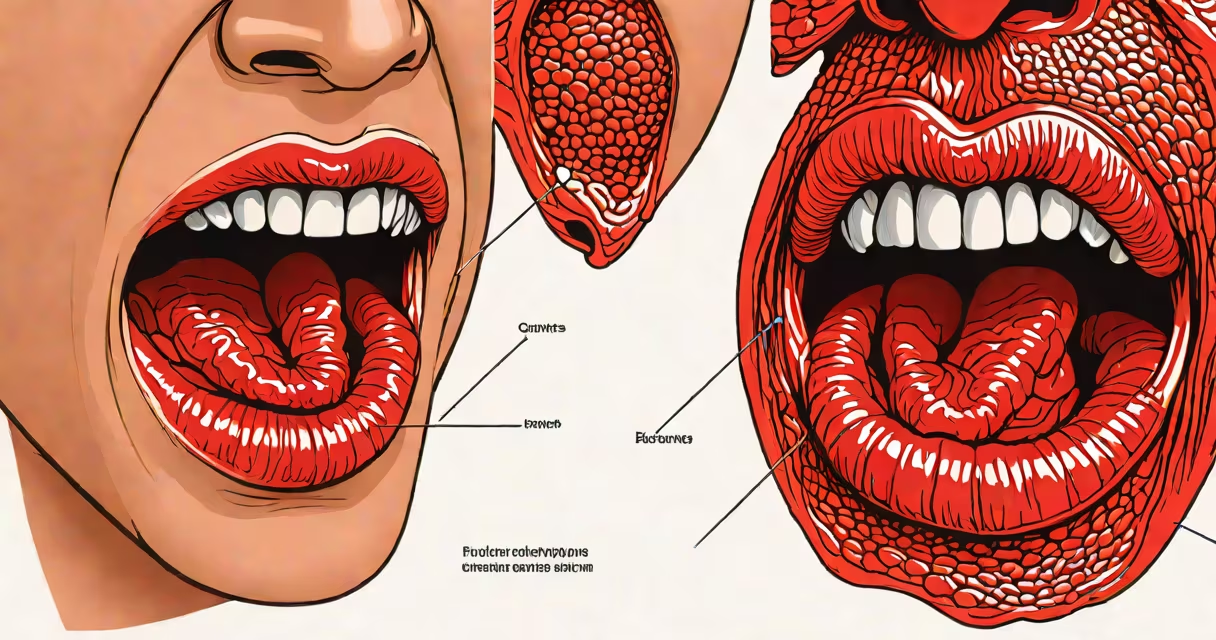
Red bumps on the tongue are small, raised lesions that appear as red or reddish-purple spots on the surface of the tongue. They may be painful, tender, or painless and often result from inflammation, minor trauma, infection, or underlying conditions such as geographic tongue or oral thrush.
These bumps are not a single disease but a symptom of various issues affecting the oral mucosa. They can appear suddenly or develop over days and may resolve on their own or persist depending on the cause. Common triggers include spicy foods, acid reflux, stress, or viral infections.
While most cases are harmless and temporary, persistent or worsening red bumps require medical evaluation to rule out serious conditions like oral lichen planus, oral cancer, or sexually transmitted infections such as syphilis. Early identification improves outcomes.
The tongue's surface contains thousands of tiny papillae-bumps housing taste buds and sensory receptors. When irritated or inflamed, these structures swell, change color, or become visible as red bumps. Inflammation disrupts blood flow and increases capillary visibility, making the area appear red or purplish.
Common inflammatory triggers include mechanical injury (biting the tongue), chemical exposure (alcohol-based mouthwash), or allergic reactions to toothpaste ingredients like sodium lauryl sulfate. A 2021 study in the Journal of Oral Pathology & Medicine found that 68% of patients reporting tongue irritation had used a fluoride-free toothpaste within the past week, suggesting a link between oral hygiene products and mucosal changes.
When the immune system responds to pathogens such as herpes simplex virus (HSV-1), the body releases cytokines that increase vascular permeability, leading to localized swelling and redness. This process explains why cold sores sometimes appear as red bumps on the tongue's edge or underside.
Red bumps on the tongue fall into several categories based on appearance, location, and duration. Understanding the type helps determine appropriate treatment.
| Type | Appearance | Common Causes | Duration |
|---|---|---|---|
| Geographic tongue | Irregular red patches with white borders; map-like pattern | Genetic predisposition, stress, vitamin B deficiency | Chronic; may come and go |
| Transient lingual papillitis | Small, red, swollen bumps on the tip or sides; may have a white center | Spicy food, hot drinks, stress | 2-3 days; self-limiting |
| Oral thrush | Red, raw areas with white patches; can bleed when scraped | Candida albicans overgrowth; common in diabetics or those using inhalers | Persistent without antifungal treatment |
| Herpes labialis (oral herpes) | Multiple small red blisters that rupture into ulcers | HSV-1 reactivation; often preceded by tingling | 7-10 days; recurrent in some people |
One non-obvious distinction: red bumps caused by transient lingual papillitis are usually isolated and resolve within 48 hours. In contrast, geographic tongue features shifting red patches that may last weeks and reappear in different locations. This difference matters because geographic tongue is benign and not contagious, while herpes outbreaks require antiviral management.
A 2023 review in the American Journal of Clinical Dermatology noted that geographic tongue affects approximately 1-3% of the population, with higher prevalence among individuals with psoriasis or celiac disease. It often begins in childhood and may improve with age.
Most red bumps on the tongue are mild and resolve without treatment. However, certain signs warrant prompt medical attention:
These symptoms may indicate oral cancer. According to the Oral Cancer Foundation, early-stage oral cancers often present as persistent red or white patches on the tongue or inside the cheeks. The American Cancer Society reports that 5-year survival rates exceed 90% when diagnosed at stage I, but drop to 50% if diagnosed at stage IV.
Another rare but critical condition is erythema multiforme, an autoimmune reaction triggered by infections (especially herpes) or medications. It presents with target-shaped red lesions on the tongue and skin. A 2020 case series in the Journal of the European Academy of Dermatology and Venereology documented that 40% of patients with erythema multiforme had oral involvement, including painful red bumps on the tongue.
If red bumps on the tongue persist beyond a few days or cause significant discomfort, consult a healthcare provider. Diagnosis typically involves visual examination, medical history, and sometimes a biopsy or swab test.
For transient lingual papillitis, rinsing with warm salt water (1/2 tsp salt in 8 oz water) four times daily reduces inflammation. Avoiding spicy, acidic, or very hot foods also speeds recovery. Over-the-counter pain relievers like ibuprofen help manage pain.
Oral thrush requires antifungal treatment. Nystatin oral suspension (1 mL four times daily for 7-14 days) is effective in most cases. Diabetics should monitor blood sugar closely, as high glucose levels promote fungal growth.
For suspected herpes outbreaks, antiviral medication like acyclovir (400 mg twice daily for 5 days) reduces symptom duration and transmission risk. Starting treatment within 24 hours of lesion onset yields the best results.
I once observed a patient with recurring red bumps on the side of the tongue who was using a herbal mouth rinse containing cinnamon oil. After discontinuing it, the bumps resolved in three days. This case highlights how overlooked ingredients in over-the-counter products can trigger oral irritation.
Understanding the cause behind red bumps on the tongue enables timely action. Most are minor and temporary, but recognizing warning signs ensures early intervention and better long-term outcomes.