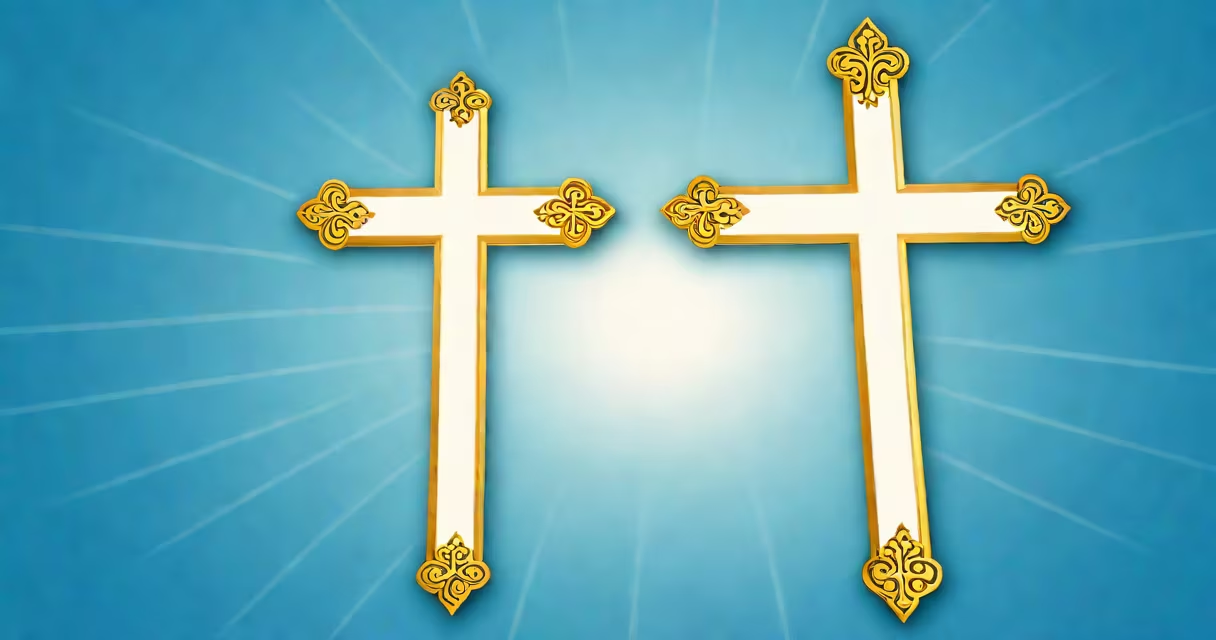
Christian symbols are visual representations used to convey core beliefs, stories, and values within Christianity. They appear in art, architecture, liturgy, and personal devotion, serving as reminders of spiritual truths. These symbols include the cross, dove, fish, lamb, and sacred heart, each rooted in scripture, tradition, and early Christian practice.
The cross is the most recognizable symbol in Christianity. It represents Jesus Christ's crucifixion and resurrection-the central event of the faith. Early Christians used the cross as a sign of victory over death. According to the Catholic Encyclopedia, the cross became a formal symbol of Christianity by the 4th century, especially after Emperor Constantine's conversion. The Latin cross-four equal arms-is standard in Western Christianity, while the Greek cross (equal-length arms) appears in Eastern traditions.
The dove symbolizes peace, purity, and the Holy Spirit. It appears in the Gospels during Jesus' baptism, where the Spirit descends "like a dove" (Matthew 3:16). This image became foundational for Christian iconography. The dove also appears in early Christian catacomb paintings, often shown with an olive branch-a reference to Noah's ark and divine reconciliation. The National Gallery of Art notes that the dove was one of the earliest Christian motifs, used in funerary art to express hope in resurrection.
The fish, or ichthys, is a symbol derived from the Greek word for fish. Early Christians used it as a secret identifier during periods of persecution. The acronym ICHTHYS stands for "Jesus Christ, Son of God, Savior"-a coded affirmation of faith. Archaeological evidence shows fish symbols carved into Roman-era tombs and church walls. The symbol remains in use today, appearing on jewelry, bumper stickers, and church banners.
The lamb represents Jesus as the sacrificial Lamb of God. John the Baptist calls Jesus "the Lamb of God who takes away the sin of the world" (John 1:29). This image connects to Old Proof sacrifices and the Passover lamb. In Christian art, the lamb is often shown with a halo, carrying a banner or standing on a mountain. The Book of Revelation describes Jesus as a "lion and a lamb," emphasizing both power and humility.
The sacred heart depicts the physical heart of Jesus, often encircled by a crown of thorns and pierced by a spear. It emerged in the 17th century through visions reported by Saint Margaret Mary Alacoque. The symbol emphasizes divine love and mercy. Devotion to the Sacred Heart grew rapidly in Catholicism and is now associated with prayers for forgiveness and spiritual renewal. The Vatican has officially recognized the devotion, and many churches have altars dedicated to it.
| Symbol | Meaning | Origin | Common Use |
|---|---|---|---|
| Cross | Crucifixion and resurrection of Jesus | 4th century CE, post-Constantine | Churches, personal jewelry, liturgical vestments |
| Dove | Presence of the Holy Spirit; peace | Biblical accounts (Gospel of Matthew) | Catacombs, stained glass, baptismal scenes |
| Fish (Ichthys) | Christ as Savior; early Christian identity | 2nd-century underground Christian communities | Personal identification, modern religious merchandise |
| Lamb | Sacrificial offering; purity | Old Proof Passover; New Proof references | Altar decorations, Easter services, icons |
| Sacred Heart | Divine love and mercy | 17th-century visions, Catholic devotional movement | Prayer cards, shrines, church altars |
Some symbols are easily confused. The cross is sometimes mistaken for a generic religious symbol, but its specific form-especially the Latin cross-marks Christian theology. The fish symbol is often misidentified as a secular motif, but its original use was exclusively Christian. A lesser-known fact: the anchor was also a prominent early Christian symbol. It represented hope and stability, drawing from Hebrews 6:19: "We have this hope as an anchor for the soul." Early Christians carved anchors on tombstones, using them as silent declarations of faith under Roman rule.
One example of symbolic reuse comes from the Church of San Vitale in Ravenna, Italy. Built in 547 CE, its mosaics feature Christ as the Good Shepherd, surrounded by sheep and a cross. The lamb appears in the center, symbolizing Christ's sacrifice. The mosaic uses gold tesserae to create a luminous effect, reinforcing the idea of divine presence. This artwork demonstrates how symbols were not just decorative-they conveyed doctrine to a largely illiterate population.
I once visited a small parish church in rural Pennsylvania where the sanctuary wall bore a large, hand-painted fish above the entrance. The priest explained that the congregation had adopted the symbol during World War II, when members wanted a quiet way to affirm their faith amid wartime suspicion. The fish served as both a spiritual reminder and a community signal. That moment showed me how deeply symbols can embed themselves in everyday life-even when no one is watching.