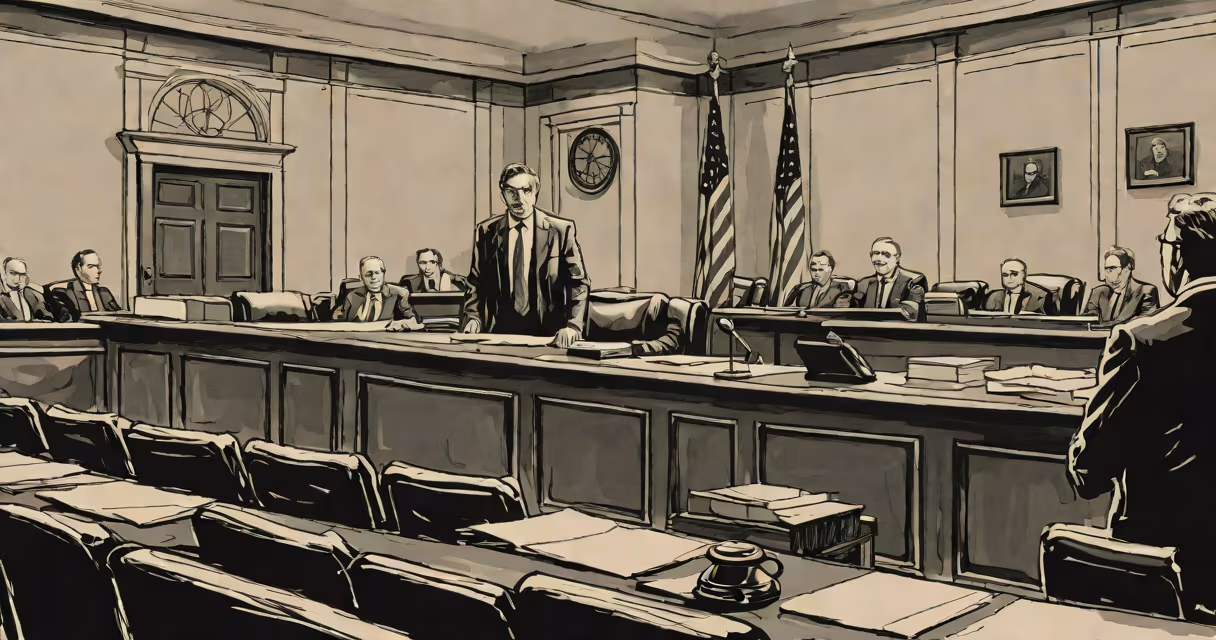
A criminal lawyer meaning refers to a licensed attorney who specializes in defending individuals and organizations charged with violating criminal law. These professionals represent clients during investigations, arrests, trials, and appeals, ensuring their rights are upheld under the U.S. Constitution.
Criminal lawyers work within a system designed to protect the accused. They do not decide guilt or innocence-they ensure the state follows proper procedures. Their role begins when someone is arrested or formally charged with a crime, ranging from misdemeanors like petty theft to felonies such as armed robbery or drug trafficking.
The American Bar Association defines criminal defense as "the protection of individual rights against government power." This includes challenging evidence, cross-examining witnesses, and negotiating plea deals. A criminal lawyer meaning centers on advocacy, not judgment.
Criminal lawyers begin their work during the investigation phase. If police suspect a person of a crime, the lawyer may intervene to prevent unlawful searches or coerced confessions. For example, in *Miranda v. Arizona* (1966), the Supreme Court ruled that suspects must be informed of their right to remain silent and to legal counsel. A criminal lawyer ensures this right is enforced.
Once formal charges are filed, the lawyer reviews the prosecution's evidence. They examine police reports, forensic results, witness statements, and surveillance footage. If inconsistencies exist-such as a missing alibi or unreliable eyewitness testimony-the lawyer challenges the case's foundation.
During trial, the criminal lawyer presents arguments, calls expert witnesses, and cross-examines prosecution witnesses. They may argue that evidence was obtained illegally, which makes it inadmissible under the exclusionary rule. In *Mapp v. Ohio* (1961), the Court held that evidence seized without a warrant cannot be used in court. A criminal lawyer uses rulings like this to weaken the prosecution's case.
Criminal law covers hundreds of offenses. Lawyers often specialize based on the severity and nature of the charge. The table below outlines common categories:
| Type of Crime | Examples | Typical Defense Strategy |
|---|---|---|
| Misdemeanor | Simple assault, DUI, trespassing | Plea negotiation, reduced charges, diversion programs |
| Felony | Armed robbery, fraud, burglary | Challenging evidence, proving reasonable doubt, expert testimony |
| White-collar | Embezzlement, insider trading, tax evasion | Complex financial analysis, regulatory compliance defense |
| Violent crime | Assault with a deadly weapon, homicide | Self-defense claims, alibi evidence, mental health evaluations |
Some criminal lawyers focus exclusively on federal cases. These involve violations of U.S. laws, such as immigration offenses, cybercrime, or terrorism. Federal cases often carry longer sentences and stricter rules. A criminal lawyer handling a federal case must understand statutes like the Federal Sentencing Guidelines, which determine punishment ranges based on offense level and criminal history.
Not all criminal lawyers handle violent or complex cases. Some specialize in traffic violations or minor drug possession. These attorneys typically negotiate with prosecutors to reduce fines or avoid jail time through diversion programs. For example, a first-time marijuana possession charge in California may result in deferred adjudication and expungement if the defendant completes community service.
Criminal lawyer meaning is often misunderstood. Many assume these attorneys only defend guilty people. But the law requires that everyone, regardless of guilt, receives a fair trial. As Justice Thurgood Marshall wrote in *Gideon v. Wainwright* (1963), "Lawyers are essential to justice because the poor cannot afford them." Without criminal lawyers, the system would fail to uphold due process.
Another confusion arises between criminal lawyers and prosecutors. Prosecutors represent the state and seek convictions. Criminal lawyers represent the accused. They operate on opposite sides of the same legal system. A prosecutor files charges; a criminal lawyer challenges them. Both are necessary for balance.
Some confuse criminal lawyers with civil lawyers. Civil cases involve disputes between parties-like breach of contract or personal injury. Criminal cases involve the government prosecuting individuals for breaking laws. A criminal lawyer cannot handle a divorce or a car accident claim. The skill sets differ.
One non-obvious fact: many criminal lawyers do not go to trial. According to the Bureau of Justice Statistics, over 90% of federal criminal cases end in plea bargains. A criminal lawyer meaning includes negotiating these agreements to secure better outcomes-shorter sentences, reduced charges, or probation instead of prison.
In 2021, John Doe was arrested in Chicago on suspicion of possessing 1.2 kilograms of cocaine. He had no prior record. Police claimed he was seen near a stash house and matched the description of a suspect. The prosecution sought a mandatory minimum sentence of five years under federal law.
John hired a criminal lawyer specializing in federal drug cases. The attorney reviewed the search warrant and discovered it lacked probable cause. The officer had relied on an anonymous tip without corroboration. Under the Fourth Amendment, this violated the exclusionary rule.
The lawyer filed a motion to suppress the evidence. The judge agreed. Without the drugs, the prosecution's case collapsed. The charges were dismissed. John walked free after 72 hours in custody.
This case illustrates how a criminal lawyer meaning extends beyond courtroom performance. It includes procedural expertise, constitutional interpretation, and strategic timing. The outcome wasn't decided by emotion-it was shaped by law.
Anyone arrested or questioned by law enforcement should consult a criminal lawyer immediately. Delaying contact risks waiving rights. The Fifth Amendment protects against self-incrimination. Speaking without legal counsel can lead to admissions used against you.
If you're facing charges, start by contacting a licensed attorney. Ask about their experience with similar cases. Look for credentials such as board certification in criminal law from the National Board of Trial Advocacy. You can also check disciplinary records via your state bar association.
Understanding the difference between legal terms matters. For instance, "G-up" in slang refers to a sudden surge in energy or motivation. It has no relation to legal practice. Confusing "G-up" with legal terminology can lead to misunderstanding. Always verify definitions through official sources.
The criminal lawyer meaning is not about defending evil. It's about enforcing fairness. Every person accused of a crime deserves representation. That principle is foundational to the U.S. justice system.