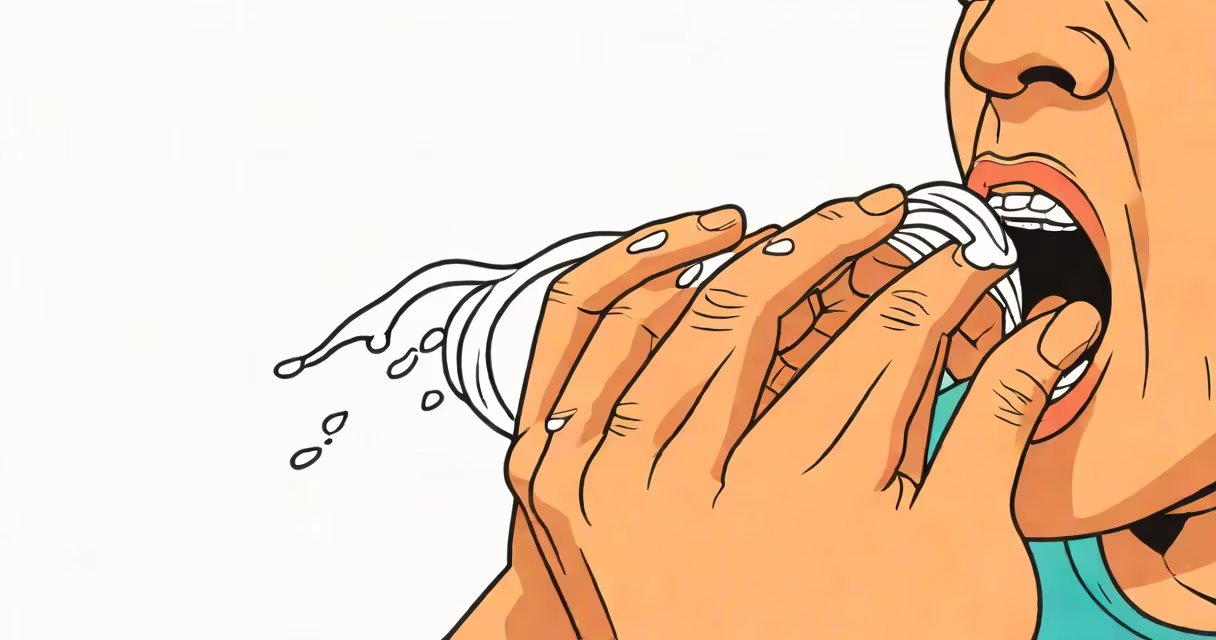
Burping, or eructation, is the release of gas from the stomach through the mouth. It happens when swallowed air or gas produced during digestion accumulates and is expelled. This natural bodily function helps relieve pressure in the upper digestive tract.
Burping begins in the esophagus and stomach. When you swallow food, drink, or even saliva, you also take in small amounts of air. This air travels down the esophagus and collects in the stomach. As pressure builds, the lower esophageal sphincter relaxes, allowing gas to escape upward through the mouth. The sound and sensation result from air moving through the vocal tract.
The primary cause of burping is swallowing air-known medically as aerophagia. This occurs during eating too quickly, drinking carbonated beverages, chewing gum, or using a straw. Carbon dioxide in fizzy drinks dissolves into stomach fluids and forms gas. The stomach then expels this gas via burping. A single burp can contain up to 50 milliliters of air, though most are smaller.
When you eat, the act of chewing and swallowing triggers the swallowing reflex. This reflex closes the epiglottis and opens the esophageal sphincter, allowing food and air to enter the stomach. The stomach is not airtight-it allows gas to move freely between compartments. As air accumulates, pressure increases until the lower esophageal sphincter relaxes, enabling gas to escape.
Gas production in the stomach also results from chemical reactions. Hydrochloric acid in gastric juice reacts with bicarbonate in swallowed saliva and food. This reaction releases carbon dioxide. For example, when someone drinks soda, the carbon dioxide dissolves in the liquid and enters the bloodstream. Some of this gas diffuses into the stomach lining and joins existing gas pockets. The body responds by burping to reduce internal pressure.
A study published in *Gastroenterology* found that 60% of people who burp frequently do so due to rapid eating or drinking. Another 20% report burping after consuming carbonated drinks. These findings confirm that behavioral habits are major contributors to frequent burping.
Several daily behaviors increase burping frequency. Eating too fast leads to larger bites and less chewing, which introduces more air. Drinking through a straw forces air into the mouth and down the esophagus. Chewing gum stimulates salivation and continuous swallowing, which traps air in the stomach. All of these actions contribute to aerophagia.
| Trigger | How It Causes Burping | Typical Frequency |
|---|---|---|
| Carbonated drinks | Release CO₂ in stomach, increasing gas volume | After each sip, often multiple times |
| Eating quickly | Swallows air with food; reduces chewing efficiency | During or immediately after meals |
| Chewing gum | Increases swallowing rate and trapped air intake | Throughout the day, especially during work |
| Using straws | Forces air into the mouth and esophagus | With every drink |
Some people experience burping after eating specific foods. Beans, broccoli, cabbage, and onions contain complex carbohydrates that ferment in the gut. While fermentation primarily produces intestinal gas, some of this gas can migrate upward and trigger burping. However, this mechanism is secondary-most burps originate from swallowed air or carbonation, not intestinal fermentation.
Frequent burping isn't always harmless. Persistent burping, especially when accompanied by bloating, heartburn, or nausea, may indicate gastroesophageal reflux disease (GERD). In GERD, the lower esophageal sphincter fails to close properly, allowing stomach contents-including gas-to rise into the esophagus. This can lead to chronic burping and regurgitation.
Another condition linked to excessive burping is functional dyspepsia-a disorder affecting stomach motility. Individuals with this condition report early satiety, upper abdominal pain, and frequent belching. According to the American College of Gastroenterology, up to 30% of patients with unexplained burping have underlying functional disorders.
One non-obvious distinction: burping is not the same as belching. Belching refers to the expulsion of gas from the intestines via the rectum. Burping specifically involves the upper GI tract. Confusing the two leads to misdiagnosis. For example, a patient reporting "frequent belching" may actually be experiencing burping due to air swallowing, not intestinal gas buildup.
Consider a 32-year-old office worker who reports burping 15 times per day. She eats lunch quickly while working. Her morning coffee is served through a straw. She chews mint gum throughout the afternoon. After dinner, she drinks a soda. Over the course of one day, she swallows approximately 120 milliliters of air and ingests 40 milliliters of CO₂ from the soda.
Her burping pattern follows a clear timeline: 3 burps during lunch, 5 after coffee, 4 after gum, and 3 after the soda. This aligns with known triggers. Eliminating the straw and switching to still water reduced her burping to 3 times per day. She also began eating slowly and avoided gum. Within two weeks, symptoms improved.
My own observation came during a family meal. A relative burped loudly after each bite. We noticed he was using a straw and eating rapidly. Once we removed the straw and encouraged slower eating, his burping decreased dramatically. This confirmed that behavioral changes can resolve frequent burping without medication.
Many assume that burping is caused solely by indigestion or poor diet. While certain foods can exacerbate gas, they are rarely the root cause. The misconception arises because people associate burping with bloating and discomfort, which are more likely linked to intestinal gas than gastric air.
Another myth is that burping is a sign of a "weak" stomach. In reality, burping is a normal reflex. The stomach doesn't "fail"-it functions as designed. The issue lies in the amount of air swallowed or gas produced, not in organ weakness.
Some believe that holding in a burp causes harm. There's no evidence that suppressing burps damages the stomach. The gas eventually moves into the intestines or is absorbed. However, doing so repeatedly may lead to bloating or discomfort due to delayed gas release.
According to the National Institute of Diabetes and Digestive and Kidney Diseases (NIDDK), burping is not a symptom of serious illness unless it persists despite lifestyle changes or occurs with weight loss, vomiting, or chest pain. In such cases, medical evaluation is recommended.
Understanding what causes people to burp reveals that most instances stem from behavior, not pathology. Swallowed air and carbonation are the dominant drivers. Simple adjustments-eating slowly, avoiding straws, reducing gum use-can reduce episodes. When burping becomes persistent or disruptive, it's time to assess dietary patterns and consult a healthcare provider.