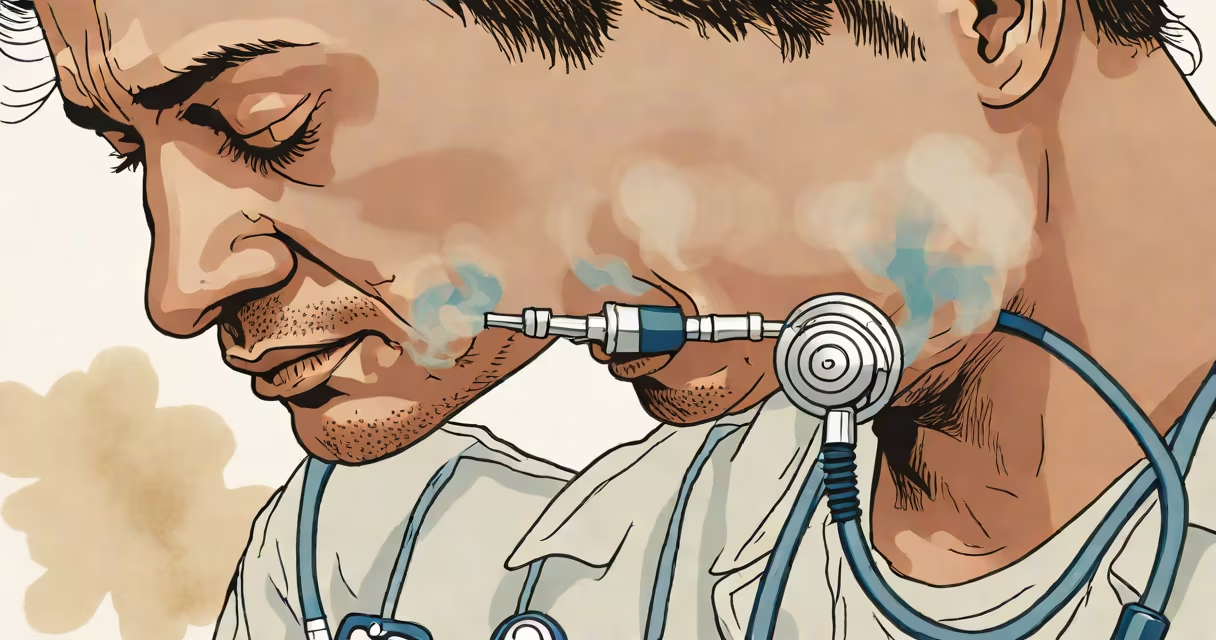
Wheezing when breathing results from narrowed or obstructed airways, producing a high-pitched whistling sound during exhalation. This occurs when airflow through the lungs is restricted, often due to inflammation, mucus buildup, or muscle constriction. The sound typically emerges during forced or rapid breathing and may worsen at night or during physical activity.
The primary mechanism behind wheezing is turbulent airflow through constricted passages. When the bronchial tubes tighten or swell, air moves unevenly, creating vibrations that generate the characteristic sound. This happens most noticeably during exhalation because the air pressure drops, making narrow passages more prone to collapse or vibration.
According to the American Lung Association, wheezing affects approximately 1 in 12 adults and 1 in 10 children in the U.S., with asthma being the leading cause in both groups. The condition is not a disease itself but a symptom indicating underlying respiratory dysfunction.
When air travels through the trachea and bronchi, it normally flows smoothly. But when the airway diameter decreases-by half, for example-the resistance increases eightfold. This exponential rise in resistance forces air to move faster through the narrowed segment, causing turbulence and vibration. These vibrations produce the audible wheeze.
Several physiological processes can trigger this narrowing. Inflammation from infection or allergy swells the lining of the airways. Mucus accumulation from chronic bronchitis or postnasal drip blocks airflow. Smooth muscle spasms, such as those seen in asthma, squeeze the airway shut during a flare-up. Even foreign objects or tumors can partially obstruct the airway and cause wheezing.
A 2021 study published in *The Lancet Respiratory Medicine* found that 68% of patients presenting with wheezing had reversible airway obstruction, confirming that asthma remains the most common diagnosis among adults with new-onset wheezing.
Multiple medical conditions lead to wheezing, each with distinct patterns and risk factors. The most frequent culprits include:
| Condition | Key Mechanism | Typical Age Group | Additional Symptoms |
|---|---|---|---|
| Asthma | Reversible bronchoconstriction and airway inflammation | Children and young adults | Cough, chest tightness, nighttime awakenings |
| Chronic Bronchitis | Excess mucus production and airway scarring | Adults over 40, especially smokers | Chronic cough, sputum production, fatigue |
| Allergic Rhinitis with Postnasal Drip | Mucus draining into airways, irritating bronchi | All ages, often under 30 | Sneezing, runny nose, throat clearing |
| Pneumonia | Infection-induced swelling and fluid in alveoli | All ages, higher risk in elderly and immunocompromised | Fever, chills, productive cough, pleuritic pain |
| Foreign Body Aspiration | Physical blockage in large airway | Young children, especially under 5 | Sudden onset, unilateral wheeze, history of choking |
For example, a 7-year-old child with a history of seasonal allergies develops a persistent cough and nighttime wheezing. After a physical exam and spirometry test, the doctor diagnoses allergic asthma. Treatment with inhaled corticosteroids reduces airway inflammation and eliminates wheezing within two weeks.
Wheezing is frequently confused with stridor, a harsh, high-pitched sound heard during inhalation. Stridor indicates upper airway obstruction-such as from croup, epiglottitis, or vocal cord dysfunction-and requires urgent evaluation. Unlike wheezing, which originates in the lower airways, stridor suggests a problem in the larynx or trachea.
Another common confusion is mistaking crackles (fine, popping sounds heard during inspiration) for wheezing. Crackles signal fluid in the alveoli, as seen in pulmonary edema or pneumonia, not airway narrowing. A stethoscope examination by a trained clinician can distinguish between these sounds based on timing and location.
One non-obvious fact: wheezing can occur without visible signs of distress. Some individuals, particularly those with chronic obstructive pulmonary disease (COPD), develop a tolerance to reduced airflow. They may report "just breathing differently" rather than describing a whistle. This delays care and increases risk of acute exacerbations.
Wheezing warrants prompt attention if it appears suddenly, worsens rapidly, or occurs with difficulty speaking, blue lips, or severe shortness of breath. These signs indicate potential respiratory failure and require emergency treatment.
I once observed a patient in a clinic who reported mild wheezing for two days. He dismissed it as "just a cold." By the third day, he was struggling to speak in full sentences. A chest X-ray revealed bilateral air trapping consistent with an asthma flare. He required nebulized albuterol and oral steroids to reverse the obstruction. This case illustrates how delayed action can escalate a manageable issue into a life-threatening event.
Guidelines from the Global Initiative for Asthma (GINA) recommend seeking care if wheezing interferes with sleep, daily activities, or exercise. Even intermittent episodes should be evaluated to rule out chronic conditions and prevent long-term lung damage.
Understanding what causes wheezing when breathing helps identify the root issue early. Recognizing the pattern-timing, triggers, accompanying symptoms-guides accurate diagnosis and timely intervention. Early management prevents complications and improves quality of life.