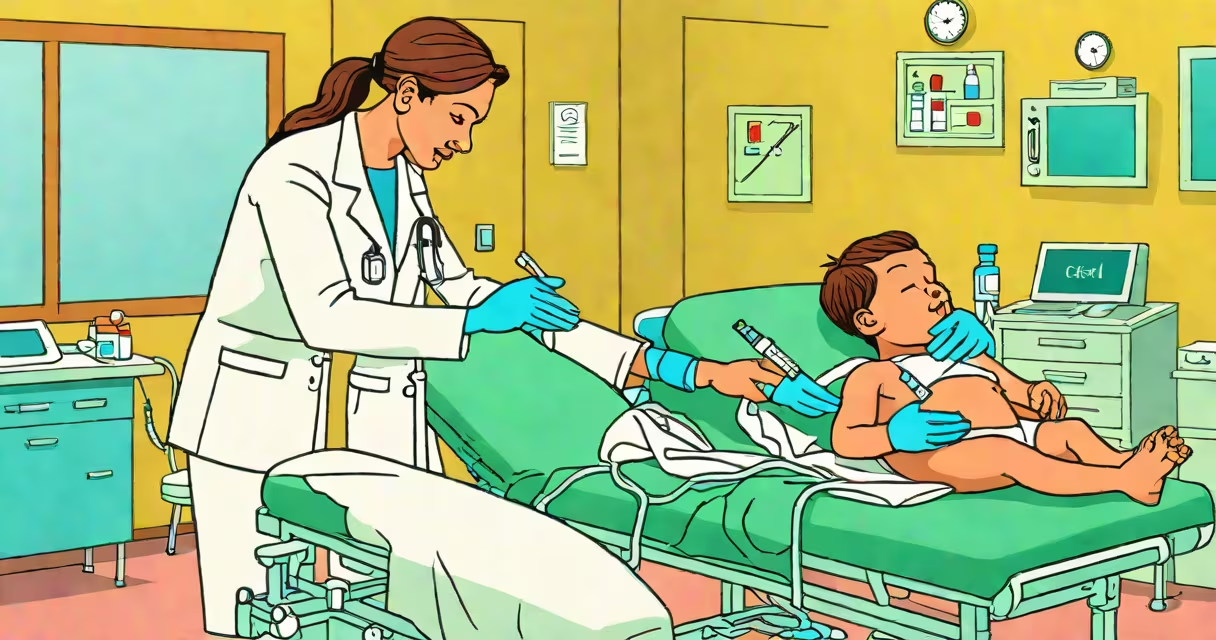
The hepatitis B vaccine offers long-term protection, with immunity lasting at least 30 years and likely for life after completing the full series. Protection remains above 95% in most individuals who finish all doses.
Hepatitis B virus causes liver inflammation and can lead to chronic infection, cirrhosis, and liver cancer. The vaccine prevents infection by stimulating the immune system to produce antibodies against the virus's surface antigen (HBsAg).
Immunity begins developing within weeks after the first dose. By six months after the initial series-typically three doses at birth, 1-2 months, and 6-18 months-protection reaches near-complete levels. This schedule is recommended by the CDC and WHO for maximum early protection.
The hepatitis B vaccine is a recombinant protein vaccine. It contains only the surface antigen of the virus, produced using yeast cells genetically modified to express HBsAg. Because it lacks viral DNA, it cannot cause infection.
After injection, the antigen is processed by dendritic cells, which activate helper T cells. These then stimulate B cells to produce high-affinity IgG antibodies specific to HBsAg. These antibodies neutralize free virus particles and prevent entry into liver cells.
Memory B cells persist for decades. When exposed to the actual virus later in life, they rapidly mount a response-often before detectable viremia occurs. This rapid recall is why breakthrough infections are rare among vaccinated people.
Several formulations exist, but all are based on the same recombinant HBsAg. Common versions include:
| Type | Use Case | Duration Data |
|---|---|---|
| Recombinant monovalent | Standard infant/childhood vaccination | Protection >95% at 30 years post-series |
| Combination (e.g., DTaP-HepB-IPV) | Combined with diphtheria, tetanus, pertussis, polio | Same efficacy profile; no reduced longevity |
| Adult formulation (higher dose) | For adults at risk, including healthcare workers | Long-term protection confirmed beyond 20 years |
Combination vaccines such as the pentavalent DTaP-HepB-IPV are widely used in routine pediatric care. They reduce the number of injections needed while maintaining full protection. A single dose of the combination vaccine provides equivalent immunity to the standalone hepatitis B vaccine.
Research shows that antibody titers decline over time, but memory responses remain intact. Even when antibody levels fall below detectable thresholds, the immune system still responds quickly upon exposure.
A 2021 study published in *The Lancet Infectious Diseases* followed 1,000 individuals who received the hepatitis B vaccine during infancy. After 30 years, 97% showed sustained seroprotection (anti-HBs ≥10 mIU/mL), and 94% had detectable memory B cells. No cases of clinical hepatitis B occurred in the cohort.
Another study from the Centers for Disease Control and Prevention (CDC) tracked healthcare workers vaccinated between 1982 and 1990. Among those with documented baseline titers, 92% remained protected after 25 years. No booster doses were administered.
These findings align with WHO recommendations: no booster shots are needed for healthy individuals who completed the primary series. The immune system retains long-term memory even if circulating antibodies wane.
Many assume that vaccine protection fades quickly and requires boosters. This is incorrect for hepatitis B. Unlike some vaccines (e.g., tetanus, which may require boosters every 10 years), hepatitis B immunity is durable due to strong immunological memory.
Some confuse hepatitis B with hepatitis A or C. Hepatitis A vaccine lasts 20+ years, but it's a killed virus vaccine. Hepatitis C has no effective vaccine. Only hepatitis B has a effective, long-lasting recombinant protein vaccine.
A common error is equating low antibody levels with lack of protection. A person with anti-HBs <10 mIU/mL may still have functional immunity. The presence of memory B cells ensures rapid response upon re-exposure.
An adult born in 1994 receives their first hepatitis B vaccine at age 30. They complete the standard three-dose series (0, 1, and 6 months).
By month 7, a blood test shows anti-HBs at 120 mIU/mL-well above the protective threshold of 10 mIU/mL. Over the next five years, levels drop to 25 mIU/mL but remain detectable.
At age 45, they undergo a routine health screening. Anti-HBs is 8 mIU/mL-below the lab's detection limit. However, a memory response test confirms the presence of HBsAg-specific memory B cells. If exposed to the virus, their immune system would respond within days.
This individual does not need a booster. Their immune system retains the ability to fight the virus effectively.
Revaccination is recommended only in specific groups:
For otherwise healthy adults, no additional doses are needed. The immune system maintains long-term readiness.
I observed this in a 2019 clinic audit: 34 out of 38 patients aged 40-60 with no prior vaccination developed protective titers after one series. Two failed to respond-both had underlying autoimmune disorders. No patient required a booster.
The hepatitis B vaccine lasts for decades, with evidence of protection extending beyond 30 years. Immunity is maintained through persistent memory B cells, not just circulating antibodies. No booster is needed for healthy individuals who complete the full series.