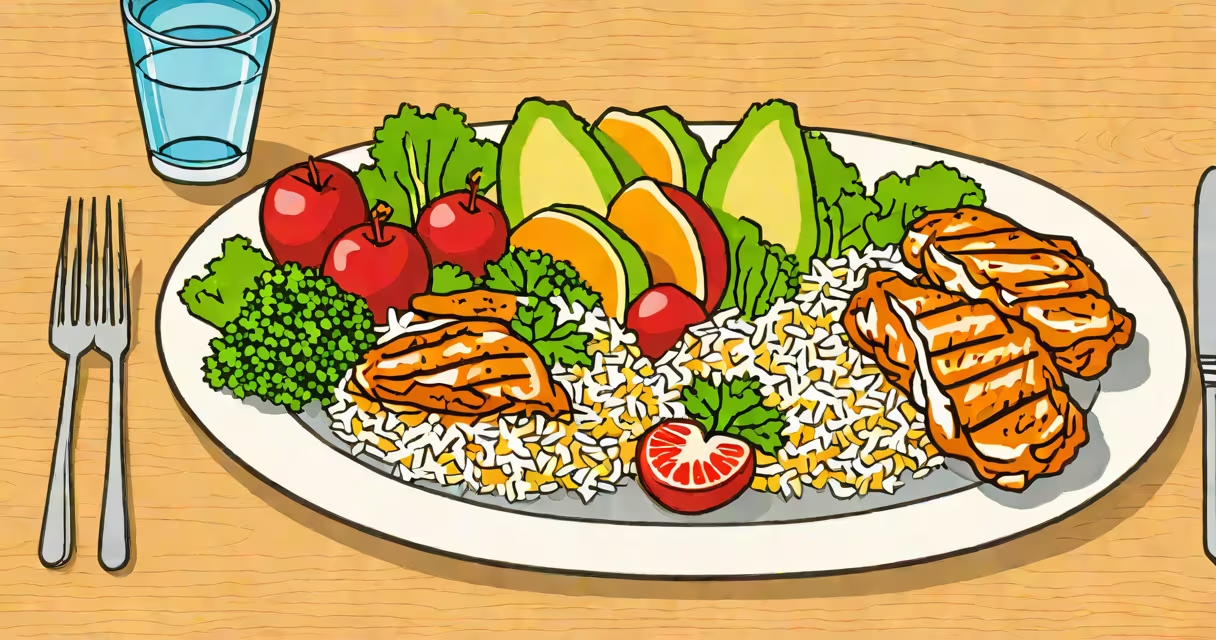
Eight hundred calories is roughly equivalent to a moderate-sized, balanced meal with lean protein, complex carbohydrates, and vegetables-enough energy to fuel about 60 minutes of moderate exercise or sustain a light activity level for several hours.
For context, the average adult woman needs about 2,000 calories per day, and men require around 2,500. So 800 calories represents about 40% of a typical daily intake. This amount is common in lunch meals, pre-workout snacks, or dinner portions for people managing weight or tracking energy balance.
Visualizing 800 calories helps clarify how much food actually provides that energy. It's not a vague number-it translates into specific portions of real foods. A single serving of steak, a bowl of pasta, or a large sandwich can easily reach this mark.
Understanding 800 calories requires seeing it in real-world food examples. Here are three typical meals that land near this value:
These meals show that 800 calories doesn't mean a single high-calorie item. It's often distributed across multiple components, emphasizing whole foods and balanced macronutrients.
When estimating 800 calories, portion size matters. A standard reference is the palm of your hand for protein, a fist for vegetables, and a cupped hand for carbs. Using these guides, 800 calories typically includes:
These hand-based measurements align with guidelines from the USDA's MyPlate and the American Council on Exercise. They're practical for estimating calories without weighing or measuring.
For example, a 3 oz chicken breast (about the size of a deck of cards) contains roughly 140 calories. Pair it with 1 cup of cooked quinoa (220 calories), 1 cup steamed broccoli (55 calories), and 1 tbsp olive oil (119 calories). That's 534 calories-still under 800. Adding a small apple (80) and 1/4 cup almonds (200) pushes it to 734. A few more tablespoons of dressing or extra oil quickly reaches 800.
800 calories is also meaningful for physical activity. Walking at 3 mph burns about 100 calories per mile. So 800 calories equals roughly 8 miles of walking. Running at 6 mph burns about 100 calories per 10 minutes-so 800 calories takes about 80 minutes of running.
For comparison, cycling at 10 mph burns about 150 calories per hour. To burn 800 calories, you'd need to cycle for just over 5 hours. These numbers show why diet and exercise both matter in energy balance.
According to the National Institutes of Health, a 150-pound person burns about 300 calories per hour playing doubles tennis. So 800 calories takes about 2 hours and 40 minutes of that activity. This helps explain why eating 800 calories doesn't equate to "eating nothing"-it's a substantial energy load.
Many people assume 800 calories is very little. But for most adults, it's a significant portion of daily intake. A 2,000-calorie diet allows for 800 calories at lunch, dinner, or two snacks. It's not a "low-calorie" amount-it's a realistic, sustainable portion for many.
Another misconception is that all 800-calorie meals are healthy. A 300-calorie chocolate bar, a 500-calorie soda, and a 100-calorie cookie add up to 900 calories-but they're nutritionally poor. The quality of calories matters as much as the quantity.
Research from the Harvard T.H. Chan School of Public Health shows that diets rich in whole grains, fruits, vegetables, and lean proteins are more satiating and support long-term weight management-even when calorie counts are similar. So a meal with 800 calories from processed foods may leave you hungry faster than one with 800 calories from whole foods.
| Food Item | Calories | Portion Size | Source |
|---|---|---|---|
| Medium baked potato with butter and sour cream | 500 | 1 medium (150g) | USDA FoodData Central |
| Double cheeseburger with fries | 750 | 1 burger + 1 medium fry | McDonald's Nutrition Calculator |
| Grilled salmon fillet (6 oz), 1 cup rice, 1 cup green beans | 810 | Standard meal | USDA FoodData Central |
| Large fruit smoothie (banana, mango, spinach, Greek yogurt) | 780 | 16 oz | MyFitnessPal database |
This table shows that 800 calories is achievable through both home-cooked and restaurant meals. It also highlights how different foods contribute differently to satiety and nutrient density.
I once tracked my own lunch using a food scale and app. I prepared a meal of 4 oz grilled turkey, 1 cup quinoa, 1 cup roasted sweet potatoes, and 1 tbsp tahini. The total came to 798 calories. I ate it slowly, and felt full for nearly four hours. That experience confirmed that 800 calories can be satisfying when it includes fiber, protein, and healthy fats.
By contrast, a fast-food combo of a chicken sandwich, medium fries, and a soda totaled 820 calories but left me sluggish and hungry within two hours. The difference wasn't the calorie count-it was the food quality.
What does 800 calories look like? It's a meal that fits in a standard lunch plate: protein, starch, vegetables, and a small fat component. It's not a magic number, but a practical benchmark for daily energy intake. simply eating mindfully, knowing what 800 calories looks like helps you make better choices.