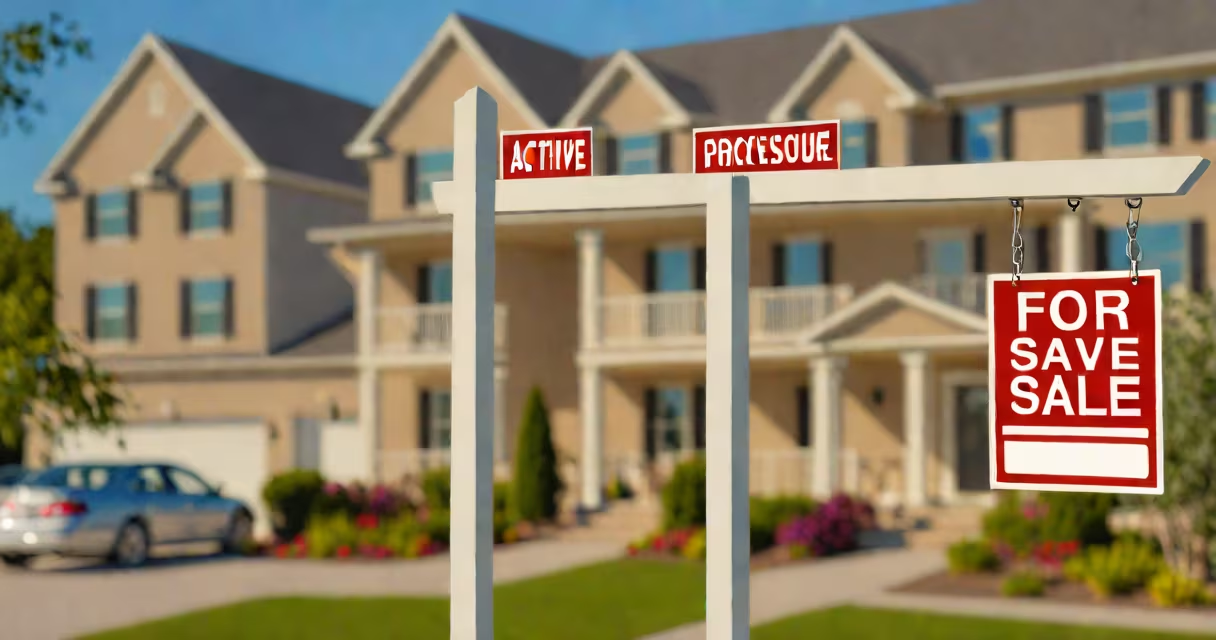
Active foreclosure occurs when a lender initiates legal action to reclaim a property because the borrower has failed to make mortgage payments for a sustained period, typically 90 days or more. This stage marks the formal start of the foreclosure process under state law.
The process begins when the lender files a notice of default with the county recorder's office. This public record triggers a timeline that varies by state but generally lasts between 60 and 180 days. During this window, the borrower may still cure the default by paying overdue amounts, including fees and interest. If no resolution occurs, the lender proceeds to the next phase: foreclosure sale.
According to the Urban Institute, nearly 1.2 million U.S. homes were in some stage of foreclosure in 2023, with active foreclosures representing about 35% of those cases. The National Association of Realtors confirms that active foreclosure is distinct from pre-foreclosure and post-foreclosure stages, each with different rights and responsibilities for borrowers.
Lenders follow a structured legal path to recover collateral when borrowers fall behind on payments. Once a borrower misses three consecutive monthly payments, the lender sends a notice of default. This document is filed with the local county land records office and serves as official notice that the borrower is in breach of contract.
After filing, the lender sets a date for a foreclosure sale-usually through a public auction. The sale date is published in local newspapers and posted on the property. Bidders include investors, banks, and individuals seeking discounted real estate. The highest bid wins, and if the sale price exceeds the outstanding loan balance, the surplus goes to the borrower. If not, the borrower remains liable for the deficiency.
For example, in California, a borrower who defaults on a $400,000 mortgage with $380,000 remaining balance may see the property sell for $360,000 at auction. The lender recovers $360,000, leaving a $20,000 gap. The borrower is still responsible for this amount unless discharged through bankruptcy.
U.S. states use two primary foreclosure models: judicial and non-judicial. Judicial foreclosure requires court involvement and is common in states like New York and Florida. Non-judicial foreclosure allows lenders to proceed without court approval, using power-of-sale clauses in the mortgage agreement. States such as Texas and Washington rely heavily on this method.
| State Type | Process | Typical Duration | Example State |
|---|---|---|---|
| Judicial | Court-supervised; borrower can contest | 12-24 months | New York |
| Non-Judicial | Direct sale via trustee; limited appeal rights | 6-12 months | Texas |
California uses a hybrid system. After the notice of default is recorded, the borrower has five months to cure the default. If not, the lender schedules a trustee's sale. The entire process typically takes 12 to 18 months from start to completion.
A lesser-known fact: some states allow borrowers to redeem the property after the sale through a "right of redemption." In states like Ohio and Indiana, borrowers have up to six months after the sale to repay the full amount owed and reclaim ownership. This right does not apply in all states, and the ability to redeem is often overlooked by homeowners facing eviction.
Many people assume that being in active foreclosure means immediate eviction. That is incorrect. The borrower retains possession until the foreclosure sale is finalized and the deed is transferred. In most cases, the borrower can remain in the home for several months after the process begins.
Another misconception is that the lender automatically takes possession of the home. Lenders do not occupy properties. Instead, they sell the property at auction or through a real estate agent after the sale. The borrower's credit score drops during this time-typically by 100 points or more-due to the public record of default.
Some confuse active foreclosure with short sales. A short sale involves the homeowner selling the property for less than the mortgage balance with lender approval. The lender agrees to accept the shortfall. In contrast, active foreclosure results in forced sale, often at a discount, with no control by the borrower.
In 2022, a single mother in Arizona lost her job and fell behind on her $320,000 mortgage. After missing four payments, the lender filed a notice of default. She received a 90-day grace period to catch up. She applied for forbearance but was denied due to income thresholds. The lender moved forward with a non-judicial foreclosure.
She continued living in the home while the process unfolded. Six months later, the property sold at auction for $280,000. The lender covered $25,000 in closing costs and legal fees, leaving a $15,000 deficiency. She negotiated a settlement with the lender to pay $5,000 in exchange for full release of liability. She later secured a rental unit with a low-income housing program.
This case illustrates that active foreclosure does not end with eviction. Borrowers retain options-even after the process begins-and outcomes depend on timely intervention.
Homeowners facing active foreclosure should contact a HUD-approved housing counselor immediately. These counselors offer free advice on loan modification, refinancing, or short sale negotiation. The U.S. Department of Housing and Urban Development reports that 70% of homeowners who work with counselors avoid foreclosure.
If you're managing a mortgage and notice signs of financial strain, consider exploring alternatives early. For instance, if your payment is 30% higher than your income, you may qualify for a loan modification under the Home Affordable Modification Program (HAMP), though eligibility has tightened since 2018.
Understanding what active foreclosure means helps you act before the situation escalates. Knowing your rights and available options can prevent long-term damage to your credit and housing stability.
For guidance on adjusting your vehicle maintenance schedule, reviewing oil viscosity ratings can help ensure engine longevity and performance.