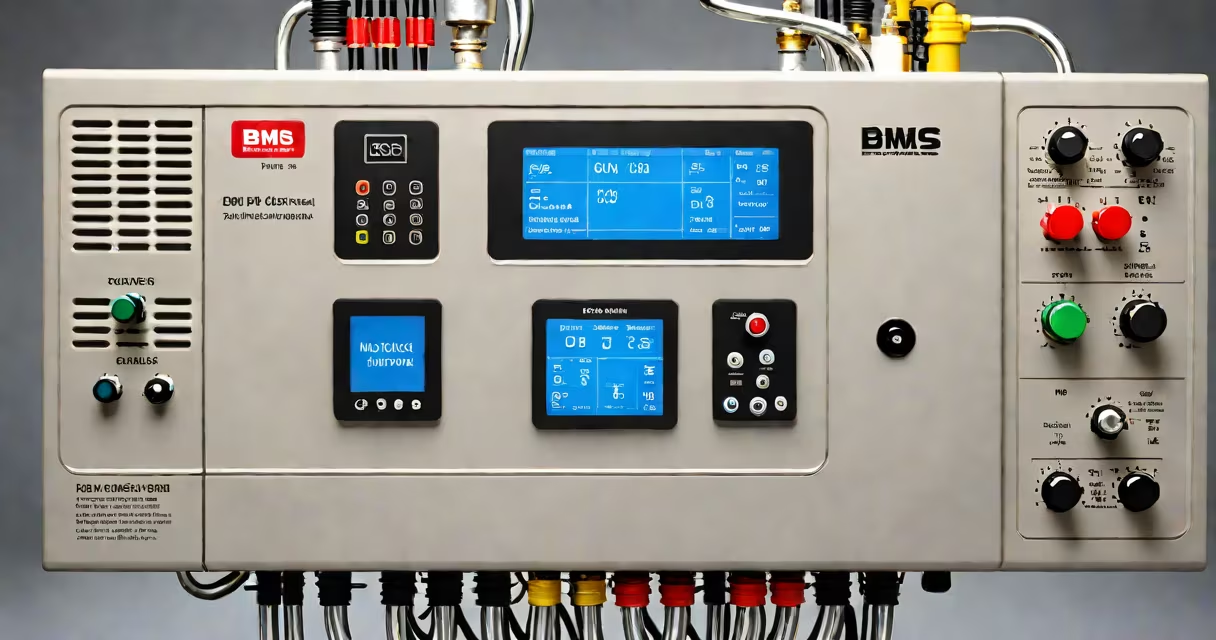
BMS stands for Building Management System in HVAC applications. It's a centralized digital platform that monitors and controls mechanical and electrical equipment in buildings, including heating, ventilation, air conditioning, lighting, and security systems.
BMS coordinates sensors, actuators, and controllers across a facility to maintain optimal indoor conditions while minimizing energy waste. It collects real-time data from devices such as thermostats, flow meters, and occupancy detectors, then adjusts system behavior automatically based on setpoints and schedules.
For example, a BMS can detect that a conference room is unoccupied and reduce HVAC output by 30%, saving energy without affecting comfort when people return. This level of automation is standard in hospitals, data centers, and large office complexes.
A BMS operates through a network of field devices connected via protocols like Modbus, BACnet, or LonWorks. These devices send status updates and receive commands from a central server or workstation.
The system runs on software that processes inputs and triggers actions. If a zone's temperature exceeds the setpoint, the BMS sends a signal to adjust the damper position or change the chiller's output. All changes are logged for auditing and troubleshooting.
Modern BMS platforms support remote access via web browsers or mobile apps. Facility managers can view system performance from anywhere, receive alerts for equipment failures, and generate reports on energy consumption.
BMS systems consist of five primary elements: sensors, controllers, actuators, communication networks, and the central interface.
| Type | Function | Example Device |
|---|---|---|
| Sensors | Detect environmental conditions | Temperature probe, CO₂ monitor |
| Controllers | Process data and issue commands | Direct Digital Controller (DDC) |
| Actuators | Move physical components | Motorized valve, damper actuator |
| Networks | Transfer data between devices | BACnet IP gateway |
| Interface | Display and manage system settings | Web-based dashboard |
There are two main deployment models: standalone BMS and integrated enterprise systems. Standalone systems serve smaller facilities like schools or retail stores. Integrated systems connect multiple buildings and support advanced analytics, often used in campuses or corporate headquarters.
Some BMS platforms offer predictive maintenance features. By analyzing historical data, they can flag potential issues-like a failing fan motor-before failure occurs, reducing downtime and repair costs.
Many assume BMS is synonymous with HVAC control alone. That's incorrect. While HVAC is a major function, BMS manages lighting, fire alarms, elevators, and access control too. A single BMS can oversee dozens of subsystems.
Another misconception is that BMS requires constant manual oversight. In reality, most modern systems operate autonomously. They follow programmed logic and only notify staff during anomalies or scheduled maintenance.
There's also confusion between BMS and BAS (Building Automation System). While the terms are sometimes used interchangeably, BAS typically refers to the broader concept of automated building functions, whereas BMS emphasizes monitoring and control of mechanical systems specifically. According to ASHRAE Standard 135, BACnet-a key protocol in BMS-defines interoperability between devices regardless of manufacturer.
In a 2021 study by the U.S. Department of Energy, commercial buildings using BMS reduced HVAC energy use by an average of 22% compared to those without automated controls. The savings came from optimized start-stop cycles, changing setpoint adjustments, and load balancing across zones.
I once worked on a retrofit project at a 12-story office building in Chicago. The original HVAC system ran continuously during business hours, leading to high utility bills. After installing a BMS with occupancy sensors and time-based schedules, we cut cooling energy usage by 31% in the first quarter. The payback period was under 2.5 years.
Energy efficiency isn't the only benefit. BMS improves occupant comfort by maintaining consistent temperatures and air quality. In healthcare facilities, precise control prevents microbial growth and supports patient recovery.
When selecting a BMS, ensure compatibility with existing equipment. Not all legacy HVAC units support modern protocols. Retrofitting may require adding gateways or upgrading control panels.
BMS doesn't replace individual HVAC components-it coordinates them. A chiller still cools water, but the BMS decides when to turn it on based on demand forecasts, ambient temperature, and electricity pricing.
Finally, BMS is not a one-size-fits-all solution. Its complexity varies widely. A small retail store might use a basic BMS with a few sensors and a single controller. A university campus could deploy a cloud-based BMS with hundreds of nodes, AI-driven scheduling, and integration with weather forecasting services.
For facility operators, understanding what BMS stands for in HVAC is the first step toward smarter, more efficient building operations. It's not just a tool-it's the nervous system of modern buildings.