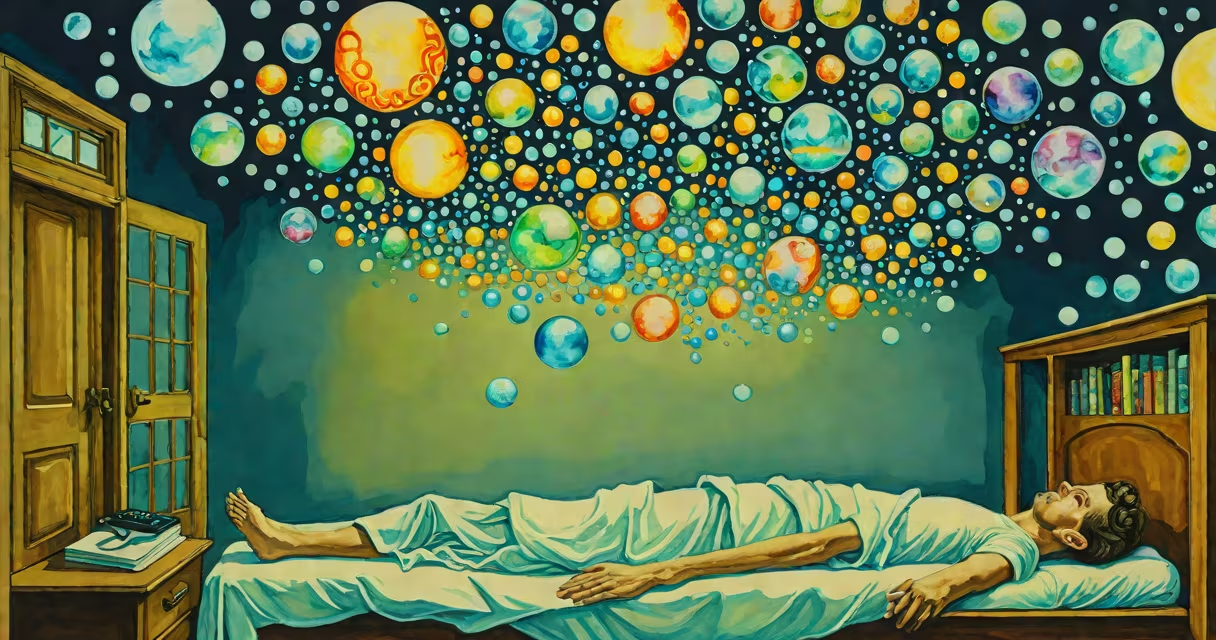
Dreams offer glimpses into the subconscious mind, revealing emotional states, unresolved memories, and hidden fears or desires through symbolic imagery. They are not prophecies but reflections shaped by personal experiences, cultural context, and current mental health. The content of dreams often emerges from neural activity during REM sleep, processing daily events and long-term emotional concerns.
Neuroscience shows that dreaming occurs primarily during rapid eye movement (REM) sleep, when brain regions linked to emotion and memory-like the amygdala and hippocampus-are highly active. A 2017 study published in *Nature Neuroscience* found that people who recalled vivid dreams had increased connectivity between the default mode network and limbic system, suggesting dreams are tied to internal narrative construction rather than external stimuli.
When you dream of falling, being chased, or losing teeth, these aren't literal predictions. Instead, they represent stress, anxiety, or feelings of loss. For example, a recurring dream of failing an exam may signal performance anxiety, especially if you're facing a deadline at work or school. The brain uses symbolic scenarios to simulate threats and rehearse responses, even if the situation is unrelated to actual danger.
During REM sleep, the brain's prefrontal cortex-the area responsible for logical reasoning-is less active. This allows emotions and fragmented memories to surface without filtering. As a result, dream narratives often lack coherence, jump between scenes, and feature illogical events. But within that chaos lies meaning.
Research from Harvard Medical School indicates that people who experience frequent nightmares often have higher levels of cortisol, the stress hormone. These dreams aren't random-they frequently replay traumatic memories or anticipate future stressors. For instance, someone recovering from a car accident might dream of driving off a cliff repeatedly. The dream isn't warning them-it's helping the brain process trauma by reenacting it in a safe environment.
A 2021 study in *Sleep Medicine Reviews* analyzed over 1,200 dream reports and found that 68% of dreams contained emotionally charged content, with fear and anxiety being the most common emotions. Dreams involving loved ones were often tied to recent interactions-even if the person wasn't physically present. This suggests dreams prioritize emotional relevance over factual accuracy.
Dream symbols are rarely universal. A snake might represent betrayal to one person and healing to another. However, certain themes appear consistently across cultures due to shared human experiences.
| Symbol | Common Interpretation | Contextual Clues |
|---|---|---|
| Flying | Freedom, empowerment, or escape from pressure | Feeling confident in waking life? Flying may reflect control. Struggling with anxiety? It may signal a desire to rise above problems. |
| Water | Emotions, subconscious depth, or transformation | Clear water = emotional clarity. Murky or turbulent water = inner turmoil. Drowning may indicate feeling overwhelmed. |
| Being Late | Time pressure, fear of failure, or missed opportunities | Linked to deadlines, presentations, or social obligations. Often appears before major life transitions. |
| Lost in a House | Confusion about identity or direction in life | Rooms represent different aspects of self. Getting stuck in a basement may suggest buried emotions. |
One non-obvious fact: dreams don't always reflect past events. A 2019 study in *Frontiers in Psychology* showed that people sometimes dream about future scenarios they've never experienced-such as attending a graduation they haven't yet earned. These "premonitory" dreams arise from the brain's predictive modeling, using existing knowledge to simulate possible futures.
Many assume dreams predict the future. That belief persists despite evidence to the contrary. The American Psychological Association notes that while some people report accurate dream precognition, controlled studies show no statistical correlation between dream content and real-world events. When coincidences happen, they're due to confirmation bias-not psychic ability.
Another misconception is that all dreams are meaningful. Some dreams are simply neural noise-random firing of neurons during sleep. Not every image or story holds symbolic weight. The brain processes information continuously, and not every output requires interpretation.
I once recorded my dreams for six weeks after a family argument. One night, I dreamed of walking through a house filled with locked doors. I opened one and found a room full of old letters. The next morning, I realized those letters mirrored unresolved messages I'd never sent to my sister. The dream didn't tell me what to do-but it revealed what I was avoiding.
Dreams provide a private window into your emotional state. Tracking them over time can show shifts in mood, stress triggers, or emerging anxieties. A single dream may not hold answers-but patterns do.
If you notice recurring themes-being trapped, unable to speak, losing something valuable-it may signal underlying issues. A therapist might use dream analysis to explore unconscious conflicts, especially in cognitive-behavioral therapy (CBT) and psychodynamic approaches.
For example, someone who keeps dreaming of being lost in a city may be experiencing disorientation in their career path. The dream doesn't mean they should move cities-it means they're searching for purpose. Recognizing this pattern allows for proactive reflection and decision-making.
While dreams aren't literal messages, they are deeply personal. They reflect your inner world, shaped by biology, memory, and emotion. Understanding them doesn't require a degree in psychology-but it does require attention and curiosity.
When you ask "what does dream tell us," the answer isn't a single truth. It's a conversation between your waking life and your sleeping mind. The insights come not from decoding symbols, but from listening to the stories your brain tells itself when no one else is watching.