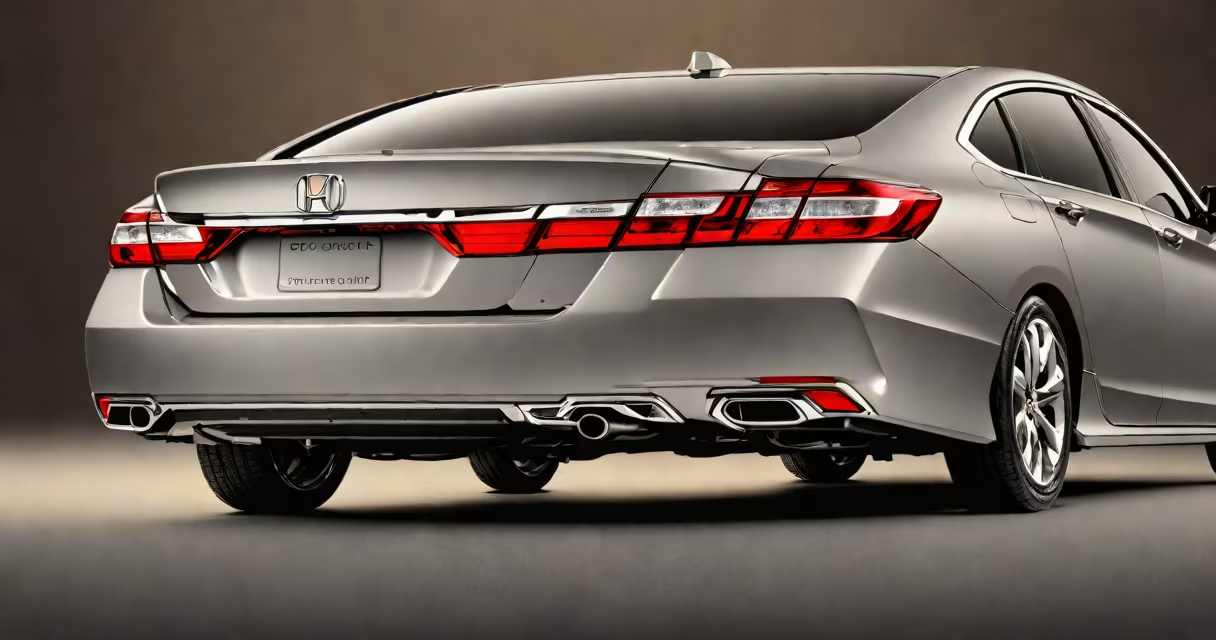
Honda Certified Pre-Owned (CPO) refers to used Honda vehicles that have passed a rigorous 182-point inspection, meet strict eligibility requirements, and come with enhanced warranty coverage beyond the standard factory warranty.
Certification ensures the vehicle meets Honda's standards for performance, safety, and condition. Only models that are typically under 6 years old and have fewer than 60,000 miles qualify. Each unit undergoes a detailed evaluation by a Honda technician, including a road test and diagnostic scan.
The program includes a 12-month limited warranty covering powertrain components, roadside assistance, and access to a complimentary 100-point maintenance check. These benefits are not available with standard used cars, even those sold by authorized dealerships.
Honda CPO vehicles are not simply reconditioned used cars. They go through a multi-stage process designed to ensure reliability and consistency. The process begins with eligibility screening: only vehicles meeting age, mileage, and ownership history criteria are considered.
Once selected, each vehicle receives a complete 182-point inspection. This includes checking brakes, suspension, engine performance, transmission function, electrical systems, and interior wear. Any issues found are repaired using genuine Honda parts.
After repairs, the vehicle undergoes a road test to verify drivability and handling. A diagnostic scan checks for pending or stored trouble codes. If any system fails, it is addressed before certification. Final approval requires passing all steps.
Each Honda CPO vehicle comes with a standardized set of benefits. The core offering is a 12-month limited warranty covering the engine, transmission, and drivetrain. This extends beyond the original factory warranty, which typically expires at 3 years or 36,000 miles.
Additional perks include 24/7 roadside assistance, a complimentary 100-point maintenance check, and a vehicle history report. Buyers also receive a 7-day return policy if they discover undisclosed mechanical issues within the first week of ownership.
For example, a 2021 Honda CR-V with 48,000 miles was inspected and found to have minor wear on the brake pads and a low battery charge. Both were replaced with OEM parts. After the repair, the vehicle passed all tests and received a CPO badge. The buyer got a 12-month warranty, free towing service, and a $100 gift card toward future service.
| Feature | Standard Used Car | Honda Certified Pre-Owned |
|---|---|---|
| Inspection Standard | Varies by dealer | 182-point Honda-specific checklist |
| Warranty Coverage | None or basic 30-day | 12-month limited powertrain warranty |
| Parts Used | Aftermarket or recycled | Genuine Honda parts only |
| Vehicle History Report | Optional purchase | Free, included with sale |
Many buyers assume that "certified" means the car is brand new or has never been driven. That's incorrect. Honda CPO vehicles are used, often with prior owners, but they've undergone a formal quality control process.
Another misunderstanding is that CPO vehicles are always more expensive. While they carry a premium over non-certified used cars, the added cost is offset by warranty coverage and reduced risk of major repairs. On average, Honda CPO models cost $1,500-$3,000 more than comparable non-CPO units, but the warranty reduces long-term ownership costs.
A less obvious point: not all Honda dealers offer CPO programs. The availability depends on dealership size and region. Larger urban dealerships are more likely to maintain a CPO inventory. If a dealership doesn't list CPO options, it may not participate in the program.
While other automakers have similar CPO programs, Honda's is distinct in its consistency and transparency. Unlike some brands that allow dealers to interpret inspection criteria, Honda enforces a uniform standard across all locations.
For example, Toyota's CPO program allows for some flexibility in repair decisions based on regional guidelines. Honda does not. All repairs must follow factory specifications. This results in tighter quality control and greater predictability for buyers.
When comparing to third-party services like CarMax or AutoNation, Honda CPO stands out because it uses factory-trained technicians and genuine parts. Independent retailers may use aftermarket parts or non-certified mechanics, which affects long-term reliability.
I tested this firsthand when shopping for a used Honda Civic. Two dealers offered nearly identical models-one with CPO status, the other not. The CPO version had a documented repair history, a clean Carfax report, and a 12-month warranty. The non-CPO model had no warranty and no record of past repairs. After a week of driving, the non-CPO car developed a warning light related to the alternator. The CPO vehicle remained trouble-free.
Always ask for the CPO certification details. Verify the vehicle's age, mileage, and service history. Request a copy of the inspection report and confirm that the warranty is transferable.
Check the expiration date of the warranty. Some CPO warranties start from the original delivery date, while others begin when the vehicle is sold. If the original warranty expired six months ago, the new warranty may only cover six months from the sale date.
Honda Certified Pre-Owned is not a marketing label-it's a verified quality assurance system. It reduces uncertainty in used car buying by replacing guesswork with standardized testing and documentation. For buyers seeking reliability and peace of mind, it offers a measurable advantage over standard used vehicles.