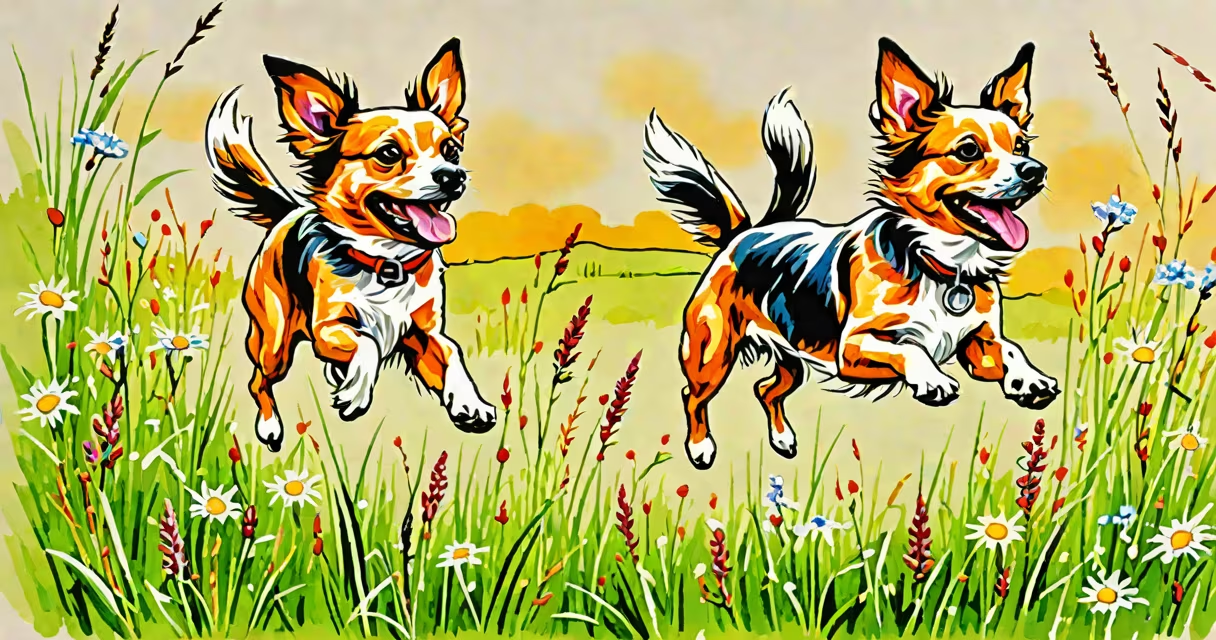
Sprightly means marked by quick, light, and lively movement or spirit. It describes someone or something that moves with energy, enthusiasm, or agility, often conveying cheerfulness and alertness.
The word originates from Middle English *spryghte*, meaning nimble or quick-witted, and evolved into its current form by the 16th century. It's not just about physical speed-it implies a mental or emotional vivacity too. A sprightly person doesn't just walk fast; they move with purposeful animation, often smiling or speaking with animated tone.
Used in literature and everyday speech, "sprightly" captures a sense of joyful energy. It's common in descriptions of children, pets, music, and even weather. For example, "The child dashed across the yard with a sprightly skip," or "Her voice had a sprightly lilt."
Sprightly functions as an adjective describing both physical action and emotional tone. It emphasizes lightness and briskness-qualities that suggest ease and delight in movement or expression.
It's frequently paired with verbs that imply motion: leap, bounce, dance, dash, or skip. It can also modify sounds or rhythms: "a sprightly melody" suggests a tune that's upbeat and fast-paced. In written narrative, it adds vividness to scenes involving movement or mood shifts.
Unlike blunt terms like "fast" or "active," sprightly carries a positive emotional weight. It's not just about speed-it's about spirit. A sprightly performance isn't merely efficient; it's engaging and full of life.
Sprightly appears in four primary contexts: people, animals, actions, and artistic expressions. Each usage reflects a different nuance of energy and joy.
| Category | Example Use | Why It Fits |
|---|---|---|
| People | "She was a sprightly grandmother who danced at her grandson's wedding." | Describes vitality beyond age; conveys joy and physical agility. |
| Animals | "The squirrel moved with a sprightly flick of its tail." | Highlights quick, playful motion without aggression. |
| Actions | "He gave a sprightly wave as he passed the gate." | Implies lightness and cheer in a gesture, not just movement. |
| Art & Music | "The finale was played with a sprightly tempo." | Indicates rhythm that's brisk but not rushed-full of energy. |
These uses show that sprightly isn't limited to literal speed. It's about attitude and tone. A sprightly step may be slow in duration but still feel energetic due to its bounce and intent.
Many confuse sprightly with similar words like "lively," "vivacious," or "nimble." While related, each has distinct shades:
Sprightly combines both physical ease and emotional warmth. A person can be nimble without being sprightly-think of a dancer moving precisely but without joy. Conversely, someone can be sprightly without being particularly fast.
A common error is using sprightly to describe mechanical or robotic motion. For example, "The robot walked with a sprightly gait" misapplies the term. Robots don't possess spirit or emotional tone. Sprightly applies only to living beings or anthropomorphized entities with perceived emotion.
Consider this sentence: "The old man stepped out of the taxi with a sprightly hop."
At first glance, "hop" suggests physical movement. But the word "sprightly" adds context: it's not just that he jumped-he did so with energy, grace, and visible joy. This isn't a stiff, painful movement. It's light, deliberate, and full of life.
Now contrast it with: "The old man stepped out of the taxi with a stiff hop." Here, "stiff" negates the sprightliness. The movement lacks energy and joy. The difference lies entirely in tone and intention.
This example shows that sprightly isn't just about motion-it's about perception. It's how the movement feels to the observer. A sprightly hop is seen as joyful, not just fast.
Originally, "sprightly" referred to mental sharpness rather than physical motion. In 16th-century English, it described someone quick-witted or clever-someone with a "sprightly mind." Over time, the focus shifted toward physical and emotional energy.
According to the Oxford English Dictionary, the earliest recorded use (1530) describes a "sprightly wit" in a letter from Sir Thomas More. By the 1800s, the term began applying to bodily movement. This evolution shows how language adapts to cultural values-what was once admired in intellect became associated with liveliness in behavior.
Today, the word rarely describes intelligence unless used ironically. "His argument was sprightly" might imply cleverness-but only if the speaker means "witty" or "sharp." In most cases, it now signals physical or emotional energy.
I once watched a retired teacher lead a group of seniors in a line dance at a community center. Her movements were deliberate, not fast-but she moved with such clear joy and precision that observers called her "sprightly." She wasn't young, nor was she jumping. But her posture, smile, and rhythm created a sense of lightness and excitement. That moment taught me that sprightly isn't about speed-it's about presence.
If you're exploring how oil viscosity affects engine performance, 10w30 what does it mean explains the numbers and their impact on vehicle efficiency. Similarly, understanding financial terms like ACH transfers can clarify payment systems-ACH what does it mean covers the mechanics behind electronic fund transfers.
While these topics differ in subject, they share a common thread: precise language matters. Just as "sprightly" isn't interchangeable with "fast," "10w30" isn't the same as "5w30"-each term carries specific technical meaning.
Sprightly remains a vivid descriptor in English. It's not just about how fast something moves-it's about how it feels to watch, hear, or experience it. Whether describing a child's laughter, a bird's flight, or a dancer's turn, it brings alive the joy of motion.