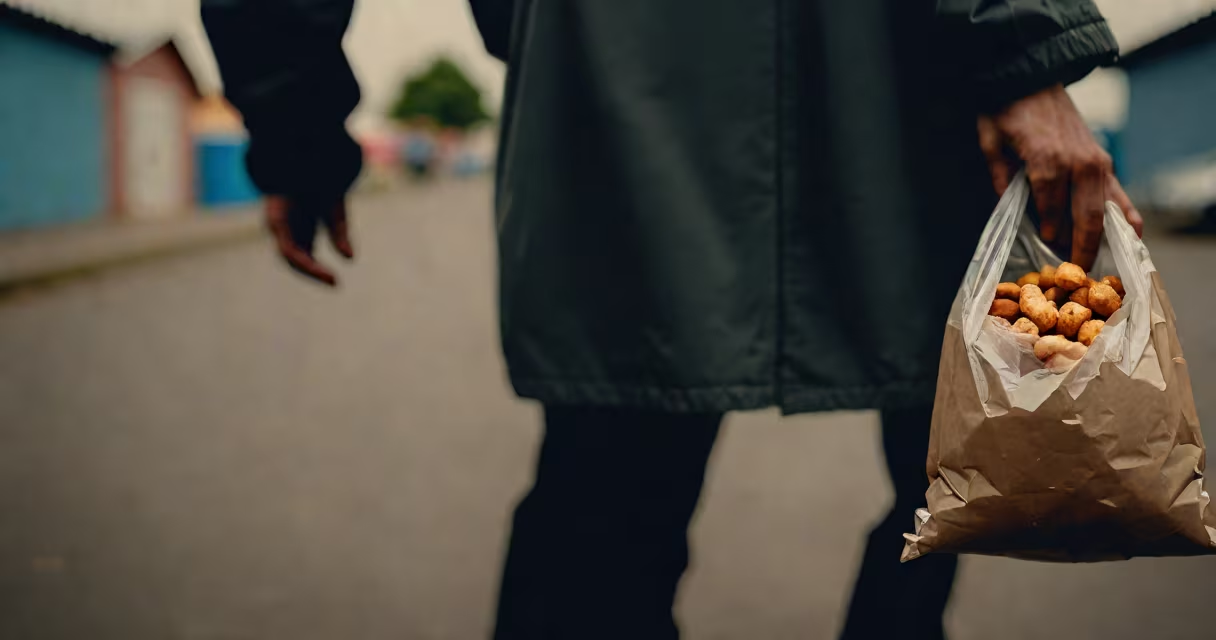
Poverty means lacking the financial resources needed to afford basic necessities such as food, housing, healthcare, and clothing. It reflects a condition where individuals or households cannot maintain a minimum standard of living necessary for health and dignity.
The term applies both to individuals and entire communities experiencing systemic economic disadvantage. Poverty is not simply about low income-it includes limited access to education, clean water, sanitation, transportation, and opportunities for upward mobility. It is a multidimensional condition shaped by geography, policy, discrimination, and personal circumstance.
According to the U.S. Census Bureau, a person is considered poor if their annual income falls below a threshold adjusted annually for inflation and family size. For 2023, the federal poverty line was $15,060 for a single individual and $35,500 for a family of four. These figures serve as benchmarks for determining eligibility for public assistance programs.
Governments and international organizations use several methods to define and track poverty. The most widely used is the official poverty line, which sets a dollar amount based on the cost of a minimal diet multiplied by three, reflecting the idea that food accounts for roughly one-third of household spending.
The World Bank uses a global standard of $2.15 per day in purchasing power parity (PPP) to define extreme poverty. This threshold adjusts for differences in the cost of living across countries. As of 2022, about 700 million people lived below this level, primarily in Sub-Saharan Africa and South Asia.
Some researchers argue that the official poverty line underestimates hardship because it doesn't account for regional cost-of-living differences. For example, a family earning $50,000 in rural Mississippi may live comfortably, while the same income in San Francisco would leave little room for rent, utilities, and childcare. Alternative measures like the Supplemental Poverty Measure (SPM) include non-cash benefits (like SNAP food stamps) and local expenses, offering a more accurate picture of economic strain.
| Measurement Method | Definition | Use Case |
|---|---|---|
| Federal Poverty Line (FPL) | Income below a set threshold based on family size and inflation | Determines eligibility for U.S. federal aid programs |
| Supplemental Poverty Measure (SPM) | Adjusts FPL to include taxes, benefits, and local costs | More accurate depiction of economic hardship in the U.S. |
| Global Extreme Poverty Line | $2.15/day in PPP-adjusted dollars | International benchmark for measuring severe deprivation |
Poverty manifests in different forms, each with distinct causes and consequences. Absolute poverty describes a state where people lack enough money to meet fundamental survival needs. Relative poverty occurs when someone's income is lower than the average in their society-even if they can afford basics.
Chronic poverty involves long-term deprivation lasting years or generations. Structural poverty results from systemic issues like racial discrimination, gender inequality, or geographic isolation. A 2021 study by the Brookings Institution found that Black and Hispanic families in the U.S. were more than twice as likely to live in poverty compared to white families, highlighting the role of systemic inequity.
Hidden poverty affects people who appear financially stable but face recurring crises-such as medical debt, job loss, or housing instability. A 2020 report from the Federal Reserve revealed that 39% of Americans couldn't cover a $400 emergency expense without borrowing or selling assets, indicating fragile financial security.
Many assume poverty stems solely from personal failure-laziness, poor choices, or lack of ambition. This view ignores structural barriers. Research from the National Bureau of Economic Research shows that only 12% of people born into the poorest quintile in the U.S. reach the top quintile as adults, underscoring how limited mobility is despite effort.
Another misconception is that poverty is rare in wealthy nations. In reality, the U.S. has one of the highest child poverty rates among OECD countries. In 2022, 16.6% of children under 18 lived below the poverty line-over 11 million kids. This contradicts the myth that affluent societies have eliminated destitution.
A lesser-known fact: poverty is not evenly distributed. In the U.S., 80% of people living in poverty reside in metropolitan areas, not rural regions. Urban poverty often involves overcrowded housing, underfunded schools, and high exposure to violence-all factors that compound disadvantage.
During the early months of the pandemic, nearly 15 million Americans lost jobs. The U.S. Department of Agriculture reported that food insecurity rose from 10.5% in 2019 to 12.8% in 2020. In New York City, food pantry lines grew by 400% between March and June 2020.
Consider Maria, a 38-year-old single mother in Detroit working part-time as a home health aide. Her hourly wage was $12.50, totaling $21,000 annually. She lived in a two-bedroom apartment with her two children, paying $1,100 monthly in rent. After taxes and childcare costs, she had less than $1,000 left for groceries, utilities, and transportation. Her income fell below the 2023 federal poverty line for a family of three ($24,526), classifying her as poor.
When the pandemic hit, she lost her job. She applied for unemployment and SNAP benefits but faced delays due to overwhelmed systems. For six months, she relied on community food banks and temporary shelters. Her story illustrates how sudden economic shocks can push people into poverty even if they were previously stable.
Poverty is not synonymous with homelessness. While many homeless people live in poverty, not all poor people are homeless. Conversely, some people with stable housing still face poverty due to inadequate income or unaffordable rents.
It is also not equivalent to being "struggling." Struggle implies difficulty but not necessarily a lack of essential resources. A middle-income family facing credit card debt may struggle financially but still meet basic needs. Poverty involves a measurable deficit in meeting those needs.
Finally, poverty is not a static condition. People move in and out of poverty due to job changes, health events, or policy shifts. The U.S. Census Bureau tracks this fluidity: in 2021, 40% of people who entered poverty remained poor for less than a year, suggesting that many experience temporary hardship rather than permanent deprivation.
Poverty means living without enough income or resources to meet basic human needs. It is measured through income thresholds, but also understood through broader indicators like access to healthcare, education, and safe housing. The term encompasses multiple dimensions-economic, social, and psychological-and varies by region, culture, and time.
Understanding what poverty means requires moving beyond stereotypes. It is not a personal failing but a complex outcome of policy, history, and structural inequality. Recognizing this helps shape better solutions-from expanding safety nets to reforming labor markets.