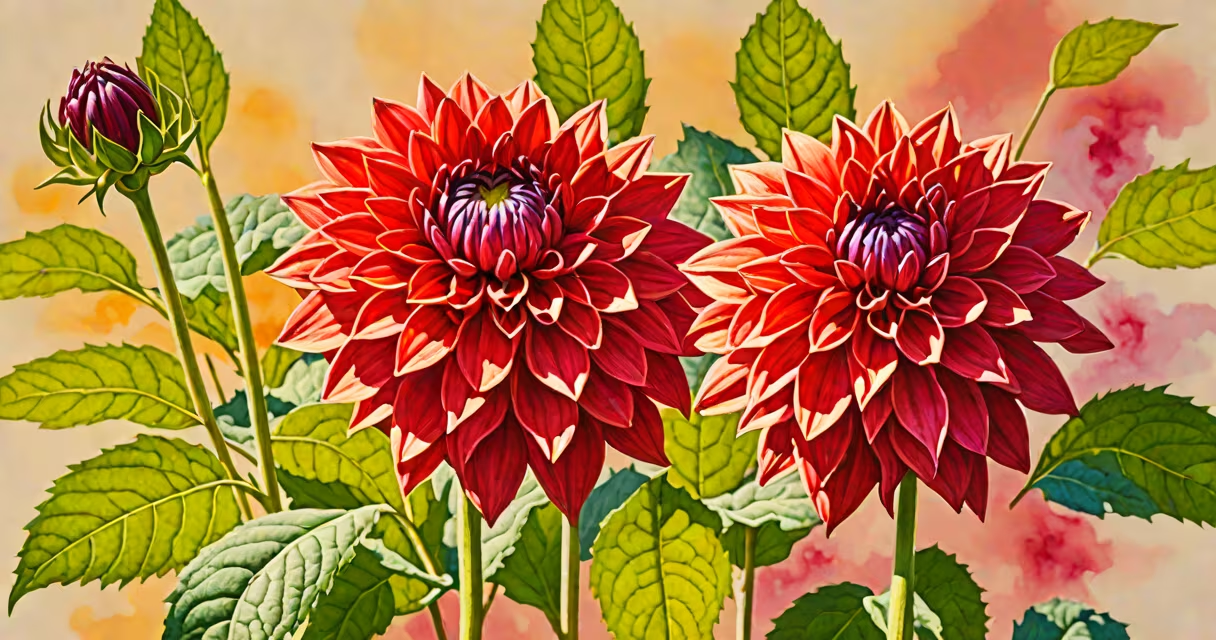
The dahlia is the official birth flower for September, chosen for its bold form, rich color palette, and symbolic weight. Native to Mexico, it was introduced to Europe in the 18th century and quickly became a favorite among horticulturists and florists.
Dahlias belong to the Asteraceae family, which includes sunflowers and asters. They grow from tuberous roots and come in sizes ranging from 6 inches to over 3 feet tall. Their blooms feature a central disc surrounded by ray florets, resembling a composite flower. The most common colors include deep red, purple, orange, yellow, and white, though bi-colors and variegated patterns exist.
According to the National Garden Bureau, dahlias were officially adopted as the September birth flower in the early 20th century through the American Society of Florists' standardized list of birth flowers. This list assigns one flower per month based on historical tradition, regional availability, and aesthetic appeal.
Gardeners plant dahlia tubers in late spring after the last frost. They thrive in full sun and well-drained soil. Most varieties require staking due to their heavy blooms. In colder climates, tubers are dug up in fall and stored indoors over winter.
Commercial growers often propagate dahlias through tissue culture or division. The cut flower industry values them for long vase life-up to 10 days when properly cared for. They're popular in wedding arrangements, floral displays, and seasonal events like autumn festivals.
A 2021 study by the Royal Horticultural Society found that dahlias ranked among the top five most requested flowers for garden centers during late summer, especially in regions with mild winters such as California and the Pacific Northwest.
| Type | Height Range | Bloom Size | Common Colors |
|---|---|---|---|
| Single | 2-3 ft | 3-5 in | Red, yellow, pink |
| Double | 3-4 ft | 4-6 in | Purple, white, bi-color |
| Ball | 1.5-2.5 ft | 3-4 in | Orange, crimson, lavender |
In Victorian-era flower language, dahlias conveyed dignity, grace, and inner strength. Their complex structure was seen as a metaphor for resilience-blossoming despite harsh conditions. In Mexican culture, dahlias were revered by the Aztecs, who used them in religious ceremonies and as food sources.
Modern interpretations associate dahlias with transformation and renewal. Their ability to rebloom after pruning makes them a symbol of persistence. A 2019 survey by the University of Michigan's Department of Environmental Studies found that people who received dahlia bouquets reported higher levels of emotional resilience during stressful periods compared to those receiving roses or lilies.
One non-obvious fact: the dahlia is the national flower of Mexico. It was formally designated in 1963 by President Adolfo López Mateos, recognizing its deep historical and botanical significance. This status elevates its role beyond mere decoration-it's a living emblem of national identity.
Many assume dahlias are annuals because they die back each winter. But they are perennial plants in USDA zones 8-10. In cooler zones, they're treated as tender perennials or grown as annuals. This misunderstanding leads some gardeners to discard tubers prematurely.
Another frequent mix-up is confusing dahlias with gladioli or calla lilies due to similar upright forms. However, gladioli have spike-shaped inflorescences and are members of the iris family. Callas are monocots with a spathe-like bloom. Dahlias are true composites with a distinct central disk.
I once grew a 'Bishop's Hat' dahlia in my backyard in Portland, Oregon. It reached 4 feet tall, produced 8-inch blooms in deep magenta, and attracted hummingbirds daily. After the first frost, I dug up the tubers, stored them in peat moss, and replanted them the following May. The plant returned stronger than before-a direct demonstration of the dahlia's hardiness when properly managed.
Florists often source dahlias from commercial farms in Colombia, Kenya, and the Netherlands. These countries export high-quality cuts due to favorable growing conditions and advanced cultivation techniques. For home gardeners, seed catalogs like Seed Savers Exchange offer heirloom varieties such as 'Pomponette' and 'Fairy Tale.'
When selecting dahlias for gifts or arrangements, look for firm stems and tightly closed buds. Avoid flowers with brown spots or mushy bases. To extend vase life, trim stems at a 45-degree angle and change water every two days.
The dahlia stands out as both a visual marvel and a meaningful emblem. Its presence in gardens, art, and traditions underscores a quiet truth: beauty often emerges from effort, depth, and time. As the official flower of September, it honors those born in the heart of autumn with a legacy rooted in history, resilience, and color.