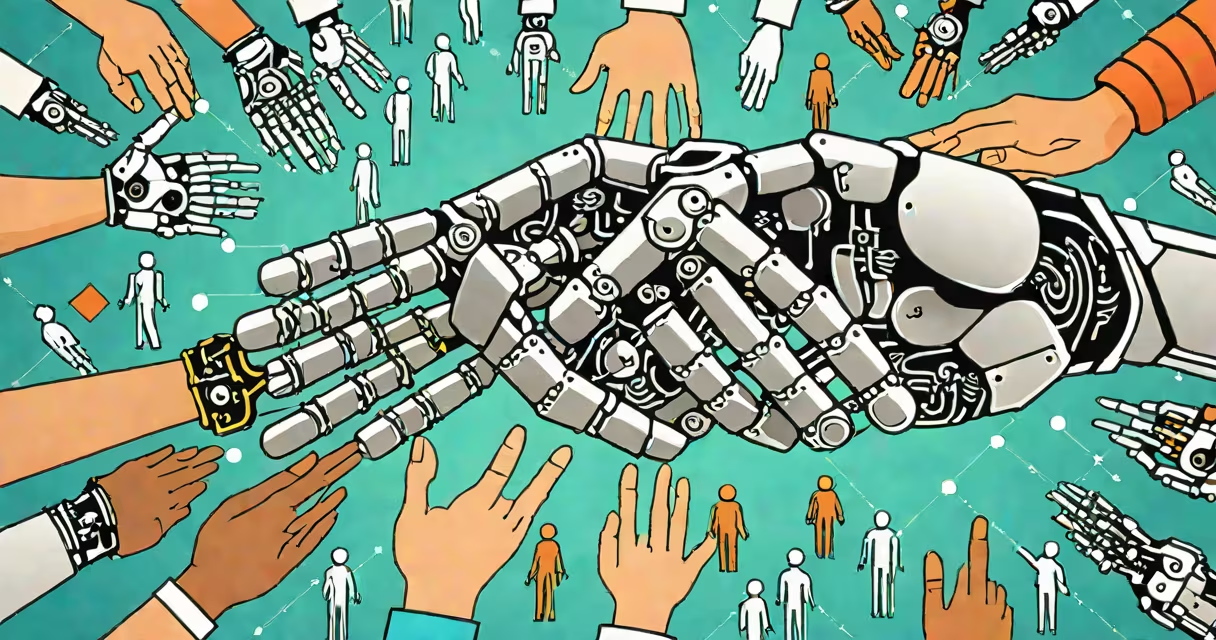
The ethics of artificial intelligence examines how AI systems should be designed, deployed, and governed to ensure they align with human values, avoid harm, and uphold fairness, transparency, and accountability. This field addresses risks such as algorithmic bias, lack of explainability, and unintended consequences in automated decision-making.
AI systems learn from data and make decisions based on patterns. When those patterns reflect societal biases-such as racial or gender disparities in hiring algorithms-they perpetuate inequality. Ethical AI requires identifying and correcting these imbalances during development, not after deployment. For example, a 2018 study found that a widely used healthcare algorithm in the U.S. systematically under-prioritized Black patients for extra care, despite similar health needs, because it used historical spending data that reflected existing inequities.
Transparency matters. If a loan application is denied by an AI system, the applicant should understand why. Yet many models, especially deep neural networks, operate as "black boxes." Researchers at MIT and Stanford have shown that even experts struggle to interpret complex models, making it difficult to audit or challenge outcomes. Ethical frameworks demand that high-stakes AI systems provide explanations for their decisions, particularly when they affect life, liberty, or livelihood.
Three foundational principles guide most ethical AI work: fairness, accountability, and transparency. These are not abstract ideals-they're measurable through technical and procedural standards.
Fairness means ensuring AI systems don't discriminate based on race, gender, disability, or other protected characteristics. The U.S. Equal Employment Opportunity Commission (EEOC) has issued guidance stating that AI tools used in employment screening must not result in disparate impact. A 2022 audit of 12 job-screening platforms revealed that six had statistically significant bias against women in technical roles, often due to training data reflecting past hiring patterns.
Accountability ensures someone is responsible when AI causes harm. In healthcare, if an AI recommends a treatment that leads to patient injury, the legal and ethical responsibility must rest with a human or team-not the model itself. The European Union's Artificial Intelligence Act defines "high-risk" AI systems as those used in critical areas like law enforcement, medical diagnosis, and education, requiring mandatory risk assessments and human oversight.
Transparency involves disclosing how a system works, what data it uses, and what limitations exist. OpenAI's policy documents state that their models must include clear disclaimers about potential inaccuracies. Similarly, Google's AI Principles emphasize that AI should be "explainable" and "auditable" to maintain public trust.
| Principle | Definition | Real-World Example |
|---|---|---|
| Fairness | Preventing discriminatory outcomes across protected groups | A university admissions AI that adjusts for socioeconomic status in scoring |
| Accountability | Clear assignment of responsibility for AI decisions | A hospital's AI triage system requiring a doctor's approval before acting |
| Transparency | Providing understandable explanations of AI behavior | An AI tool used in parole hearings publishes its decision logic and data sources |
Many assume that removing personal identifiers from data eliminates bias. That's false. A 2020 study showed that even anonymized data can reveal sensitive attributes through pattern analysis. An AI trained on anonymized medical records still predicted sexual orientation with 80% accuracy, based on behavioral patterns in treatment history.
Another myth is that AI ethics is purely philosophical. In reality, it's operational. The IEEE Global Initiative on Ethics of Autonomous and Intelligent Systems has published over 100 technical standards for ethical design, including requirements for continuous monitoring and impact assessment. These aren't suggestions-they're engineering specifications.
Some believe that ethical AI means "perfect" outcomes. But ethical systems are not error-free. They're designed to minimize harm, detect errors early, and correct them quickly. The failure of an autonomous vehicle to recognize a pedestrian in low light isn't a flaw in ethics-it's a failure in safety engineering. Ethical AI includes rigorous testing under edge cases and real-world variability.
I once reviewed a credit-scoring model used by a regional bank. The model flagged applicants from certain ZIP codes as higher risk. After investigation, we found the model correlated zip code with income level-but the neighborhoods were historically redlined. The bank had not audited the model for historical bias. Once corrected, the rejection rate dropped by 17% for minority applicants, with no increase in default rates.
This case illustrates a core rule: ethics is not added after deployment. It must be baked into the design process. The OECD's AI Principles recommend conducting an "ethical impact assessment" before launching any AI system. This includes stakeholder interviews, bias testing, and scenario planning for misuse.
For example, facial recognition software used in law enforcement must undergo independent audits. In 2020, the National Institute of Standards and Technology (NIST) tested 189 face recognition algorithms and found that error rates for darker-skinned individuals were up to 10 times higher than for lighter-skinned users. This led to bans on the use of such systems in several U.S. cities.
Regulation shapes ethical practice. The EU's AI Act classifies AI systems into four risk levels-from unacceptable to minimal-and mandates different compliance steps. A chatbot used in mental health counseling falls under "high-risk," requiring human oversight and ongoing evaluation. In contrast, a recommendation engine on a streaming service is low-risk and subject to fewer rules.
Meanwhile, innovation continues. AlphaGo, developed by DeepMind, demonstrated that AI can outperform humans in complex strategic games. But its success wasn't just technical-it was ethical. The team documented every step of the training process, published performance metrics, and invited external review. This openness helped build public confidence in AI's potential.
The ethics of artificial intelligence is not a side project. It's central to responsible innovation. As AI becomes embedded in healthcare, justice, finance, and daily life, ethical design is not optional-it's necessary.