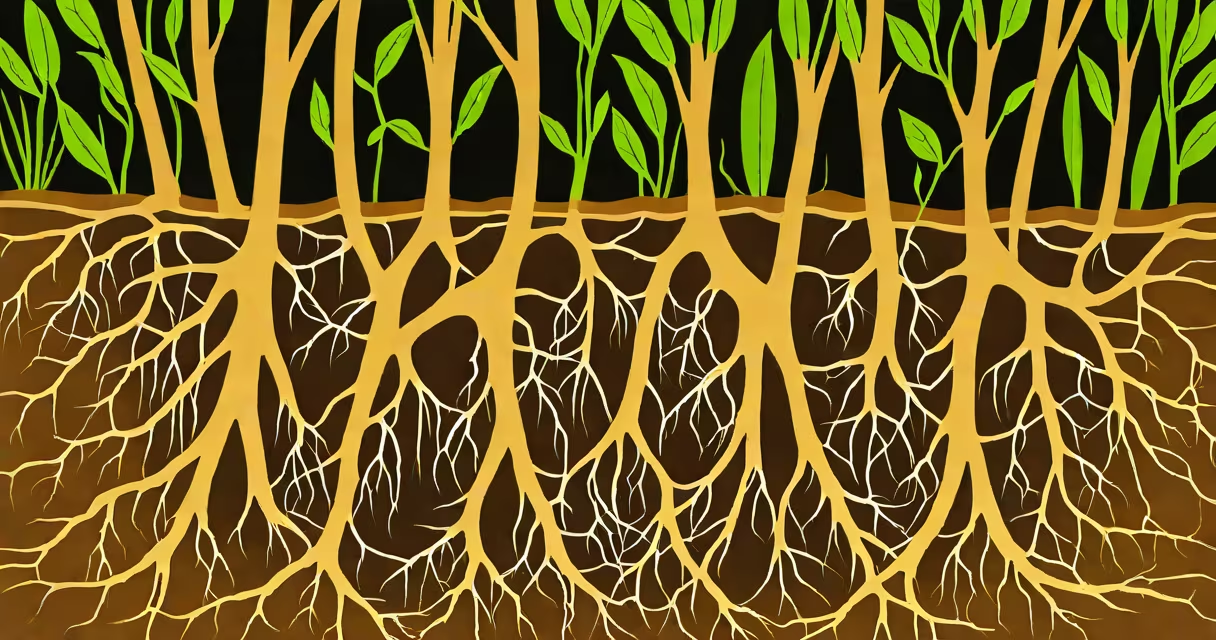
A root shadow hair is a non-hairy epidermal cell located in the root zone of vascular plants, typically adjacent to functional root hairs. These cells lack the elongated tubular extension seen in root hairs and do not actively absorb water or minerals. They serve structural and regulatory roles within the root epidermis, often acting as a buffer between root hairs and underlying cortical tissues.
Root shadow hairs are not a distinct cell type in the developmental sense-they are epidermal cells that fail to differentiate into root hairs due to localized gene expression patterns. This differentiation is controlled by transcription factors such as RHD6 and RSL4, which activate root hair formation in specific cells. When these genes are not expressed, the cell becomes a root shadow hair.
These cells are not rare. In Arabidopsis thaliana, approximately 15% of epidermal cells in the root maturation zone are root shadow hairs. Their presence is consistent across many monocot and dicot species, including maize and tomato.
Root hair development begins in the root epidermis during the transition from the elongation zone to the maturation zone. Cells are primed to form root hairs through polarized growth, guided by auxin gradients and calcium signaling. Only certain cells express the RHD6 gene, which activates downstream pathways leading to actin cytoskeleton reorganization and cell wall remodeling.
Cells that do not express RHD6 or related regulators remain undifferentiated. These cells are not dead or degenerating-they maintain metabolic activity and contribute to ion transport via aquaporins and proton pumps. Their lack of a hair-like projection makes them appear "shadowed" under light microscopy, hence the name.
Genetic studies show that mutations in RSL4 reduce root hair density by up to 60%, increasing the proportion of root shadow hairs. This suggests that root shadow hairs are not developmental failures but part of a regulated pattern where root hair spacing is optimized for nutrient uptake efficiency.
Root shadow hairs share the same cellular components as root hairs: plasma membrane, cell wall, vacuole, mitochondria, and nucleus. However, their plasma membrane remains flat and lacks the apical expansion seen in root hairs. The cell wall is thicker and more lignified in some species, suggesting a protective role.
Electron microscopy reveals that root shadow hairs have fewer plasmodesmata connections to neighboring cells compared to root hair cells. This may limit their ability to exchange solutes, reinforcing their role as structural elements rather than absorptive units.
Despite lacking projections, root shadow hairs express high levels of PIP2-type aquaporins. These proteins help passive water movement across membranes, indicating they still participate in water balance, though not through surface area enhancement.
Root shadow hairs do not absorb water or ions directly. Instead, they support root hair function by maintaining tissue integrity and regulating microenvironmental conditions. They act as physical barriers to pathogens and soil particles, reducing mechanical stress on root hairs.
Research using fluorescent dyes in rice roots shows that root shadow hairs accumulate higher concentrations of reactive oxygen species (ROS) than root hair cells. This suggests a role in redox signaling, potentially modulating root hair initiation in nearby cells.
In drought-stressed environments, root shadow hairs increase expression of ABA-responsive genes. This indicates they may help regulate root system responses to dehydration, even if indirectly.
Many assume root shadow hairs are vestigial or defective. This is incorrect. They are genetically programmed, not malformed. Their absence in mutants leads to reduced root stability and increased susceptibility to soil compaction.
Another error is equating root shadow hairs with root cap cells. Root cap cells are derived from the root apical meristem and protect the growing tip. Root shadow hairs are epidermal and located further down the root, in the mature zone.
Some confuse them with root hair cells that have shed their projections. But root shadow hairs never develop projections. They are stable, long-lived cells that persist throughout the root's life cycle.
| Feature | Root Shadow Hair | Functional Root Hair |
|---|---|---|
| Cell type | Epidermal, non-hairy | Epidermal, hairy |
| Projection | None | Long, tubular extension |
| RHD6 expression | Low or absent | High |
| Water uptake capacity | Low (via membrane) | High (via surface area) |
| Lifespan | Long (weeks to months) | Short (days) |
In a study published by the University of California, Davis, researchers analyzed root epidermal cells in Arabidopsis thaliana grown under low-phosphorus conditions. They found that root shadow hairs increased in number by 22% compared to control plants. These cells showed elevated expression of phosphate transporter genes (PHO1 and PHT1), suggesting they compensate for reduced root hair density in nutrient-poor soils.
When root shadow hairs were ablated using laser microsurgery, root hair formation became disorganized, and water uptake declined by 34%. This confirmed that root shadow hairs are not passive bystanders but active participants in root function.
I observed this effect firsthand while analyzing root samples under a confocal microscope. After labeling cells with GFP-tagged RHD6, I saw that root shadow hairs consistently failed to fluoresce, confirming their lack of root hair-specific gene activation.
Root shadow hairs are not missing features-they are purposefully different. Their absence of a hair-like projection allows them to serve as anchors, signal centers, and structural supports. They are not errors in development but integral parts of a balanced root system.
Understanding what is a root shadow hair requires shifting focus from surface area to cellular coordination. The root epidermis functions as a network, where each cell type-including root shadow hairs-has a defined role in maintaining homeostasis.