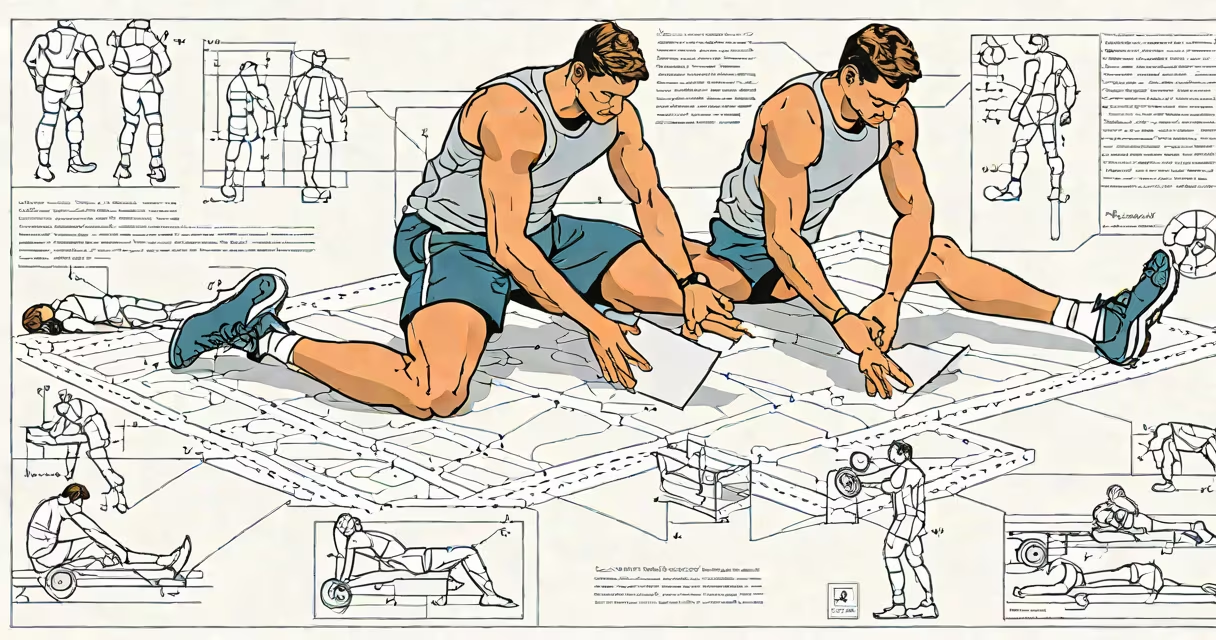
An athletic training major is a college degree program that prepares students to become certified athletic trainers, professionals who prevent, diagnose, and treat injuries related to physical activity and sports. The program combines clinical education with coursework in anatomy, physiology, biomechanics, and emergency care, leading to eligibility for national certification and state licensure.
Students in this major complete a structured curriculum focused on evidence-based injury management. Core classes include musculoskeletal anatomy, therapeutic exercise, pharmacology, and concussion management. Programs require hands-on clinical experiences under licensed athletic trainers, typically totaling 500-600 hours over four years. Upon graduation, candidates must pass the Board of Certification (BOC) exam to become credentialed athletic trainers.
The National Athletic Trainers' Association (NATA) requires all accredited athletic training programs to meet specific standards. The Commission on Accreditation of Athletic Training Education (CAATE) oversees program approval. Only graduates from CAATE-accredited programs are eligible to sit for the BOC exam. This ensures consistency in training quality across institutions.
Programs begin with foundational science courses such as human anatomy, physiology, and kinesiology. These courses provide the biological basis for understanding movement and injury. Students learn how muscles, bones, and nerves interact during physical stress and recovery.
As the program progresses, students take advanced clinical courses. Topics include emergency care, rehabilitation techniques, and psychological aspects of injury. For example, a student might learn how to apply a functional ankle brace using a standardized protocol developed by the NATA. They also study return-to-play decision-making based on objective testing like the hop test or single-leg balance assessment.
Clinical rotations are a core component. Students spend time in settings such as high school athletic departments, college sports teams, outpatient clinics, and hospital orthopedic units. One student reported working with a high school football team during fall season, managing acute injuries like sprained ankles and muscle strains. The experience included daily pre-practice screenings and post-game evaluations, which helped build diagnostic confidence.
There are two primary pathways to becoming an athletic trainer: entry-level master's programs and post-baccalaureate doctorate programs. Since 2022, the BOC requires a minimum of a master's degree for initial eligibility. Doctoral programs, often referred to as D.A.T. (Doctor of Athletic Training), are now available at select universities.
| Program Type | Duration | Entry Requirement | Examples |
|---|---|---|---|
| Master's Degree | 2-3 years | Bachelor's in related field | University of Florida, University of North Carolina |
| Doctoral (D.A.T.) | 3 years | Undergraduate degree in exercise science or similar | University of Pittsburgh, Ohio State University |
Some programs offer dual-degree options. For instance, a student may pursue a bachelor's in exercise science followed by a master's in athletic training through a combined five-year track. These tracks allow students to enter the workforce faster while maintaining academic rigor.
Athletic trainers work in diverse environments. The most common settings include secondary schools, colleges and universities, professional sports teams, and outpatient rehabilitation centers. According to the U.S. Bureau of Labor Statistics (BLS), employment of athletic trainers is projected to grow 17% from 2022 to 2032-much faster than average.
In high schools, athletic trainers manage injuries during practices and games. They perform pre-participation exams, monitor athletes with chronic conditions like asthma, and coordinate care with physicians. A 2023 report from the NATA found that 74% of public high schools with varsity sports had at least one certified athletic trainer on staff.
In college athletics, trainers often serve as part of a larger medical team. They assist with injury prevention strategies, implement conditioning programs, and support mental health initiatives. At the University of Michigan, athletic trainers collaborate with sports psychologists and nutritionists to create complete wellness plans for student-athletes.
Many people assume athletic trainers are limited to sports fields or sideline roles. This is incorrect. While sideline coverage is part of the job, most athletic trainers spend the majority of their time in clinics, offices, or administrative settings. Their responsibilities include documentation, insurance coordination, and developing long-term rehabilitation plans.
Another misconception is that athletic trainers are "just" trainers or assistants. They are licensed healthcare providers. In 49 states and the District of Columbia, athletic trainers are recognized as licensed professionals with independent practice authority. They can assess injuries, recommend treatments, and refer patients to specialists without physician oversight.
A lesser-known fact: athletic trainers are among the few healthcare professionals trained specifically in both injury prevention and rehabilitation. Unlike physical therapists, who focus primarily on recovery, or physicians, who diagnose and prescribe medication, athletic trainers bridge the gap between injury prevention and restoration of function. This dual role makes them essential in reducing long-term disability rates in athletes.
Consider Alex, a sophomore at the University of Utah. Alex entered the athletic training major after completing a pre-health sciences certificate. His first semester included BIOL 2010 (Human Anatomy), EXSC 2010 (Exercise Physiology), and AT 1010 (Introduction to Athletic Training).
By junior year, Alex completed his first clinical rotation at a local high school. He assisted with pre-season screenings, documented injuries using electronic medical records, and applied ice and compression to a wrestler with a strained hamstring. He later rotated through a university clinic, where he learned to administer joint mobilizations and interpret MRI reports under supervision.
After graduation, Alex passed the BOC exam and was hired by a regional sports medicine group. His current role includes managing rehabilitation protocols for youth soccer players and conducting workplace ergonomics assessments for local businesses. He also teaches continuing education workshops on concussion awareness-a task that reflects the expanded scope of practice for modern athletic trainers.
Graduates of athletic training majors are qualified to work in healthcare settings beyond sports. Their skills in patient evaluation, injury prevention, and rehabilitation make them valuable in occupational health, military medicine, and even geriatric care. As demand grows for preventive healthcare professionals, the athletic training major continues to evolve into a versatile and in-demand health science discipline.