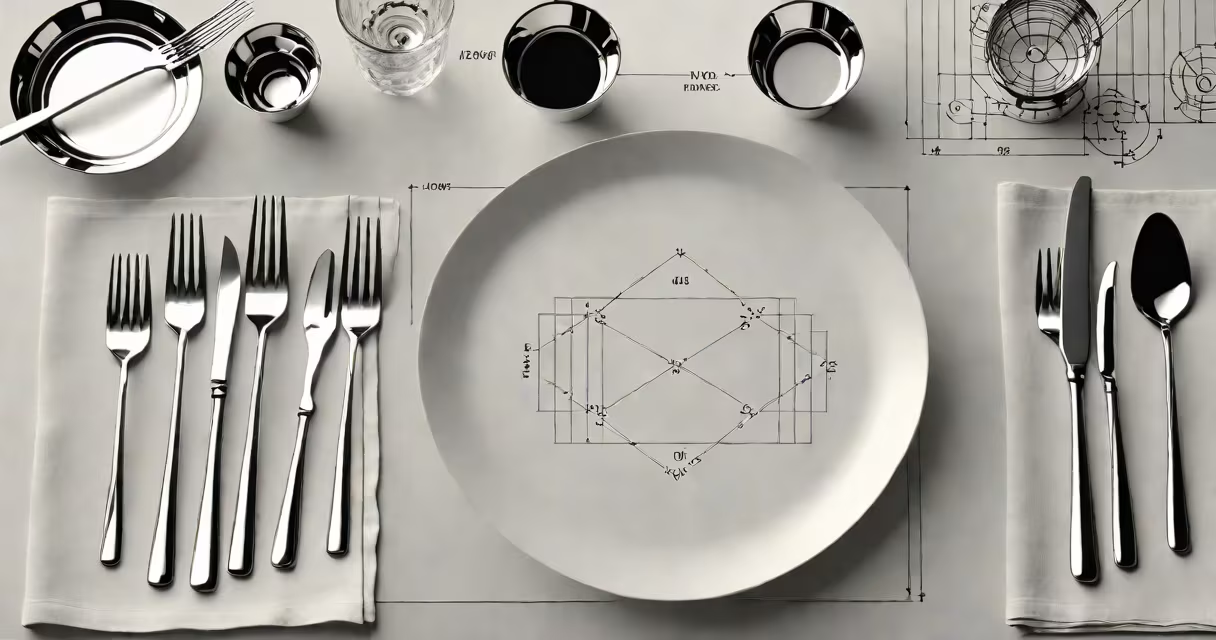
Cutlery refers to handheld tools used for eating, serving, or preparing food. It includes knives, forks, spoons, and related implements designed for specific tasks at the table or in the kitchen.
The term originates from the Latin word *cutile*, meaning "to cut," and evolved through Old French *cutilier* to describe tools for slicing and handling food. Modern usage includes both functional kitchen tools and formal dining sets, often grouped under the broader category of tableware.
While "cutlery" and "silverware" are often used interchangeably, the latter technically refers to items made of silver or silver-plated metal. True cutlery encompasses materials like stainless steel, wood, plastic, and even bone or horn in historical contexts.
Each piece of cutlery performs a distinct function based on shape, size, and edge design. Knives have sharp edges for slicing, dicing, or spreading. Forks use tines to pierce and hold food. Spoons rely on concave bowls to scoop liquids or soft solids.
Design principles prioritize grip, balance, and precision. A well-made knife should feel stable in the hand, with weight distributed toward the blade. Forks are engineered so tines don't bend under pressure, and spoons avoid spilling by maintaining a consistent curve.
For example, a standard dinner knife measures 7.5 inches long with a 3-inch blade. Its curved edge allows for clean cuts through meat, while the blunt tip prevents accidental punctures during serving. This design reflects centuries of refinement in European table culture.
Modern cutlery falls into several categories based on purpose and material. Common types include:
| Type | Purpose | Typical Material | Example Use |
|---|---|---|---|
| Dinner fork | Serving main course | Stainless steel | Handling steak or pasta |
| Salad spoon | Handling greens or dressings | Plastic or nickel-plated steel | Stirring a mixed green salad |
| Butter knife | Spreading soft foods | Stainless steel or wood | Applying butter to bread |
| Desert spoon | Consuming desserts | Gold-plated or silver | Serving crème brûlée |
Historically, cutlery was crafted from bone, ivory, or bronze. By the 18th century, Sheffield, England became a center for steel cutlery production. Today, most mass-produced cutlery uses 18/10 stainless steel-a blend of 18% chromium and 10% nickel-for corrosion resistance and durability.
A lesser-known fact: the fork did not become common in Western dining until the 14th century. Before then, people ate with their hands or used single-pronged utensils. The multi-tined fork gained popularity only after being adopted by Italian nobility and later accepted in France and Britain.
Many assume "cutlery" includes all kitchen tools. However, cutlery specifically refers to handheld items used at the table or during meal consumption. Kitchen tools like peelers, graters, and whisks fall under the category of cooking equipment, not cutlery.
Another confusion arises between "flatware" and "cutlery." While both terms describe eating utensils, "flatware" typically refers to the flat, non-bladed components-forks, spoons, and sometimes butter knives-excluding knives. This distinction matters in formal settings where place settings are labeled by flatware type.
Some believe cutlery must be made of metal. But historically, wooden spoons were standard in medieval Europe, and bamboo cutlery remains common in parts of Asia. Even modern biodegradable cutlery made from wheat starch or bamboo fiber is classified as cutlery due to function, not material.
In a formal American dinner setting, a guest might use five pieces: a dinner knife, dinner fork, salad fork, soup spoon, and dessert spoon. These are arranged left to right based on sequence of use, with the outermost utensil used first.
Consider a 2023 study by the National Restaurant Association showing that 68% of fine-dining restaurants in the U.S. still use traditional cutlery layouts. The study noted that guests who understood proper placement reported higher satisfaction with service quality.
I once observed a misstep at a wedding reception where a server placed a fish fork too close to the plate's edge. The guest didn't notice until they tried to spear a piece of salmon and the tines slipped. This highlights how spacing and positioning affect usability-even minor errors disrupt the dining experience.
When shopping for cutlery, consider weight and balance. A spoon that feels too light may spill easily; one that's too heavy causes fatigue. Brands like Zwilling J.A. Henckels and Shun offer models with ergonomic handles and precise weight distribution, tested by chefs and home cooks alike.
Not all cutlery is meant for eating. Some tools serve preparation or presentation roles. For example, a melon baller is a form of cutlery used to scoop fruit, though it's not used at the table. Similarly, a cheese knife with a serrated edge is designed for cutting hard cheeses but is not typically used during meals.
Another distinction: cutlery used in religious or cultural rituals may differ from everyday forms. In Japanese tea ceremonies, chopsticks are used with strict etiquette. In Indian weddings, silver spoons are often included in dowry sets, symbolizing prosperity and purity.
Finally, the term "cutlery" does not apply to straws, napkins, or drinking glasses-though all are part of a complete table setting. These belong to the broader category of tableware, which includes dishes, glassware, and linens.
Understanding what cutlery means involves recognizing its role in daily life, history, and etiquette. Whether using a basic plastic spoon or a hand-forged chef's knife, each tool serves a purpose rooted in centuries of human adaptation.
If you're exploring the mechanics behind engine performance, 10W30 oil explained offers insight into viscosity and seasonal use.