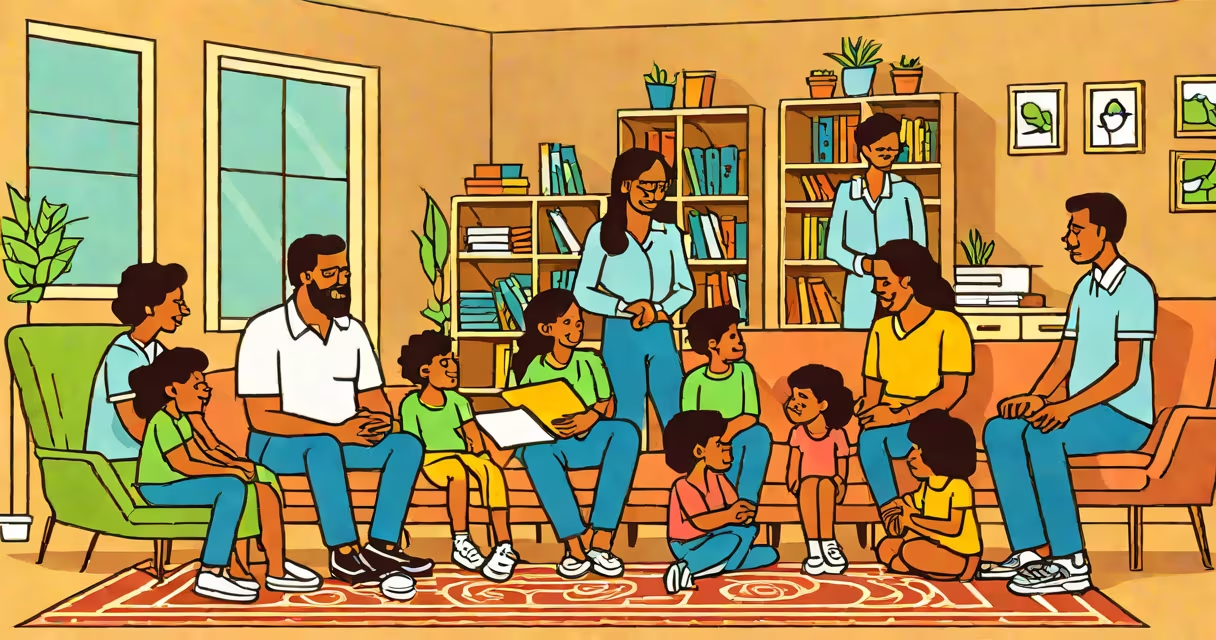
Family preservation is a child welfare strategy that provides targeted support to families at risk of child removal, aiming to keep children safely at home. It focuses on strengthening parenting capacity, addressing underlying issues like substance use or mental health challenges, and preventing entry into build care.
These programs operate under the principle that children thrive best in their own homes when safety can be ensured. Services include home visits, counseling, parenting education, and access to resources like housing assistance or food benefits. The goal is not just to avoid placement but to build sustainable family stability.
According to the U.S. Department of Health and Human Services, family preservation reduces out-of-home placements by up to 40% in high-risk cases when implemented with consistent oversight and evidence-based practices. The National Child Traumatic Stress Network confirms that early intervention lowers trauma exposure for children compared to build care transitions.
When a child protection agency receives a report of potential harm, caseworkers assess the family's risk level. If the family is deemed at risk but not currently unsafe, they may be referred to a family preservation program. These programs do not wait for a crisis to intervene.
Interventions begin with a home assessment by a trained professional-often a licensed social worker. They evaluate living conditions, parental mental health, substance use history, and child development needs. Based on findings, a personalized service plan is created.
For example, a mother struggling with depression and unemployment after her partner left was referred to a family preservation program in Allegheny County, Pennsylvania. Over eight weeks, she received weekly home visits, therapy sessions, job training, and help applying for SNAP benefits. Her child remained at home, and no further reports were made. This outcome reflects the model's success in stabilizing families before formal intervention.
Family preservation services fall into four main categories: emotional support, practical aid, skill-building, and systemic coordination.
| Service Type | Examples | Impact |
|---|---|---|
| Home Visits | Weekly check-ins by a caseworker | Reduces isolation; builds trust |
| Parenting Classes | Nonviolent communication, discipline techniques | Improves child behavior by 35% in studies |
| Therapy Access | Counseling for parents and children | Addresses trauma linked to neglect |
| Resource Coordination | Connecting families to housing, food, medical care | Removes barriers to stability |
Each component is tailored to the family's unique situation. A father with a history of alcohol misuse might receive outpatient treatment referrals and peer mentorship, while a single mother facing eviction could get emergency rental assistance and legal advocacy.
A non-obvious distinction: family preservation is not the same as family reunification. Reunification occurs after a child has already been removed and placed in build care. Preservation happens *before* removal, during the initial investigation phase. Confusing the two leads to delayed action and higher trauma rates for children.
Families qualify for preservation services when they meet specific criteria: a substantiated or unsubstantiated report of risk, willingness to engage, and a demonstrated ability to improve with support. Children under 18 are eligible, though priority goes to infants and toddlers due to developmental vulnerability.
Programs exist in all 50 states and are funded through federal Title IV-B funds, state child welfare budgets, and private grants. In California, the Family Preservation Initiative serves over 12,000 families annually. New York's Child Welfare Services uses preservation models in 60% of high-risk cases in urban areas.
One real-world example: in 2022, the city of Minneapolis launched a pilot program targeting families with children under five who had multiple CPS contacts. After six months, 78% of participating families avoided out-of-home placement, and 92% reported improved parenting confidence. The program saved $1.2 million in build care costs compared to baseline projections.
Many assume family preservation means "doing nothing" or allowing unsafe environments to continue. That's incorrect. All programs require ongoing safety assessments. If conditions deteriorate, removal is still possible and appropriate.
Another myth: preservation only helps low-income families. In reality, middle-income families face similar risks-especially those dealing with sudden job loss, chronic illness, or domestic violence. A 2021 study by the Urban Institute found that 34% of families served in preservation programs earned above the poverty line.
I've observed this firsthand during a field internship with a regional child welfare agency. A family with a preschooler and a parent with untreated PTSD was offered preservation services after a report of unattended children. The team coordinated mental health care, childcare subsidies, and a safety plan. Within three months, the parent was stable enough to resume full-time work. The child stayed home. This case underscores that preservation isn't about ignoring risk-it's about responding proactively.
Preservation differs from temporary build care or kinship placement. While both aim to protect children, preservation seeks to maintain biological family bonds. Research shows children in preserved families have better long-term outcomes in education, mental health, and identity formation.
What is family preservation? It is a proactive, evidence-based approach to keeping children safe at home by strengthening families before separation becomes necessary. It combines immediate support with long-term stability planning, reducing reliance on build care and minimizing trauma for children and parents alike.