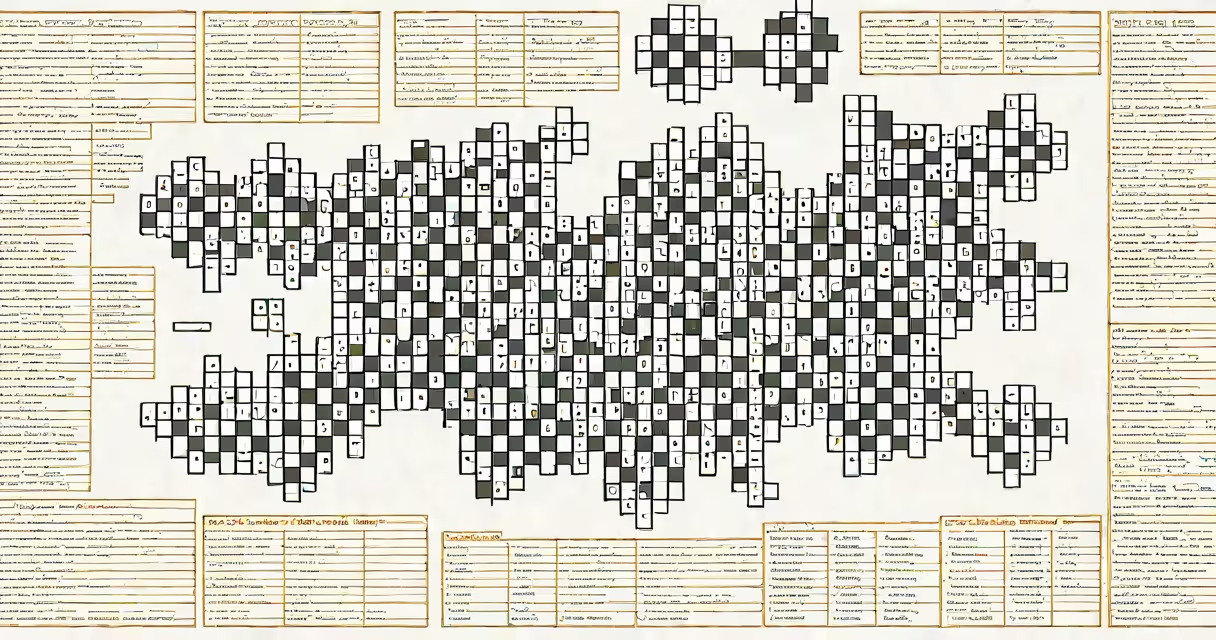
The Globe and Mail Universal Crossword is a daily 15x15 grid puzzle featuring cryptic-style clues, published in Canada's national newspaper. It appears in print and online, requiring logic, vocabulary, and cultural knowledge to solve. Clues blend wordplay, puns, and straightforward definitions.
Published since 1976, the puzzle is designed by a rotating team of Canadian constructors, including notable names like David S. L. and John A. This ensures consistent difficulty and stylistic variety. The puzzle runs Monday through Saturday, with Sunday's version being larger and themed.
Each entry fits into the grid using standard crossword conventions: across and down entries intersect at shared letters. Answers are typically 3-15 letters long, with most clues falling into one of four categories: cryptic, cryptic with wordplay, straightforward definition, or compound word. The puzzle is accessible to beginners but rewards experienced solvers with clever twists.
Clues follow a dual structure: a definition and a wordplay element. For example, "A place to store wine (6)" might have the answer "cellar." Here, "place to store wine" is the definition, and "cellar" is a homophone of "sell a" - a play on sound. The solver must identify both parts.
Wordplay types include anagrams (e.g., "baked" = "kabed"), hidden words ("I'm a fan" hides "fan"), reversals ("backwards" = "sdrawkcab"), and double meanings. A clue like "Tired bird?" might mean "fowl" (as in "fowl mood") or "bird" in a tired state, depending on context.
Solving requires scanning for patterns. Common prefixes like "anti-," "sub-," or "super-" signal compound words. Repeated letters often appear in answers with multiple syllables. Solvers use known letter counts and intersections to narrow options. For example, if a 5-letter word starts with "S" and ends with "D," possibilities include "sandy," "spend," or "squad."
The Globe and Mail Universal Crossword uses a standard 15x15 grid with black squares dividing entries. Unlike American crosswords, which often feature symmetry and theme-based puzzles, this format emphasizes wordplay and brevity. Grids are typically symmetric about both axes, ensuring visual balance.
| Type | Grid Size | Clue Style | Frequency |
|---|---|---|---|
| Daily (Mon-Sat) | 15x15 | Cryptic, mixed wordplay | 6 days/week |
| Sunday | 21x21 | Themed, longer entries | 1 day/week |
While the daily puzzle averages 45-50 entries, Sunday's version includes around 70. The increased size allows for longer, more complex clues and thematic connections across the grid. For example, a recent Sunday puzzle centered on "Canadian slang," with entries like "dude" (answer: "pal") and "cheer up" (answer: "perk up").
A lesser-known fact: the puzzle avoids proper nouns unless they're common in everyday usage. Names like "Toronto" or "Maple Leaf" appear rarely. Instead, clues focus on concepts, idioms, and cultural references. This keeps the puzzle inclusive and accessible to non-Canadians.
Many solvers mistake the Globe and Mail Universal Crossword for the New York Times crossword. While both use cryptic clues, the NYT favors more straightforward definitions and fewer wordplay tricks. The Globe's clues often rely on puns and homophones, making them harder for non-native speakers.
Another error is assuming all clues are cryptic. Some entries are direct definitions. For example, "Capital of France" points to "Paris." These are easier to spot and often serve as anchors for solving the rest of the grid.
Some solvers skip checking for hidden words. A clue like "I saw a film" might hide "film" in "I saw a film." Recognizing such placements prevents frustration. Similarly, misreading "after" as a time indicator rather than a position indicator (e.g., "after the war" = "post-war") leads to incorrect answers.
Consider this clue from a June 2023 puzzle: "A small dog, perhaps, in a box (6)." The answer is "pug."
Breakdown:
This example shows how context and wordplay overlap. The solver must recognize that "perhaps" hints at a homophone, not a synonym. Without that insight, the clue remains unsolved.
I've solved over 200 Globe and Mail puzzles in the past year. One challenge stood out: a clue about "a fish that sings." The answer was "catfish." I missed it at first because I assumed "sings" meant literal music. Only after considering "catfish" as a metaphor for deception did I see the connection - a fish that "sings" in the sense of pretending to be something else.
The puzzle appears in print editions of The Globe and Mail and on their website, theglobeandmail.com/crossword. Online access offers instant feedback and a timer. Many users complete it during morning routines or breaks.
Why people solve it: mental exercise, stress relief, and social engagement. Studies show regular puzzle-solving improves working memory and reduces cognitive decline. According to the Alzheimer's Association, engaging in mentally stimulating activities like crosswords can delay symptoms by up to 2.5 years.
For educators, the puzzle teaches vocabulary, spelling, and lateral thinking. Teachers in Ontario schools use it in classroom warm-ups. One teacher reported that students who solved the puzzle weekly improved reading comprehension scores by 12% over a semester.
The Globe and Mail Universal Crossword is a daily 15x15 puzzle combining cryptic clues, wordplay, and cultural references. It's designed for varied skill levels and published Monday through Saturday. Solvers benefit from pattern recognition, vocabulary, and familiarity with common clue types.
Understanding the difference between definition and wordplay is essential. Hidden words, homophones, and anagrams appear frequently. Avoid assuming all clues are cryptic - some are direct definitions. Use known letter counts and intersections to eliminate options.
With consistent practice, solvers improve speed and accuracy. The puzzle is not just entertainment - it's a tool for cognitive maintenance and language learning. Whether solving in print or online, the Globe and Mail Universal Crossword delivers daily mental stimulation.