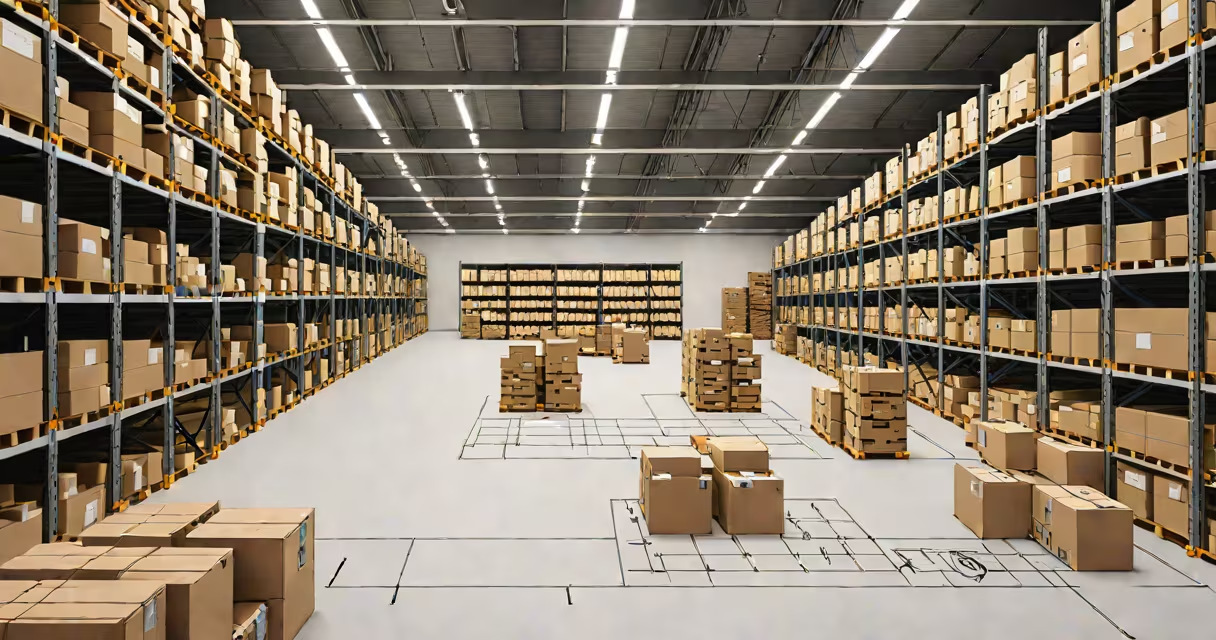
An IWMS-Integrated Warehouse Management System-is a software platform that automates inventory tracking, order processing, and resource allocation within a warehouse. It centralizes data across receiving, storage, picking, packing, and shipping operations to reduce manual errors and improve throughput.
Modern IWMS platforms integrate with enterprise resource planning (ERP) systems, barcode scanners, automated guided vehicles (AGVs), and cloud-based dashboards. They support real-time updates, predictive analytics for stock levels, and compliance reporting for audits. These systems are essential in high-volume environments such as e-commerce fulfillment centers and pharmaceutical distribution hubs.
The term "IWMS" emerged in the early 2000s as warehouses evolved beyond basic inventory logs into complex logistics networks. Today, it refers specifically to systems that combine warehouse operations with broader supply chain visibility, distinguishing them from legacy WMS tools that only tracked stock movement.
When a shipment arrives, an IWMS assigns a unique identifier-like a barcode or RFID tag-to each item. The system logs the arrival time, location, quantity, and condition. This data syncs instantly across departments, so warehouse staff, dispatch teams, and procurement managers see the same updated status.
During order fulfillment, the IWMS calculates the optimal path for pickers using algorithms that minimize walking distance. For example, if a customer orders five different products, the system may group them based on proximity in storage to reduce travel time. It then generates a pick list with bin locations and quantities, often displayed on handheld devices or wearable scanners.
After packing, the system confirms the shipment's weight, dimensions, and carrier details before releasing it for dispatch. Any discrepancies-such as missing items or damaged packaging-are flagged automatically. Data from each step feeds into performance reports, helping managers identify bottlenecks or underused storage zones.
Every IWMS includes modules for receiving, putaway, picking, cycle counting, and shipping. Some advanced versions include labor management, slotting optimization, and integration with automated storage and retrieval systems (AS/RS).
| Type | Best For | Key Features |
|---|---|---|
| Cloud-Based IWMS | Small to mid-sized businesses with multiple sites | Scalable access, automatic updates, mobile app support |
| On-Premise IWMS | Larger enterprises needing strict data control | Customizable workflows, offline functionality, internal IT support |
| Hybrid IWMS | Companies transitioning to cloud with legacy hardware | Local servers for sensitive data, cloud for analytics and remote access |
For instance, a regional distributor using a cloud-based IWMS reduced average order processing time from 47 minutes to 22 minutes after implementing changing routing. The system adjusted picker routes based on real-time congestion data, avoiding crowded aisles during peak hours.
Many confuse IWMS with simple inventory spreadsheets or basic barcode systems. A spreadsheet can track stock levels but cannot enforce proper putaway rules or detect duplicate entries. An IWMS enforces business logic-such as preventing overstocking in a zone or blocking shipments until quality checks pass.
Another mistake is assuming IWMS replaces human workers. In reality, it augments them. A 2022 study by the Material Handling Institute found that warehouses using IWMS reported a 38% increase in picker accuracy and a 26% rise in daily output-but still required 72% of their workforce to operate equipment and resolve exceptions.
Some assume IWMS is only for large retailers. However, small manufacturers using just 2,000 square feet of floor space have cut inventory shrinkage by 41% after adopting modular IWMS solutions. One such company, a custom furniture maker in Oregon, used a low-code IWMS to track raw materials by batch number and trace defects back to specific suppliers.
A midsize electronics retailer with three regional warehouses faced recurring stockouts and delayed deliveries. Their existing system relied on paper pick tickets and weekly manual counts. After switching to a cloud-based IWMS, they achieved the following results in six months:
The system used RFID tags on high-value components and triggered alerts when stock fell below reorder thresholds. Managers received daily summaries via email, including variance analysis between forecasted and actual usage. When a surge in demand for a popular headset model occurred, the IWMS automatically reserved 30% of available stock for next-day fulfillment, avoiding backorders.
What stood out was the system's ability to learn. Over time, it began suggesting optimal placement for new arrivals based on historical turnover rates. Items moved frequently were placed near loading docks; slow-moving parts were shifted to less accessible zones.
The Council of Supply Chain Management Professionals (CSCMP) defines IWMS as "a digital system that manages the flow of goods through a facility using real-time data and predefined operational rules." According to their 2023 Supply Chain Technology Report, companies using IWMS experienced a 22% faster response to supply disruptions compared to those relying on manual processes.
The National Institute of Standards and Technology (NIST) outlines security requirements for IWMS in its SP 800-53 structure. Systems handling regulated goods-such as medical devices or controlled substances-must encrypt data at rest and in transit, audit all user actions, and maintain logs for at least seven years.
These standards ensure that IWMS isn't just efficient but also compliant with federal regulations like HIPAA (for healthcare inventory) and FDA 21 CFR Part 11 (for electronic records).
Understanding what is iwms reveals a tool far beyond inventory logging. It's a decision engine that aligns physical space, labor, and material flow to meet business goals. Whether managing seasonal spikes or maintaining just-in-time production lines, IWMS delivers measurable improvements in speed, accuracy, and cost control.