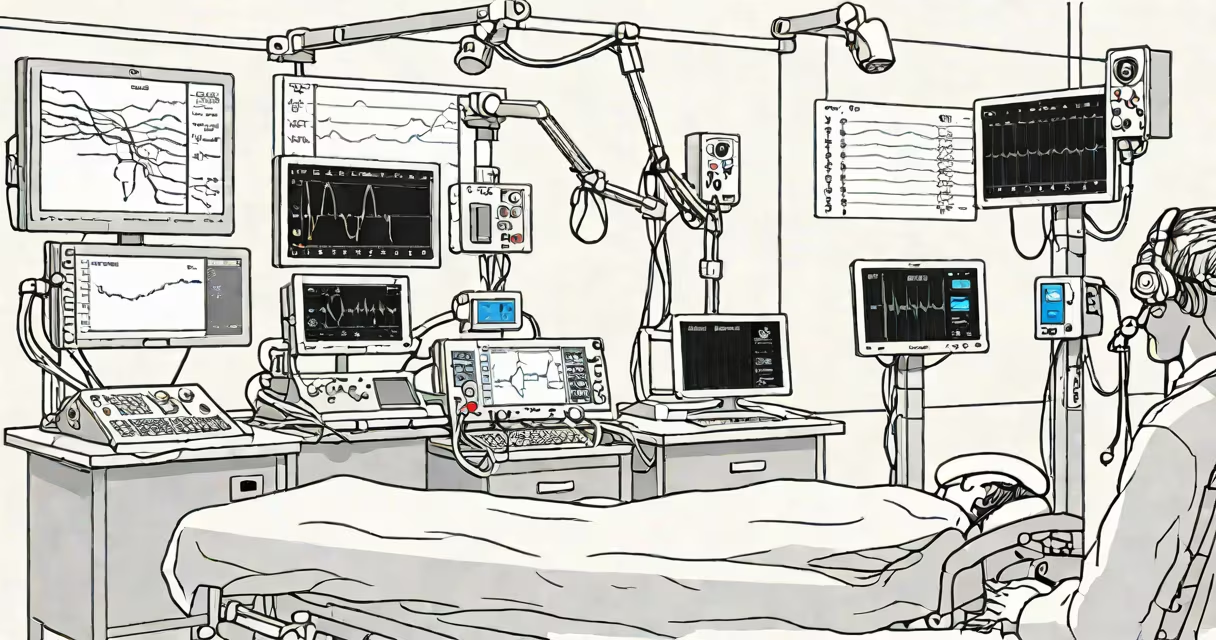
A neuro ICU is a specialized intensive care unit focused on treating patients with acute, life-threatening neurological conditions such as severe traumatic brain injury, stroke, status epilepticus, and spinal cord injuries. Unlike general ICUs, neuro ICUs have dedicated staff trained in neurological physiology and advanced monitoring techniques tailored to brain and spinal cord function.
These units operate under protocols designed to prevent secondary brain injury-damage that occurs after the initial insult due to swelling, low oxygen, or abnormal blood pressure. Patients are closely monitored using intracranial pressure (ICP) monitors, continuous EEG, and cerebral blood flow sensors. Treatment targets include maintaining optimal cerebral perfusion pressure, managing intracranial pressure, and preventing seizures.
The American Association of Neuroscience Nurses (AANN) reports that neuro ICU teams typically include neurointensivists-doctors certified in both neurology and critical care-alongside specially trained nurses and respiratory therapists. This multidisciplinary approach reduces mortality by up to 20% compared to standard ICU care for similar cases, according to a 2021 study published in *Critical Care Medicine*.
Neuro ICUs use real-time physiological data to guide interventions. For example, a patient with a subarachnoid hemorrhage may have an external ventricular drain (EVD) placed to monitor and reduce intracranial pressure. If ICP rises above 20 mmHg, clinicians initiate sedation, hyperventilation, or osmotic therapy with mannitol to lower pressure and prevent herniation.
Continuous EEG monitoring detects non-convulsive seizures in comatose patients. A 2020 study in *Neurocritical Care* found that 14% of ICU patients with altered mental status had seizures not visible on clinical exam-only detectable via EEG. Early detection allows prompt treatment with antiepileptics, reducing long-term disability.
Patients are often intubated and mechanically ventilated to maintain stable oxygenation and carbon dioxide levels. Hypocapnia (low CO₂) can reduce cerebral blood flow and worsen outcomes in traumatic brain injury. Therefore, ventilation settings are adjusted to keep PaCO₂ between 35-40 mmHg, balancing oxygen delivery and intracranial pressure control.
Neuro ICUs rely on several advanced tools not routinely used in general ICUs:
| Tool | Purpose | Normal Range |
|---|---|---|
| Intracranial Pressure (ICP) Monitor | Measures pressure inside the skull | <20 mmHg |
| Continuous EEG (cEEG) | Detects silent seizures | No epileptiform activity |
| Cerebral Oximetry (rSO₂) | Measures oxygen saturation in brain tissue | 60-80% |
| Transcranial Doppler (TCD) | Assesses blood flow velocity in major brain arteries | 50-100 cm/sec |
One non-obvious fact: many neuro ICU patients develop delirium due to sedatives, pain medications, and sensory deprivation. A 2022 review in *The Lancet Neurology* found that up to 50% of patients in neuro ICUs experience delirium during their stay. This increases risk of prolonged mechanical ventilation and longer hospital stays. Preventive strategies include early mobilization, minimizing sedation, and using validated delirium screening tools like the Confusion Assessment Method for the ICU (CAM-ICU).
Neuro ICUs manage a narrow set of high-acuity conditions. The most frequent diagnoses include:
A 2023 study in *JAMA Neurology* showed that patients with moderate-to-severe TBI admitted to a neuro ICU had a 35% higher survival rate at 6 months compared to those treated in general ICUs, primarily due to protocol-driven management of ICP and cerebral perfusion.
Neuro ICU is not a place for recovery from minor strokes or routine postoperative care. It is not equipped for long-term rehabilitation or palliative care. Patients who stabilize after 48-72 hours are often transferred to a step-down unit or neurology ward.
It is also not interchangeable with a general ICU. While both provide life support, neuro ICUs have unique staffing, equipment, and protocols. A patient with sepsis and confusion may be managed in a general ICU, but if they develop new-onset seizures or rising ICP, transfer to a neuro ICU becomes necessary.
One common misconception is that neuro ICU patients are always unconscious. Some patients remain awake and able to communicate. A 2021 case series in *Neurocritical Care* described 12 patients with traumatic brain injury who were conscious and cooperative despite elevated ICP. These cases required careful sedation titration to avoid masking neurological changes.
Consider a 28-year-old male involved in a motorcycle crash. He arrives at the emergency department with a GCS score of 6 (indicating severe brain injury). A CT scan shows a right-sided subdural hematoma with midline shift. He is intubated and taken to the neuro ICU.
Upon arrival, an ICP monitor is inserted. Within two hours, ICP reaches 28 mmHg. The team initiates hypertonic saline (3% NaCl) infusion to reduce cerebral edema. They also raise the head of the bed to 30 degrees and administer propofol for sedation to reduce metabolic demand.
After six hours, cEEG reveals burst suppression patterns-indicating suppressed brain activity. The team adjusts sedation to avoid excessive suppression. After 48 hours, the ICP stabilizes below 20 mmHg. The patient is weaned off sedation and begins to respond to commands. He is later transferred to a neurorehabilitation unit.
This case illustrates how neuro ICU care combines real-time monitoring, targeted pharmacology, and precise timing to improve outcomes. Without this level of specialized intervention, the risk of death or severe disability increases.
Neuro ICU admission is recommended for patients with:
Early consultation with a neurointensivist improves survival. According to the Brain Trauma Foundation, patients with TBI who receive neuro ICU care within 1 hour of arrival have a 25% lower mortality rate than those who wait more than 4 hours.
Understanding what is neuro ICU clarifies why specialized care matters. It's not just a room with monitors-it's a system designed to preserve brain function under extreme stress. With trained staff, advanced tools, and evidence-based protocols, neuro ICUs deliver precision medicine for the most vulnerable neurological patients.