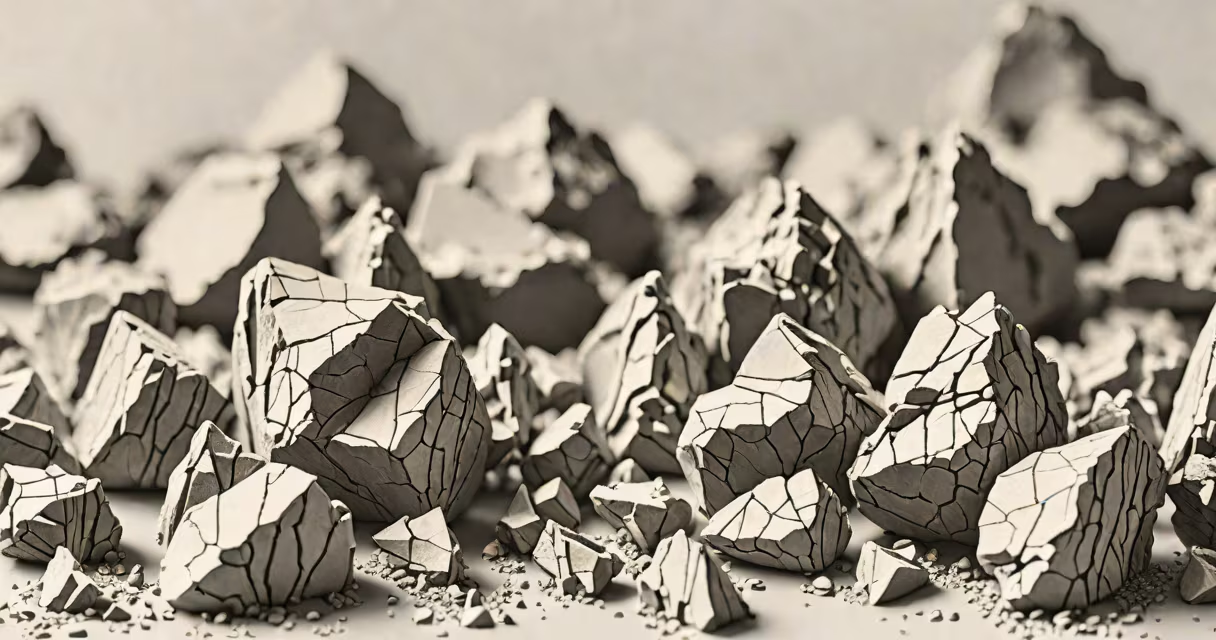
Phosphate rock is a naturally occurring sedimentary rock primarily composed of calcium phosphate minerals, most commonly apatite. It forms over millions of years from the accumulation and compression of marine organic material rich in phosphorus. This rock is the primary source of phosphorus for fertilizers, animal feed, and industrial chemicals.
Phosphorus is a critical element for plant growth and is often the limiting nutrient in agricultural systems. Without phosphate rock, modern crop yields would drop by 30-50%, according to the Food and Agriculture Organization (FAO). The mineral is extracted through open-pit mining and processed into phosphoric acid, which then becomes the base for most commercial fertilizers.
Global production of phosphate rock reached 220 million metric tons in 2022, with Morocco and Western Sahara accounting for nearly 75% of known reserves, as reported by the U.S. Geological Survey (USGS). These reserves are concentrated in a few countries, making phosphate rock a geopolitically sensitive resource.
Phosphate rock forms in shallow marine environments where dead organisms-especially fish and plankton-decompose and release phosphorus. Over time, this phosphorus precipitates and binds with calcium to form apatite crystals. As sediments settle and compact, they create layers of phosphate-rich rock.
Major deposits occur in North Africa, particularly in Morocco's Oued Ed-Dahab region, where vast sedimentary basins host high-grade ore. Other significant sources include the United States (Florida and North Carolina), China, Russia, and Western Sahara. The largest known deposit is the Khouribga mine in Morocco, producing over 10 million tons annually.
Geological surveys show that phosphate rock layers are typically 1-3 meters thick and embedded in limestone or clay matrices. Extraction requires removing overburden-up to 20 meters of soil and rock-before accessing the ore. This process generates large volumes of waste, known as phosphogypsum, which poses long-term storage challenges.
Phosphate rock varies in composition based on origin and processing. The main mineral is fluorapatite (Ca₅(PO₄)₃F), though hydroxyapatite (Ca₅(PO₄)₃OH) and chlorapatite (Ca₅(PO₄)₃Cl) also occur. Trace elements such as uranium, cadmium, and rare earth metals may be present, affecting both environmental risk and recovery value.
| Type | Primary Mineral | Typical P₂O₅ Content (%) | Common Source Region |
|---|---|---|---|
| High-grade | Fluorapatite | 30-36 | Morocco, Western Sahara |
| Low-grade | Hydroxyapatite | 18-25 | Florida, USA |
| Residual | Mixed apatites | 10-15 | China, India |
High-grade phosphate rock contains over 30% phosphorus pentoxide (P₂O₅), making it economically viable for direct processing into phosphoric acid. Low-grade ores require additional beneficiation steps, including flotation and acid leaching, to concentrate the phosphate content.
A lesser-known fact: some phosphate rock deposits contain measurable levels of uranium-up to 150 ppm in certain Moroccan samples. While this is below regulatory thresholds for nuclear fuel, it contributes to radioactive waste streams during processing. The U.S. Environmental Protection Agency (EPA) classifies phosphogypsum as a hazardous byproduct due to radionuclide content.
The overwhelming majority of mined phosphate rock-over 90%-is converted into phosphoric acid, which is then used to produce fertilizers. Diammonium phosphate (DAP) and monoammonium phosphate (MAP) are the most widely used nitrogen-phosphorus fertilizers globally.
For example, a typical cornfield in Iowa receives 120 kg/ha of DAP, containing approximately 18 kg of phosphorus. Without phosphate rock-derived fertilizers, achieving such yields would require more land or organic inputs, increasing pressure on ecosystems.
Non-agricultural uses include food additives (e.g., sodium phosphate in processed cheese), detergents (before bans in many countries), and industrial chemicals. In the U.S., the EPA banned phosphates in laundry detergents in 1970 due to eutrophication risks in waterways. However, phosphate rock remains essential in toothpaste formulations (as calcium phosphate) and pharmaceuticals.
Phosphate rock is often confused with phosphorus itself. Phosphorus is a chemical element (symbol P, atomic number 15), while phosphate rock is a mineral composite. You cannot extract elemental phosphorus directly from rock-it must first be reduced via high-temperature processes using carbon and silica.
Another misconception is that all phosphate rock is mined sustainably. In reality, large-scale operations in Western Sahara have drawn international criticism. The United Nations has stated that the exploitation of resources in occupied territories violates international law, and several countries have imposed sanctions on imports from the region.
I once visited a mine in Florida's Bone Valley region and observed the scale of extraction firsthand. A single dragline bucket lifted 15 cubic meters of overburden per cycle. The ore was then crushed and floated in large tanks to separate phosphate particles from clay. The process left behind a slurry of fine particulates that settled slowly in containment ponds-some of which remain active decades later.
Phosphate rock mining disrupts local ecosystems and releases heavy metals into runoff. A 2021 study published in *Environmental Science & Technology* found elevated cadmium levels in groundwater near phosphate facilities in North Carolina, exceeding EPA safety thresholds.
Despite concerns, demand continues to grow. The FAO projects global phosphorus demand to reach 1.3 billion tons of P₂O₅ equivalent by 2050, driven by population growth and dietary shifts toward meat consumption-meat production requires 10 times more phosphorus per calorie than plant-based diets.
Recycling phosphorus from wastewater and animal manure is gaining traction. Finland's Helsinki city project recovers 70% of phosphorus from sewage, reducing reliance on virgin rock. Yet, current recycling rates remain below 20% globally, according to the International Fertilizer Association.
Understanding what is phosphate rock reveals its dual role: a foundation of modern food security and a driver of environmental trade-offs. As the world seeks sustainable alternatives, the balance between agricultural productivity and ecological preservation hinges on responsible management of this finite resource.