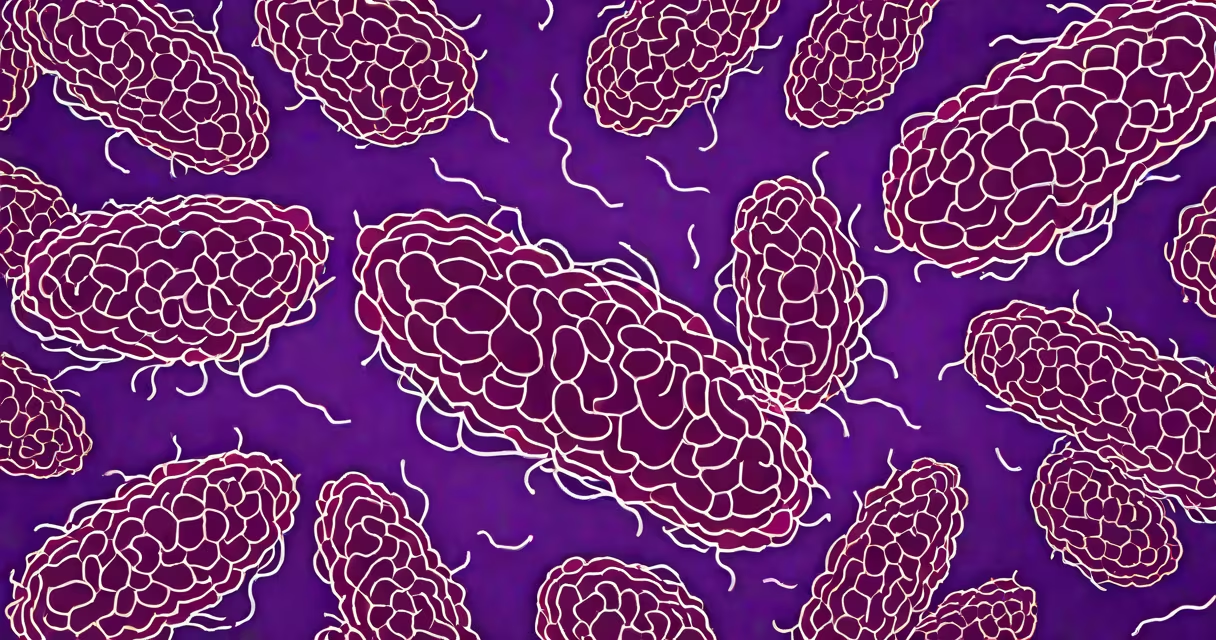
Salmonella typhi is a Gram-negative rod-shaped bacterium that causes typhoid fever, a systemic infection marked by prolonged high fever, headache, and gastrointestinal distress. It is transmitted through ingestion of food or water contaminated with human feces or urine.
This bacterium is distinct from other Salmonella species that cause foodborne gastroenteritis. While most Salmonella infections resolve within days, Salmonella typhi can survive in the gallbladder and bloodstream for weeks, leading to life-threatening complications if untreated. It affects approximately 11 million people globally each year, with higher incidence in regions with poor sanitation, according to the World Health Organization (WHO).
Salmonella typhi thrives in the human intestinal tract and invades the lymphoid tissue of the small intestine. Once absorbed, it travels via the bloodstream to the liver, spleen, and bone marrow. It evades immune detection by surviving inside macrophages-white blood cells meant to destroy pathogens-making treatment challenging without antibiotics.
Transmission occurs exclusively through the fecal-oral route. An infected person sheds the bacteria in their stool, and contamination happens when hands, food, or water come into contact with fecal matter. A single gram of feces from an infected individual can contain up to 10 billion bacteria.
Contaminated water supplies are a major vector in endemic areas. In India, for example, outbreaks have been traced to public water taps near slums where sewage systems are inadequate. In one documented case in Delhi, 23 people fell ill after drinking water from a single tap linked to a sewage leak.
After ingestion, the bacteria cross the intestinal epithelium using specialized proteins called T3SS (Type III Secretion System) to inject effector molecules into host cells. This allows them to invade and replicate inside macrophages. The immune system responds with inflammation, causing fever, malaise, and abdominal pain. Without treatment, the illness can progress to intestinal perforation or sepsis.
Salmonella typhi belongs to the species *Salmonella enterica* serovar Typhi. Unlike other Salmonella serovars such as Typhimurium or Enteritidis, which infect multiple hosts including birds and reptiles, Typhi is strictly human-adapted. It lacks genes for survival outside humans, making it less common in environmental samples.
| Bacterium | Host Range | Primary Transmission | Disease Outcome |
|---|---|---|---|
| Salmonella typhi | Humans only | Fecal-oral, contaminated water/food | Typhoid fever, systemic illness |
| Salmonella Typhimurium | Humans, poultry, rodents | Undercooked meat, eggs | Gastroenteritis, diarrhea |
| Salmonella Enteritidis | Humans, birds | Raw eggs, dairy | Acute diarrhea, fever |
A key difference lies in virulence factors. Salmonella typhi produces Vi antigen-a polysaccharide capsule that masks surface proteins from immune recognition. This feature is absent in non-typhoidal Salmonella strains, contributing to the bacterium's ability to persist in the bloodstream for longer periods.
Approximately 1-3% of individuals who recover from typhoid fever continue to shed Salmonella typhi in their stool for months or years. These asymptomatic carriers pose a significant public health risk because they show no signs of illness but can still transmit the disease.
The most famous historical example is Mary Mallon, known as "Typhoid Mary," a cook in New York City during the early 1900s. She was identified as a carrier after causing multiple outbreaks despite feeling healthy. Public health officials quarantined her for decades due to her role in spreading the disease.
Carriers often harbor the bacteria in the gallbladder, where bile creates a favorable environment for persistence. In one study published in *The Lancet Infectious Diseases*, researchers found that 60% of chronic carriers had gallstones, which may protect bacteria from antibiotics and immune cells.
Many confuse Salmonella typhi with other Salmonella strains. Non-typhoidal Salmonella typically causes acute, self-limiting diarrhea lasting 4-7 days. In contrast, typhoid fever develops slowly over 10-14 days and includes symptoms like rose spots (small pink rashes on the chest), relative bradycardia, and mental confusion.
Another misconception is that typhoid is rare in developed countries. While incidence is low-about 5 cases per 100,000 people annually in the U.S.-travelers returning from South Asia, Africa, or Latin America account for nearly all domestic cases. The Centers for Disease Control and Prevention (CDC) reports that 75% of U.S. typhoid cases result from international travel.
In 2018, a typhoid outbreak in Kathmandu affected 1,240 people over six weeks. Epidemiologists traced the source to a school cafeteria where a staff member with undiagnosed typhoid prepared meals. The kitchen used a single water tap connected to a leaking sewage pipe.
Testing confirmed Salmonella typhi in the tap water and leftover rice. The strain matched the isolate from the staff member's stool sample. Antibiotic resistance was detected-specifically to ampicillin and chloramphenicol-forcing clinicians to switch to ceftriaxone, a third-generation cephalosporin.
Public health teams isolated 117 contacts and administered prophylactic antibiotics. The outbreak ended after 45 days, but 14 patients required hospitalization, and two died from septic shock. This case illustrates how a single infected person in a high-contact setting can trigger widespread transmission.
Salmonella typhi bacteria remains a serious global health threat due to antibiotic resistance and persistent carriers. Preventive measures include safe water access, proper handwashing, and vaccination-especially for travelers to endemic zones. The WHO recommends the typhoid conjugate vaccine (TCV) for children aged 6 months and older, with protection lasting at least five years.