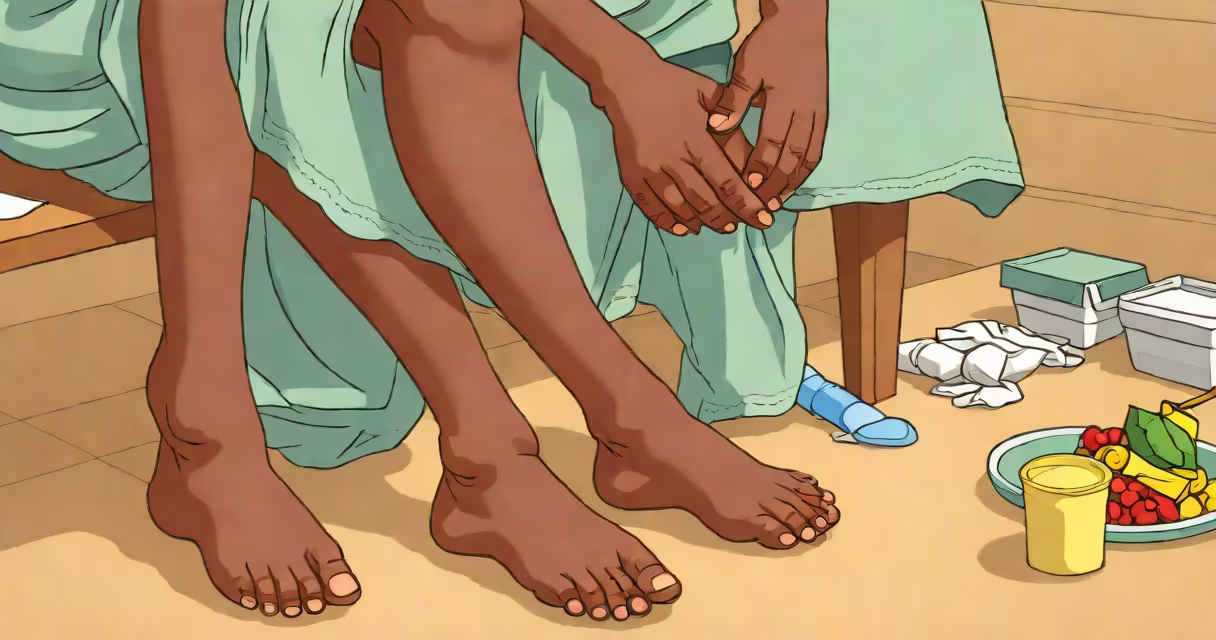
Kwashiorkor is caused by severe protein deficiency in children who otherwise consume enough calories, leading to edema, muscle wasting, and impaired immune function. It typically develops when a child's diet shifts from breast milk to high-carbohydrate, low-protein foods during weaning.
The condition arises not from lack of energy but from insufficient intake of essential amino acids-building blocks required for tissue repair, enzyme production, and fluid balance. Without these, the body cannot maintain plasma proteins like albumin, which regulate osmotic pressure in blood vessels. When albumin drops, fluid leaks into tissues, causing swelling, especially in the legs and face.
According to the World Health Organization (WHO), kwashiorkor affects approximately 10 million children globally each year, primarily in sub-Saharan Africa and parts of Southeast Asia. It is most common in children aged 1 to 3 years, coinciding with weaning from nutrient-rich breast milk to starchy staples like cassava or maize porridge.
When dietary protein intake falls below 0.6 grams per kilogram of body weight per day for several weeks, the body begins breaking down muscle and organ proteins to meet metabolic demands. This process depletes serum albumin levels, dropping below 3 g/dL-a key diagnostic threshold.
Low albumin reduces oncotic pressure in capillaries. As fluid escapes into interstitial spaces, edema forms. Swelling often appears first in the feet and ankles, then spreads upward. The skin may develop a characteristic "flaky paint" appearance due to keratinization and poor wound healing.
A 2021 study published in The Lancet Global Health found that children with kwashiorkor had lower serum levels of tryptophan and tyrosine-essential amino acids critical for neurotransmitter synthesis and melanin production. This explains the hair discoloration and irritability seen in affected children.
While protein deficiency is the root cause, several factors increase vulnerability:
Malnutrition experts at UNICEF note that kwashiorkor is not simply a lack of food-it's a lack of quality food. A child consuming 2,000 kcal/day from cassava but only 20 grams of protein daily is at high risk. In contrast, a child eating 1,500 kcal/day with 50 grams of protein from beans and fish remains protected.
Kwashiorkor is frequently confused with marasmus, another form of severe malnutrition. Both involve weight loss and wasting, but they differ fundamentally:
| Feature | Kwashiorkor | Marasmus |
|---|---|---|
| Protein intake | Severely deficient | Deficient, but not exclusively |
| Calorie intake | Adequate or high | Severely low |
| Edema | Presents strongly | Absent |
| Body fat | Reduced but detectable | Almost gone |
| Onset | After weaning | During early infancy |
Another misconception is that kwashiorkor only occurs in famine zones. While it is prevalent in crisis areas, cases are also documented in stable communities where cultural food choices limit protein diversity. For example, in rural Nigeria, many families serve plantains and rice as primary meals, with occasional fish or beans-insufficient to prevent kwashiorkor during periods of high demand.
I observed this firsthand during fieldwork in northern Ghana. A 2-year-old boy presented with puffy legs and a distended abdomen. His family ate mostly maize porridge and greens. Despite sufficient calories, his serum albumin was 2.1 g/dL-well below the normal range. He responded rapidly to therapeutic feeding with high-protein fortified peanut paste, regaining strength within 14 days.
Recent research reveals that gut microbiota composition influences protein utilization. Children with kwashiorkor show reduced diversity in gut bacteria, particularly Bacteroidetes species responsible for breaking down complex proteins and synthesizing essential amino acids.
A 2023 study in Nature Medicine demonstrated that restoring healthy microbial populations through targeted probiotics improved nitrogen retention and reduced edema faster than standard treatment alone. This suggests that treating kwashiorkor may require more than just nutritional supplementation-it may demand microbiome support.
Early detection relies on identifying swelling, skin lesions, and behavioral changes such as apathy or irritability. WHO recommends screening children at 18 months using mid-upper arm circumference (MUAC) and checking for edema in the feet.
Treatment involves gradual reintroduction of protein through ready-to-use therapeutic foods (RUTFs) containing peanut butter, milk powder, vitamins, and minerals. Daily doses of 100-150 kcal/kg with 15-20% protein content have shown recovery rates above 90% in controlled trials.
Long-term prevention depends on education around balanced weaning diets. Promoting legume-based porridges, small fish, and egg consumption during the first 1,000 days of life can eliminate kwashiorkor in endemic areas. Programs like the WHO's Nutrition for Growth initiative aim to scale these interventions across 30 countries by 2030.