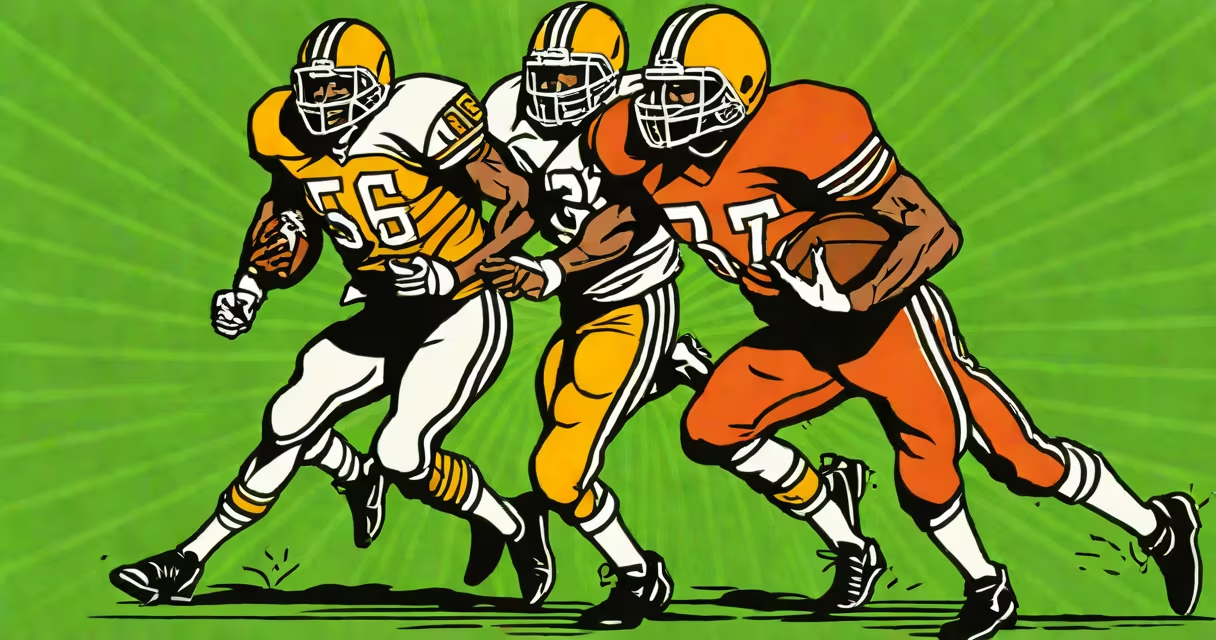
A blitz in football is a defensive play where additional players beyond the usual four rush the quarterback, typically from unexpected angles. This aggressive tactic aims to disrupt passing plays, force hurried throws, or generate a sack. Blitzes are most effective when coordinated with coverage schemes that protect against quick passes.
Blitz football is not a standalone formation but a strategic decision made by defensive coordinators based on offensive tendencies, down-and-distance situations, and personnel matchups. It's often used in third-down scenarios, especially when the offense is likely to pass. The term "blitz" originated in American football in the 1960s, evolving from earlier forms of pressure designed to collapse the pocket.
According to the NFL's official rulebook, a blitz occurs when five or more defenders cross the line of scrimmage before the snap. The rule doesn't define which players must be involved-any combination of linebackers, safeties, or even cornerbacks can participate. The key is intent: to apply immediate pressure on the quarterback.
When a team runs a blitz, the defensive coordinator assigns one or more players to rush the quarterback while others drop into coverage. For example, a 4-3 defense might send the middle linebacker and one outside linebacker on a blitz, leaving only two safeties and two cornerbacks to cover receivers. The success of the blitz hinges on timing, deception, and precise execution.
Defensive backs often adjust their routes to account for the extra rusher. A safety may move deeper into the secondary, or a cornerback may switch from man-to-man to zone coverage. If the blitz is successful, the quarterback is pressured into making a mistake-throwing behind the line, fumbling, or getting sacked. If it fails, the offense gains an advantage through open passing lanes.
Teams use blitz packages based on the situation. A "quarterback spy" is a common variation where a defender is assigned to track the quarterback's movement, especially if he's mobile. The spy stays in the backfield until the ball is snapped, then moves to intercept any escape route. This is frequently seen in high-stakes games like the Super Bowl.
Blitzes vary by structure and purpose. The most common types include:
| Type | Players Involved | Use Case | Example |
|---|---|---|---|
| Four-man blitz | Two linebackers, two defensive linemen | Standard pressure on third down | Green Bay Packers' 2021 NFC Championship game |
| Five-man blitz | Three linebackers, two defensive linemen | Against mobile quarterbacks | Los Angeles Rams' 2022 playoff run |
| Six-man blitz | Four linebackers, two defensive linemen | Short-yardage or goal-line defense | New Orleans Saints' 2023 season opener |
| Zone blitz | Linebacker drops into coverage; safety rushes | Deception to confuse offensive line | Seattle Seahawks' 2020 regular-season game vs. 49ers |
The zone blitz is particularly effective because it disguises the rush. A linebacker appears to be dropping into coverage but instead bursts forward at the snap. This tactic relies heavily on timing and misdirection. According to Pro Football Focus, zone blitzes resulted in a 12.3% sack rate in 2023-higher than standard blitzes.
One non-obvious fact: blitzes are less effective on second-and-long than on third-and-short. The NFL's 2023 analytics report shows that blitz success rates drop from 38% on third down to 24% on second down. This is because offenses have more time to react and recognize the blitz, especially when they're facing long yardage.
Coaches deploy blitzes most frequently in high-use moments. Third downs, especially with under 5 yards to go, see the highest frequency of blitz usage. The average NFL team runs a blitz on 28% of third downs, according to ESPN's 2023 season analysis.
Blitzes are also common in red-zone situations. When the offense is within 10 yards of the end zone, defenses often increase pressure to prevent scoring. However, this is risky-the average completion rate on blitzed plays in the red zone is 72%, compared to 58% on non-blitzed plays. That means the risk of allowing a touchdown increases.
Teams with elite pass-rushers lean into blitzing more. The Kansas City Chiefs, with Chris Jones and Trent McDuffie, ran a blitz on 35% of their defensive snaps in 2023. Conversely, teams with weaker edge rushers avoid blitzing unless necessary. The Cleveland Browns, lacking a dominant pass rusher, used blitzes on only 18% of snaps that season.
Many fans assume a blitz always results in a sack or turnover. That's incorrect. The primary goal is to disrupt timing, not necessarily to record a tackle. A successful blitz can lead to a completed pass if the quarterback reads the pressure quickly and throws early.
Another misconception is that blitzes are only used against weak offensive lines. In reality, elite offensive units like the San Francisco 49ers regularly face blitzes. Their quarterback, Brock Purdy, faced a blitz on 31% of his dropbacks in 2023-more than any other starter. His ability to read and counter blitzes contributed to a 105.2 passer rating in those situations.
Some believe that blitzing is a sign of poor discipline. But research from the Football Outsiders database shows that teams using blitzes effectively rank higher in defensive efficiency. The 2023 Philadelphia Eagles, who ranked #1 in defensive DVOA, ran a blitz on 32% of snaps-second-highest in the league.
In the 2023 NFC Championship between the Philadelphia Eagles and the Washington Commanders, the Eagles used a zone blitz on third-and-4 from the 35-yard line. The safety, K'Von Wallace, dropped into coverage while the middle linebacker, Zack Baun, rushed from the opposite side. The offensive line failed to recognize the motion, and the quarterback was sacked for a 10-yard loss. The Eagles went on to score a touchdown on the next drive.
This play illustrates how a well-executed blitz can change momentum. The Eagles' defensive coordinator, Sean Desai, later confirmed that the zone blitz was designed to exploit the Commanders' tendency to leave the tight end in the backfield. By sending the linebacker from the weak side, they created a mismatch that led to the sack.
Blitz football is not a single play-it's a calculated response to offensive formations, clock management, and personnel. It requires coordination, film study, and in-game adaptability. Coaches don't call blitzes randomly. They base decisions on data, opponent tendencies, and situational awareness.
Understanding the definition of blitz football means recognizing it as a tactical tool, not a gimmick. It's not about speed or aggression alone-it's about timing, deception, and execution. When used correctly, it can stop drives, create turnovers, and shift momentum. When misused, it leaves the defense vulnerable to big plays.