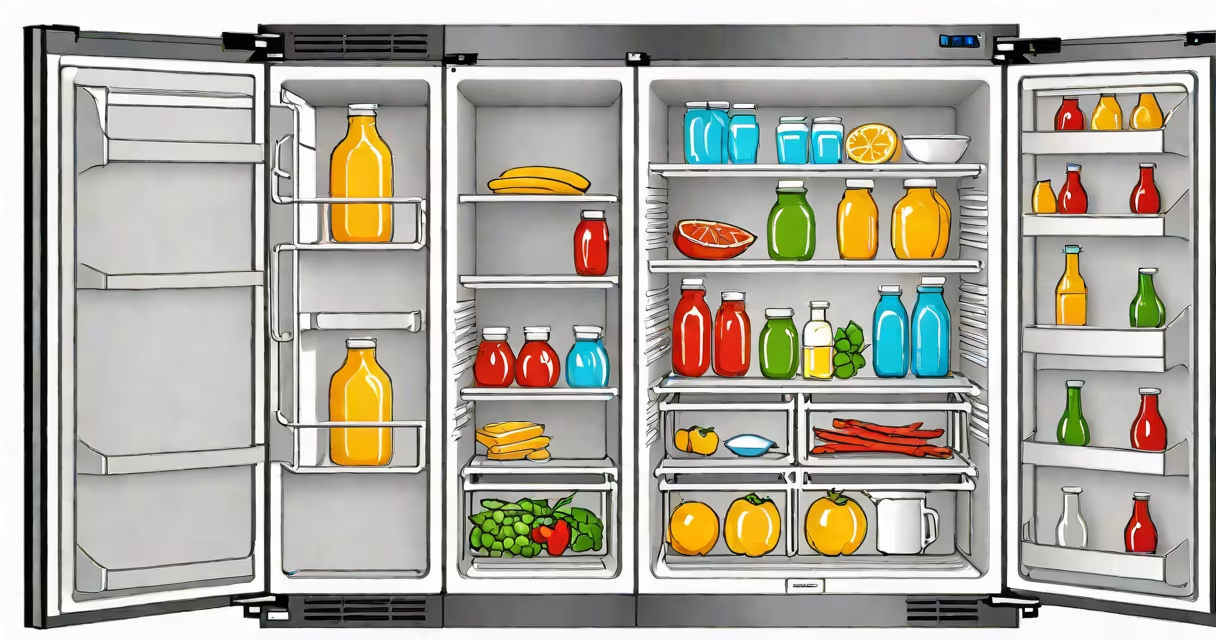
A refrigerator stays cold through a continuous cycle of heat removal using a pressurized coolant, mechanical compression, and controlled heat exchange. This process relies on thermodynamic principles to move thermal energy from inside the unit to the external environment.
The core mechanism is the vapor-compression refrigeration cycle. A refrigerant fluid circulates through sealed tubing, absorbing heat inside the fridge and releasing it outside. The cycle begins when low-pressure, low-temperature refrigerant enters the evaporator coil, located inside the freezer and fresh food compartments. As the refrigerant absorbs heat from the air and stored items, it changes from liquid to gas. This phase change draws thermal energy away, lowering the internal temperature.
Once vaporized, the refrigerant travels to the compressor, a motor-driven pump located at the back or bottom of the appliance. The compressor increases the pressure and temperature of the gaseous refrigerant. High-pressure, high-temperature vapor then flows into the condenser coils, usually mounted on the back or sides of the fridge. Here, ambient room air cools the hot gas, turning it back into a liquid. The heat released during this condensation is expelled into the kitchen.
After condensing, the liquid refrigerant passes through an expansion valve-a small orifice that reduces pressure abruptly. This drop causes the refrigerant to cool before entering the evaporator, restarting the cycle. The entire process repeats every few minutes, maintaining a stable internal temperature around 37°F (3°C).
Each part of the refrigeration system performs a distinct function critical to cooling efficiency:
Many people assume that cold air is pumped into the fridge. In reality, cold air forms as a result of heat being drawn out. The fan circulates cooled air, but the actual cooling happens via the refrigerant's phase change.
A frequent error is blaming the thermostat for poor cooling. While the thermostat controls when the compressor turns on and off, a malfunctioning compressor or blocked condenser coils often cause failure. For example, dust buildup on the condenser fins can reduce heat dissipation by up to 30%, leading to higher internal temperatures and increased compressor runtime.
Another misunderstanding involves the role of insulation. While foam insulation between the inner and outer walls prevents heat from entering, it doesn't generate cold. Without the refrigeration cycle, insulation alone cannot maintain sub-freezing temperatures. A fridge left unplugged with full insulation still warms to room temperature within 24 hours.
Suppose a refrigerator fails to keep food cold. The user notices ice forming on the back wall of the freezer and warm air blowing from the vents. This indicates a problem with airflow or defrosting, not the refrigeration cycle itself.
Testing reveals the evaporator fan is frozen due to a failed defrost heater. The heater normally melts frost that accumulates on the evaporator coil. When it fails, frost builds up, blocking airflow and reducing heat absorption. Even though the compressor runs, the cooling capacity drops because the evaporator can't absorb heat effectively.
Replacing the defrost heater restores proper airflow. After 12 hours, the freezer reaches -10°F (-23°C), and the fridge maintains 38°F (3°C). This shows that the refrigeration cycle functions correctly-but auxiliary systems like defrost heaters are essential for sustained performance.
Refrigerators differ from freezers in operating temperature and refrigerant charge. Freezers typically run at -10°F (-23°C), requiring lower saturation pressures and different refrigerant blends. Using the wrong refrigerant in a freezer can lead to compressor damage due to excessive pressure.
Not all cooling systems use the same refrigerant. Older models (pre-2010) used R-12, which was phased out due to ozone depletion. Modern units use R-134a or R-600a, which have lower global warming potential. According to the U.S. Environmental Protection Agency (EPA), R-600a has a GWP of 3, compared to R-134a's 1,430.
Another subtle point: the condenser does not cool the refrigerant-it releases heat. The misconception that "cooling" happens in the condenser leads users to think cleaning the back of the fridge improves cooling. While cleaning the condenser coils helps, it's not because the coils cool the refrigerant. They remove heat so the refrigerant can condense and return to the evaporator.
I once repaired a refrigerator that had stopped cooling entirely. The compressor ran continuously, but the interior remained above 50°F. Upon inspection, the expansion valve was clogged with debris. The restriction prevented proper refrigerant flow, causing the evaporator to starve. Without adequate liquid refrigerant, the evaporator couldn't absorb heat. Replacing the valve restored normal operation. This confirmed that the compressor and thermostat were functional-the issue lay in the flow control system.
If a fridge runs constantly, makes loud knocking noises, or fails to cool despite a functioning compressor, the problem may involve refrigerant leaks or compressor failure. These require professional diagnosis and repair. Attempting to recharge refrigerant without proper tools and certification violates EPA regulations under Section 608 of the Clean Air Act.
For routine maintenance, clean the condenser coils every six months. Use a vacuum with a brush attachment to remove dust and pet hair. Ensure the door seals tightly-test by closing a dollar bill in the door; if it pulls out easily, the seal is compromised.
Understanding what keeps a refrigerator cold reveals that it's not magic-it's physics. The refrigeration cycle moves heat, not cold. The system depends on precise timing, correct refrigerant levels, and clean components. When one element fails, the whole system degrades.