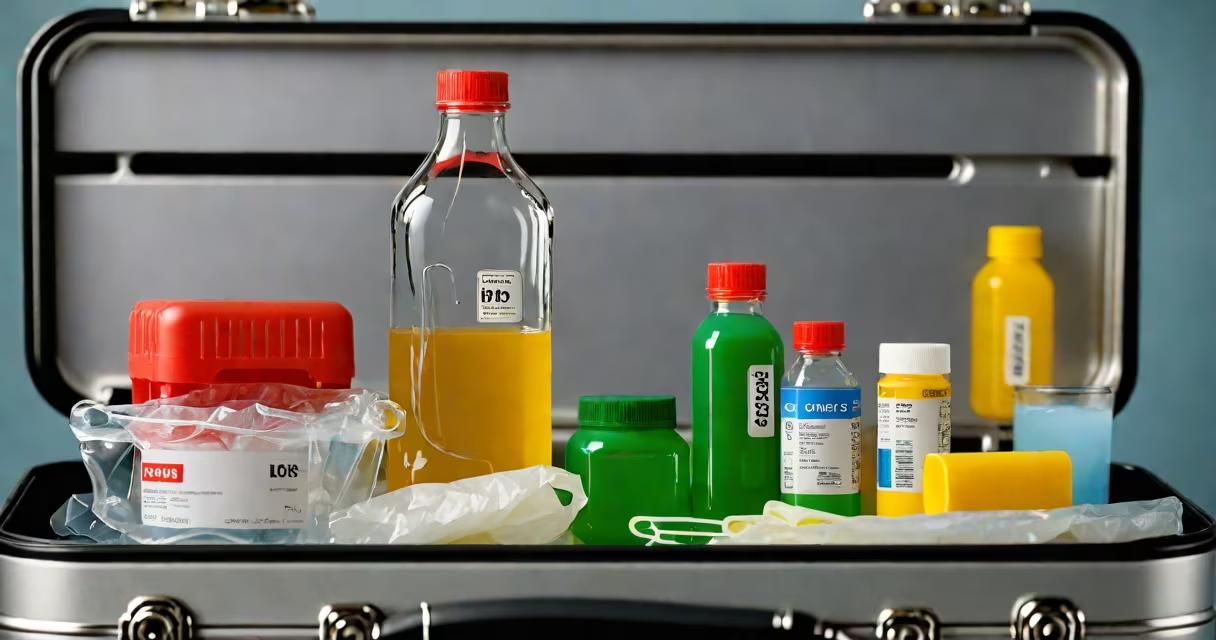
You can carry on liquids in containers of 3.4 ounces (100 milliliters) or less, packed in a single clear quart-sized bag, with no more than one bag per passenger. This rule applies to all domestic and international flights departing from U.S. airports and is enforced by the Transportation Security Administration (TSA).
The 3.4-ounce limit is based on the metric system standard used globally for air travel safety. Containers larger than this must be packed in checked baggage. This includes common personal care items such as shampoo, conditioner, lotion, toothpaste, and deodorant. Even if a product is sold in a larger bottle, you must transfer it into a smaller container that meets the size requirement.
For example, a 12-ounce bottle of hand sanitizer cannot be carried on unless it's decanted into a container under 3.4 ounces. The TSA requires all liquid containers to fit comfortably in a single, transparent, resealable quart-sized bag. Bags larger than a quart or made of opaque material are not permitted.
At airport security checkpoints, passengers must remove their quart-sized bag of liquids from their carry-on and place it in a bin for screening. The bag must be visible and not stuffed with items that prevent inspection. If multiple bags are presented, they may be rejected or cause delays.
Items like gels, pastes, and creams follow the same rule. Toothpaste counts as a liquid under TSA guidelines, even though it's semi-solid. So a 3.5-ounce tube of toothpaste must be packed in checked luggage or transferred to a smaller container.
When traveling internationally, the same 3.4-ounce rule applies to flights departing from U.S. airports. However, some countries have different regulations. For example, the European Union allows liquids up to 100 ml in containers, but requires them to be in a transparent bag. Always verify the destination country's rules if you're connecting through foreign hubs.
Not all liquids are treated equally. Some items are exempt due to medical necessity or special circumstances. Below is a breakdown of typical carry-on liquids:
| Liquid Type | Allowed Size | Special Conditions |
|---|---|---|
| Shampoo, conditioner | ≤3.4 oz (100 mL) | Must fit in quart bag |
| Toothpaste | ≤3.4 oz | Counted as liquid; not allowed in bulk |
| Deodorant (stick form) | No limit | Stick form is solid; spray or gel versions count as liquids |
| Alcohol (over 70% proof) | Not allowed in carry-on | Must be in checked luggage; 70% proof is the threshold |
| Medications (liquid) | Unlimited, if declared | Must be declared at checkpoint; no size limit if medically necessary |
One non-obvious fact: baby formula, breast milk, and liquid medications are exempt from the 3.4-ounce rule. You can bring more than one container if needed, as long as you declare them at the security checkpoint. This exemption exists because these items are essential for health and safety during travel.
Another common mistake: assuming that a 3.4-ounce container is the same as a 100-milliliter container. They are nearly equivalent-3.4 ounces equals 100.6 milliliters-but the TSA strictly enforces the 3.4-ounce measurement. A container labeled "100 mL" may still exceed the limit if it's slightly over 3.4 ounces. Always measure carefully.
Many travelers assume that the 3.4-ounce rule applies to all liquids, including those in aerosol cans. But aerosols such as hair spray, deodorant sprays, and shaving foam are subject to additional restrictions. These items are considered pressurized liquids and must be in containers under 3.4 ounces, stored in the same quart bag.
Some people believe that liquids in duty-free shops are exempt. This is false. Duty-free purchases made after passing through security are allowed in carry-ons, but only if they are sealed in a tamper-proof bag with a receipt. If you buy a perfume in a duty-free shop at the airport, you can carry it on-but only if it's in a sealed bag and you have proof of purchase.
A frequent error is placing multiple small containers in a single bag. The rule allows only one quart-sized bag per passenger. If you have two bags, even if each contains only five 3.4-ounce bottles, you'll be asked to repack or check the excess.
I once flew from New York to Los Angeles with a carry-on containing toiletries for a 10-day trip. I brought a 3.4-ounce bottle of shampoo, a 3.4-ounce tube of toothpaste, a 3.4-ounce container of moisturizer, and a 3.4-ounce bottle of sunscreen. All fit in a single clear quart bag.
At the checkpoint, I removed the bag and placed it in the bin. The screener scanned it and waved me through. No issues. But earlier in the week, I had tried to bring a 6-ounce bottle of face wash in my pocket. It was confiscated and I had to discard it. That's why checking containers beforehand matters.
After the flight, I used the remaining products. The sunscreen lasted through four days of beach time. The moisturizer held up well in dry cabin air. The toothpaste prevented morning breath. All within the rules.
Remember: the rule is not about volume alone-it's about containment, labeling, and presentation. A single oversized container or a bag with multiple layers of liquids will trigger a secondary screening. Stay compliant, stay efficient.