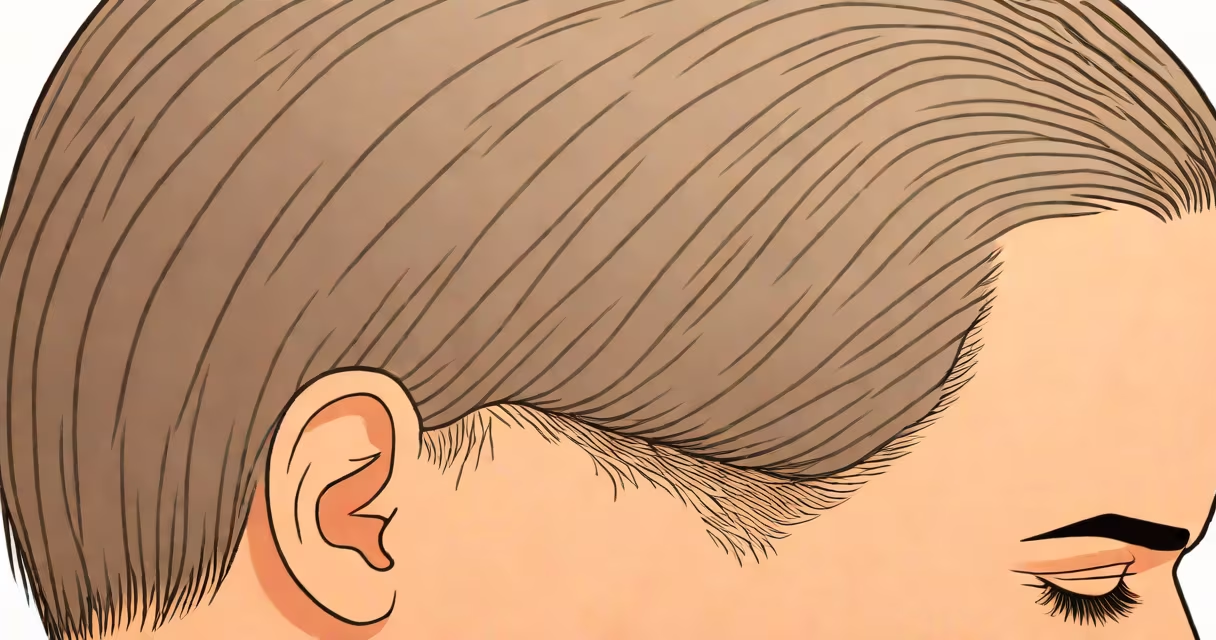
Alopecia areata stress induced refers to a form of autoimmune hair loss triggered by psychological or physiological stress, resulting in sudden, circular patches of hair loss on the scalp or body. This condition occurs when the immune system mistakenly attacks hair follicles, often following significant life events such as trauma, illness, or prolonged anxiety.
Stress does not cause alopecia areata directly, but it can act as a catalyst in individuals genetically predisposed to the disorder. The immune system becomes dysregulated under chronic stress, leading to T-cell infiltration around hair follicles. This process disrupts the normal hair growth cycle, causing follicles to enter a dormant phase prematurely. The result is abrupt hair loss in well-defined areas, typically 1-2 cm in diameter, which may regrow spontaneously or persist for months.
According to the American Academy of Dermatology Association (AAD), approximately 6.8 million people in the U.S. have alopecia areata, with onset most common between ages 20 and 40. While genetic factors account for 50-70% of risk, environmental triggers-including severe stress-are increasingly recognized as contributors to disease activation. A 2021 study published in *JAMA Dermatology* found that 62% of patients reported a major stressful event within six months prior to symptom onset.
Chronic stress elevates cortisol and catecholamine levels, disrupting immune homeostasis. These hormones alter dendritic cell function and promote pro-inflammatory cytokine release, including interferon-gamma and tumor necrosis factor-alpha. These molecules signal T cells to migrate to the skin and attack hair follicles, mistaking them for foreign invaders.
The hair follicle's immune privilege-its ability to shield itself from immune surveillance-is compromised under stress. Normally, follicles express regulatory proteins like PD-L1 to suppress immune activity. But in stressed individuals, this protection fails. A 2019 study in *Nature Immunology* demonstrated that mice exposed to chronic restraint stress developed spontaneous alopecia areata-like lesions, confirming the direct link between neural-immune signaling and autoimmunity.
Physical stressors-such as surgery, childbirth, or acute infections-can also initiate the condition. For example, a 2020 case report documented a 34-year-old woman who lost 80% of her scalp hair within four weeks after recovering from a severe viral infection. Her symptoms resolved partially after corticosteroid treatment and stress management therapy, underscoring the interplay between immune activation and stress response.
Alopecia areata manifests in several distinct patterns, each indicating different severity and prognosis:
| Type | Description | Prevalence | Prognosis |
|---|---|---|---|
| Single patch | One or two small round bald spots | ~50% | High chance of spontaneous regrowth |
| Multiple patches | Several patches appearing simultaneously | ~30% | Lower recovery rate; higher relapse risk |
| Ophiasis | Ring-shaped hair loss along the scalp's perimeter | ~10% | More resistant to treatment; associated with nail changes |
| Totalis | Complete loss of scalp hair | ~5% | Often progresses to universalis; requires medical intervention |
When stress is the trigger, the onset is often rapid-within days to two weeks-and frequently coincides with periods of high emotional load. Patients may describe waking up to find a noticeable bald spot, especially after sleep disruption or intense work demands. The absence of itching or pain differentiates this from fungal infections or psoriasis.
Alopecia areata stress induced is not the same as telogen effluvium, a temporary shedding caused by nutrient deficiency, hormonal shifts, or postpartum changes. Telogen effluvium causes diffuse thinning across the entire scalp, not discrete patches. It resolves within 3-6 months without treatment. In contrast, alopecia areata involves immune-mediated destruction of follicles and may require immunomodulatory therapy.
Another frequent confusion is equating alopecia areata with dandruff or seborrheic dermatitis. While both can cause flaky skin and mild hair loss, they lack the sharply demarcated, smooth patches seen in alopecia areata. The absence of scaling and the presence of a "moth-eaten" appearance distinguish it from inflammatory scalp conditions.
Stress does not cause alopecia areata in isolation. A person must carry specific HLA alleles-particularly HLA-DRB1*04:01 and HLA-DQB1*03:02-to develop the condition. Without this genetic background, even extreme stress won't trigger the disease. This explains why only a minority of people experiencing trauma go on to develop alopecia areata.
In 2022, a 29-year-old software engineer presented with three 1.5 cm round bald patches on his crown and left temporal region. He reported working 80-hour weeks during a product launch, sleeping fewer than five hours nightly, and experiencing panic attacks. Blood tests ruled out thyroid dysfunction, iron deficiency, and vitamin D insufficiency. A scalp biopsy confirmed lymphocytic infiltration around anagen-phase follicles.
He was diagnosed with alopecia areata stress induced. After six weeks of topical minoxidil and intralesional triamcinolone injections, two patches regrew 30% of their original density. His psychiatrist initiated cognitive behavioral therapy (CBT) and mindfulness training. Over nine months, he reduced work hours and improved sleep hygiene. By the 12-month mark, all patches had regrown fully, with no recurrence.
This case illustrates that while stress can initiate the disease, outcomes improve with combined medical and lifestyle interventions. The patient's recovery was not due to medication alone-it required addressing the root stressors.
There is no cure for alopecia areata, but treatments aim to suppress immune activity and stimulate regrowth. Topical corticosteroids, intralesional steroids, and JAK inhibitors (like ruxolitinib) are FDA-approved for moderate-to-severe cases. However, JAK inhibitors carry black-box warnings for increased risk of thrombosis and malignancy, limiting long-term use.
Non-pharmacological approaches show promise. A 2023 pilot study in *Dermatologic Therapy* found that patients practicing daily breathwork and guided imagery had a 40% higher remission rate over 18 months compared to controls. Mind-body practices appear to modulate autonomic nervous system activity, reducing systemic inflammation.
Recovery timelines vary widely. Some patients see regrowth within weeks; others experience persistent cycles. The key is early diagnosis and consistent follow-up. With proper support, many achieve stable, long-term outcomes.