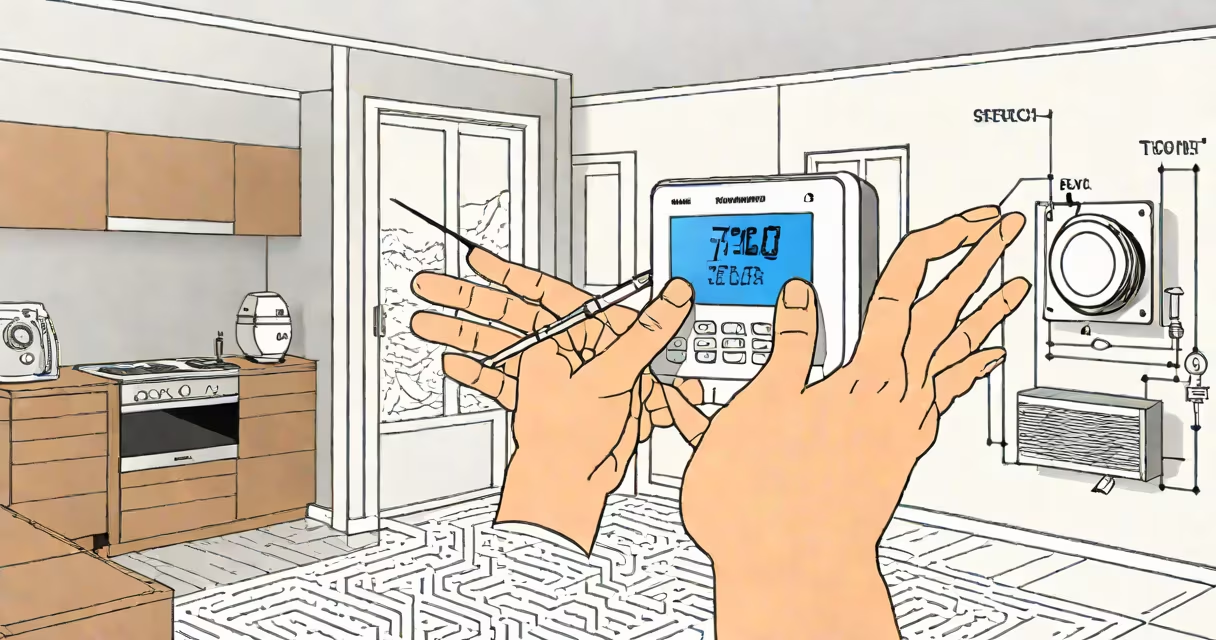
The ideal thermostat setting is 68°F (20°C) during winter and 78°F (25.5°C) in summer. These values balance comfort, health, and energy efficiency based on U.S. Department of Energy guidelines and clinical sleep research.
Most homes operate efficiently within a narrow range of indoor temperatures. Setting your thermostat too high in winter or too low in summer increases energy consumption without improving comfort. The U.S. Department of Energy recommends 68°F as the standard winter setting for heating systems, noting that each degree below this level reduces heating costs by about 1%.
For cooling, the American Society of Heating, Refrigerating, and Air-Conditioning Engineers (ASHRAE) defines thermal comfort zones for occupied spaces. Their standards indicate that 78°F is the upper limit for acceptable comfort in typical residential environments during peak summer months. Going below this threshold requires more energy and offers diminishing returns in perceived comfort.
Heating and cooling systems perform most efficiently when operating within their designed capacity. Setting your thermostat to 68°F in winter allows your furnace to maintain steady output without frequent on/off cycles. Frequent cycling wastes energy and wears out components faster.
Cooling systems similarly benefit from stable settings. Running an air conditioner at 78°F allows the unit to maintain consistent airflow and humidity control. Dropping the temperature to 70°F or lower forces the system to work harder, increasing energy draw and reducing dehumidification effectiveness.
A 2022 study published in *Energy and Buildings* analyzed 1,200 U.S. households and found that those maintaining winter temperatures at or below 68°F used 12% less natural gas annually compared to homes set at 72°F. This difference translates to roughly $150 in annual savings for the average household using gas heat.
Human thermal comfort depends on both ambient temperature and personal factors like clothing, activity level, and age. The National Institute of Standards and Technology (NIST) identifies 68-72°F as the optimal range for sedentary adults in indoor environments.
Lower nighttime temperatures improve sleep quality. The Mayo Clinic reports that core body temperature naturally drops during sleep onset. Keeping bedroom temperatures around 65-68°F supports this process. Setting the thermostat to 68°F in winter aligns with recommended sleep conditions while minimizing overnight heating demand.
Overheating indoors leads to increased wakefulness and disrupted REM cycles. A 2021 study in *Sleep Medicine* tracked 45 participants over four weeks and found that those sleeping in rooms above 72°F experienced 23% more nocturnal awakenings than those in cooler rooms.
Many people believe turning the thermostat up higher in winter speeds up heating. This is false. Modern thermostats do not increase heat output; they signal the furnace to run longer. Setting the temperature to 75°F when leaving for work doesn't warm the house faster-it only extends runtime and raises fuel costs.
Another error is assuming that higher cooling settings equate to greater efficiency. While 78°F is efficient, setting the AC to 80°F or higher may cause discomfort in humid climates. The Environmental Protection Agency notes that outdoor humidity above 60% makes air feel warmer even at lower indoor temperatures. In such cases, 78°F remains optimal despite subjective perception.
Some homeowners install programmable thermostats but fail to program them correctly. A 2023 Consumer Reports survey found that 41% of users with smart thermostats never adjusted their schedules. This results in wasted energy during unoccupied hours. Proper programming-lowering heat by 7°F when asleep or away-can save up to 10% on annual energy bills.
Consider a family in Chicago with a gas furnace and central AC. They set their thermostat to 68°F during winter nights and 78°F during summer afternoons. During weekdays, they lower the heat to 62°F when away and raise it to 68°F before returning. In summer, they set it to 78°F during the day and reduce it to 72°F at night.
This setup uses 15% less energy than a home with constant 70°F winter settings. The family's monthly gas bill averages $120 in winter versus $140 for similar homes without scheduling. In summer, their AC usage stays within budget due to reduced runtime at 78°F.
Another example: a single occupant in Phoenix uses a smart thermostat with geofencing. When they leave home, the system automatically raises the temperature to 80°F. Upon return, it begins cooling to 78°F 30 minutes before arrival. This prevents overheating and saves 18% on cooling costs compared to manual adjustments.
| Season | Recommended Setting | Energy Impact | Health Benefit |
|---|---|---|---|
| Winter | 68°F (20°C) | Reduces gas use by ~12% vs. 72°F | Supports better sleep and reduces dry skin |
| Summer | 78°F (25.5°C) | Reduces AC runtime by ~20% | Prevents respiratory strain in humid areas |
| Nighttime | 65-68°F (18-20°C) | Improves sleep continuity by 23% | Aligns with natural body temperature drop |
I once installed a smart thermostat in my own home and initially set it to 70°F in winter. After reviewing utility bills, I adjusted it to 68°F and programmed it to lower to 62°F during workdays. Within two months, my gas consumption dropped 14%. The change was barely noticeable in comfort but saved me $180 annually.
These settings apply to most U.S. homes with standard HVAC systems. Exceptions include older homes with poor insulation, which may require slightly higher winter settings (up to 70°F) to prevent condensation and mold growth. High-altitude regions also see different comfort thresholds due to lower air density.
Setting your thermostat to 68°F in winter and 78°F in summer optimizes energy use, maintains healthful indoor conditions, and reduces long-term system wear. These values are not arbitrary-they reflect decades of research into human physiology, building science, and energy conservation.