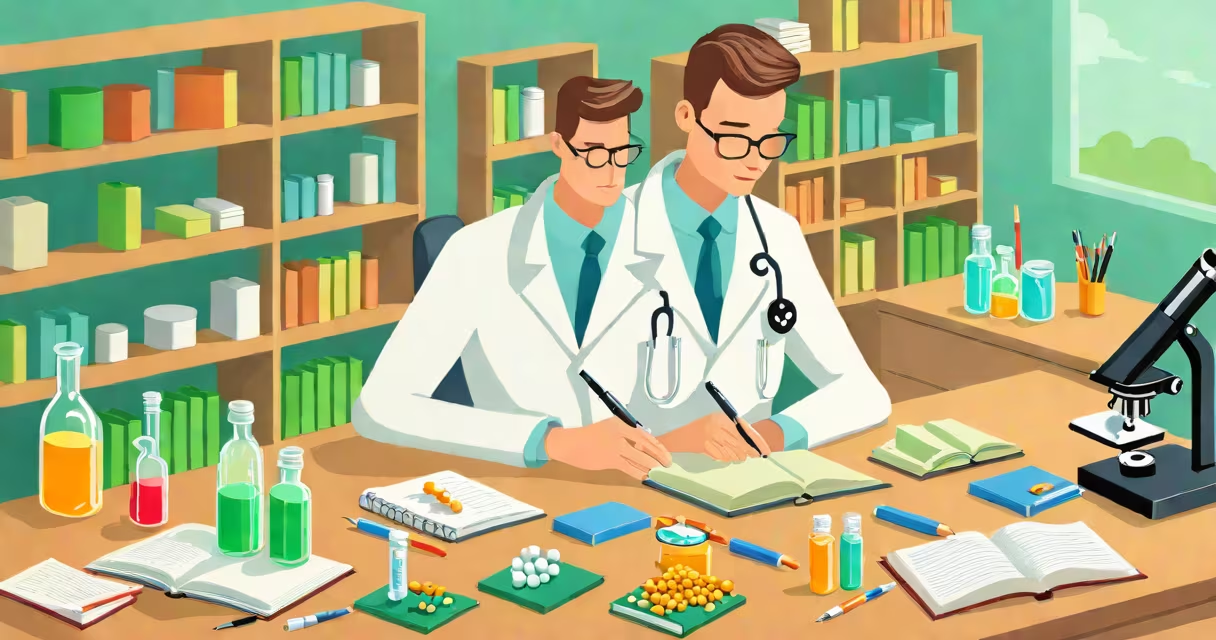
A pharmacist major studies pharmaceutical sciences, clinical pharmacology, medicinal chemistry, and patient-centered care. This undergraduate and professional program prepares students to dispense medications, counsel patients, and manage drug therapy safely and effectively.
Pharmacists complete a Doctor of Pharmacy (PharmD) degree, which typically takes six years after high school. The curriculum blends science, clinical practice, and ethics. Students take courses in anatomy, physiology, biochemistry, pharmacokinetics, and pharmacy law. They also train in hospital and community pharmacy settings through supervised rotations.
The field requires precision and responsibility. A single dosage error can harm a patient. Pharmacists must understand drug interactions, side effects, and individual patient factors like age, weight, and medical history. They work in hospitals, retail pharmacies, clinics, and research labs.
Pharmacy programs emphasize applied science. Students learn how drugs behave in the human body, how they're manufactured, and how they affect health outcomes. The foundational disciplines include:
These subjects build a foundation for real-world decision-making. For example, a pharmacist must adjust a warfarin dose based on a patient's INR levels, renal function, and concurrent medications. This requires understanding both pharmacology and clinical context.
Most pharmacy schools require applicants to complete specific prerequisite courses before enrollment. These usually include:
| Subject | Typical Credits | Why It Matters |
|---|---|---|
| General Biology | 4 | Provides baseline knowledge of human systems and cellular function. |
| General Chemistry | 4 | Essential for understanding drug solubility and reaction mechanisms. |
| Organic Chemistry | 4 | Explains how molecules interact-critical for drug development. |
| Physics | 3-4 | Supports understanding of fluid dynamics and drug delivery systems. |
| Calculus | 3 | Used in modeling drug absorption and elimination rates. |
After completing prerequisites, students enter a PharmD program. The first two years focus on didactic learning-lectures, labs, and case studies. The final two years involve experiential rotations in diverse settings: ambulatory care, oncology, pediatrics, and emergency departments.
One non-obvious fact: Many pharmacy students begin their training with a bachelor's degree in a science field. While some schools admit students directly after high school, most prefer candidates with prior college credits. According to the American Association of Colleges of Pharmacy (AACP), 65% of entering PharmD students had completed at least one year of college before starting the program.
People often confuse pharmacists with doctors or researchers. Pharmacists are licensed healthcare professionals who specialize in medication use-not diagnosis or surgery. They do not prescribe antibiotics in all states, though many can under collaborative agreements.
Another misconception is that pharmacy is purely about counting pills. In reality, pharmacists spend significant time reviewing prescriptions for accuracy, checking for interactions, and educating patients. A 2022 study published in Annals of Pharmacotherapy found that pharmacists intercepted 1 in 5 potentially harmful medication errors during routine dispensing.
Some assume all pharmacy schools are the same. But programs differ in focus. For example, the University of Michigan's School of Pharmacy emphasizes population health and public policy, while the University of California, San Francisco's program integrates advanced clinical simulation and interprofessional education.
Consider a 68-year-old man with hypertension, type 2 diabetes, and chronic kidney disease. He presents a prescription for lisinopril 10 mg daily. His creatinine level is 2.1 mg/dL, indicating moderate renal impairment.
A pharmacist reviews the prescription. Lisinopril is an ACE inhibitor. In patients with reduced kidney function, it can cause hyperkalemia and worsening renal function. The pharmacist checks the patient's current potassium level (5.2 mmol/L-elevated), confirms the last eGFR was 35 mL/min/1.73m², and notes the patient is already on spironolactone for heart failure.
Based on guidelines from the National Kidney Foundation, the pharmacist contacts the prescriber. They recommend reducing the lisinopril dose to 5 mg daily and monitoring electrolytes weekly. The pharmacist also educates the patient on symptoms of hyperkalemia-muscle weakness, fatigue, irregular heartbeat-and advises reporting them immediately.
This scenario illustrates how pharmacists apply scientific knowledge, clinical judgment, and communication skills. They don't just fill prescriptions-they prevent harm.
If you're considering this path, start by taking science courses in high school and college. Focus on biology, chemistry, math, and physics. Maintain a strong GPA-most pharmacy schools expect a minimum of 3.0, though competitive applicants average 3.5 or higher.
Gain hands-on experience. Volunteer at a pharmacy, shadow a pharmacist, or work as a pharmacy technician. These experiences demonstrate commitment and provide insight into daily responsibilities.
Becoming a pharmacist demands rigorous academic preparation and ongoing learning. The profession is evolving toward expanded roles in direct patient care, especially in primary care settings. As of 2023, over 40% of U.S. pharmacies offer pharmacist-led services like immunizations, blood pressure screenings, and medication reconciliation.