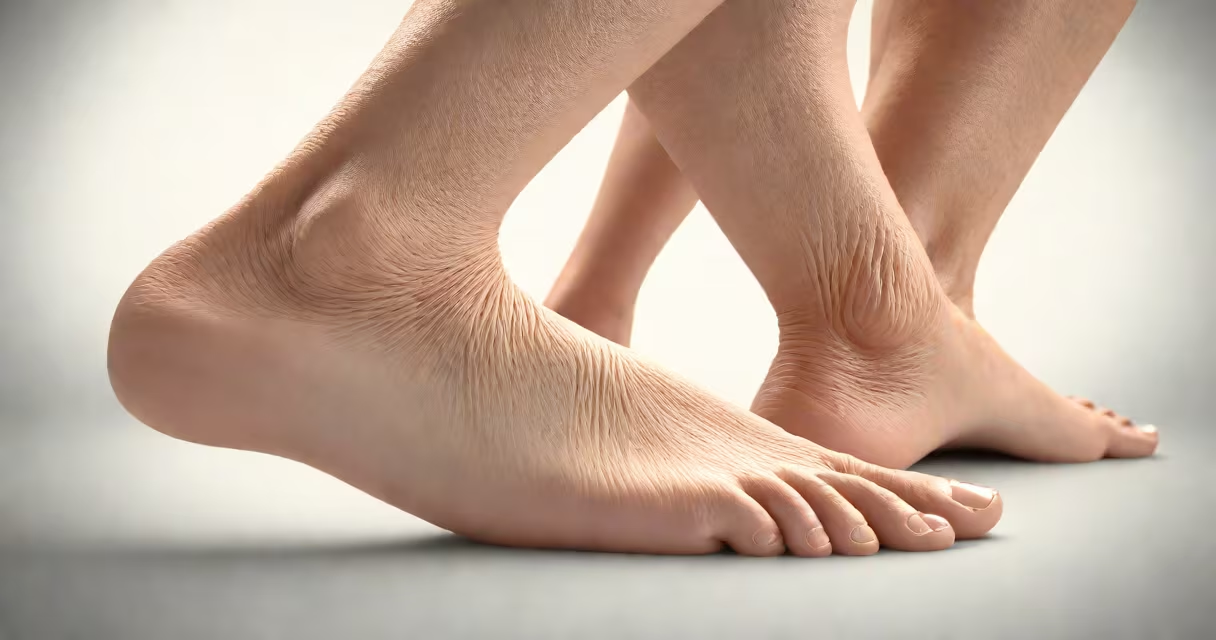
Edema occurs when excess fluid accumulates in interstitial spaces, leading to visible swelling, particularly in the legs, ankles, feet, or hands. It arises from imbalances in hydrostatic or oncotic pressure, capillary permeability, or lymphatic drainage.
Fluid normally moves between blood vessels and surrounding tissues through filtration and reabsorption. When this balance shifts-either too much fluid leaks out or too little returns-swelling develops. The condition may affect localized areas or be generalized throughout the body.
Common triggers include heart failure, kidney disease, liver cirrhosis, venous insufficiency, and medication side effects. Identifying the underlying cause determines treatment and prognosis.
Edema forms when fluid exits capillaries faster than it returns. This imbalance stems from three primary mechanisms: increased capillary pressure, reduced plasma protein levels, or damaged capillary walls.
In heart failure, weakened cardiac output increases venous pressure. Blood backs up in veins, elevating hydrostatic pressure in capillaries. Fluid leaks into tissues, especially in dependent areas like the lower legs. The National Heart, Lung, and Blood Institute notes that 70% of patients with advanced heart failure develop peripheral edema.
Kidney disease reduces glomerular filtration rate, causing sodium and water retention. Low albumin production further decreases oncotic pressure, pulling fluid into tissues. The American Society of Nephrology reports that nephrotic syndrome leads to edema in over 80% of cases.
Edema is categorized by location, duration, and physical characteristics. Pitting versus non-pitting edema is critical for diagnosis.
| Type | Definition | Common Causes | Example |
|---|---|---|---|
| Pitting | Indentation remains after pressing skin for 5 seconds | Heart failure, kidney disease, venous insufficiency | Dependent swelling in legs after standing all day |
| Non-pitting | No indentation after pressure; tissue feels firm | Lymphedema, myxedema (from hypothyroidism) | Swelling in arms after breast cancer surgery |
| Generalized | Affects multiple body regions | Severe liver disease, malnutrition, systemic lupus | Face, hands, and legs all swollen simultaneously |
| Localized | Confined to one area | Cellulitis, injury, allergic reaction | Swollen foot after sprain |
Four degrees of pitting edema are clinically recognized: mild (1 mm indentation), moderate (2 mm), severe (3 mm), and extreme (4 mm). A 2021 study in *Journal of Clinical Medicine* found that grade 3 or higher pitting edema correlates strongly with worsening heart failure outcomes.
Systemic diseases account for the majority of edema cases. Heart, kidney, and liver disorders disrupt fluid regulation at different points in the circulatory system.
Chronic venous insufficiency causes pooling in leg veins. Over time, valves fail, increasing capillary pressure. This leads to persistent lower limb edema, often accompanied by skin discoloration and ulceration. The CDC estimates that 2 million Americans have chronic venous insufficiency, with edema as a sign symptom.
Medications such as calcium channel blockers (e.g., amlodipine), NSAIDs, and certain diabetes drugs (like pioglitazone) can induce edema. These alter vascular tone or sodium reabsorption. A 2020 review in *Pharmacotherapy* reported that up to 15% of patients on amlodipine develop peripheral edema within six months.
During pregnancy, normal physiological changes increase blood volume and venous pressure. While mild edema is expected, sudden or asymmetric swelling may signal preeclampsia-a serious condition requiring urgent care. The American College of Obstetricians and Gynecologists warns that new-onset edema after 20 weeks gestation warrants immediate evaluation.
Many assume edema is always a sign of heart disease. While cardiac causes are frequent, they're not universal. Swelling in one leg only suggests deep vein thrombosis (DVT), not heart failure. DVT requires anticoagulation; mistaking it for heart-related edema delays proper treatment.
Another error is dismissing mild swelling as harmless. Persistent edema-even if painless-can indicate early organ dysfunction. For example, subtle ankle swelling may precede overt signs of kidney disease by months. Early detection improves long-term outcomes.
I once observed a patient with bilateral ankle swelling who had no known heart issues. Initial labs showed low serum albumin. Further testing revealed early-stage liver cirrhosis. Without investigating the cause, we'd have treated symptoms rather than the root problem.
True edema is not simply "water weight." It reflects pathophysiological processes. A single swollen toe after a minor injury may be inflammation, but swelling that spreads rapidly or doesn't improve with elevation signals a deeper issue.
Seek medical attention if edema appears suddenly, worsens quickly, affects both sides equally, or includes shortness of breath, chest pain, or confusion. These suggest life-threatening conditions like pulmonary edema or acute heart failure.
Swelling that doesn't resolve after 24 hours of rest and elevation, especially with redness, warmth, or fever, may indicate infection or DVT. Prompt imaging and blood tests are needed.
For localized swelling, especially after trauma or insect bites, consider allergic reactions or cellulitis. These require antibiotics or antihistamines, not diuretics.
Edema is not a diagnosis-it's a sign. Its presence indicates a disturbance in fluid homeostasis. Correct identification of the underlying mechanism prevents mismanagement and improves outcomes.