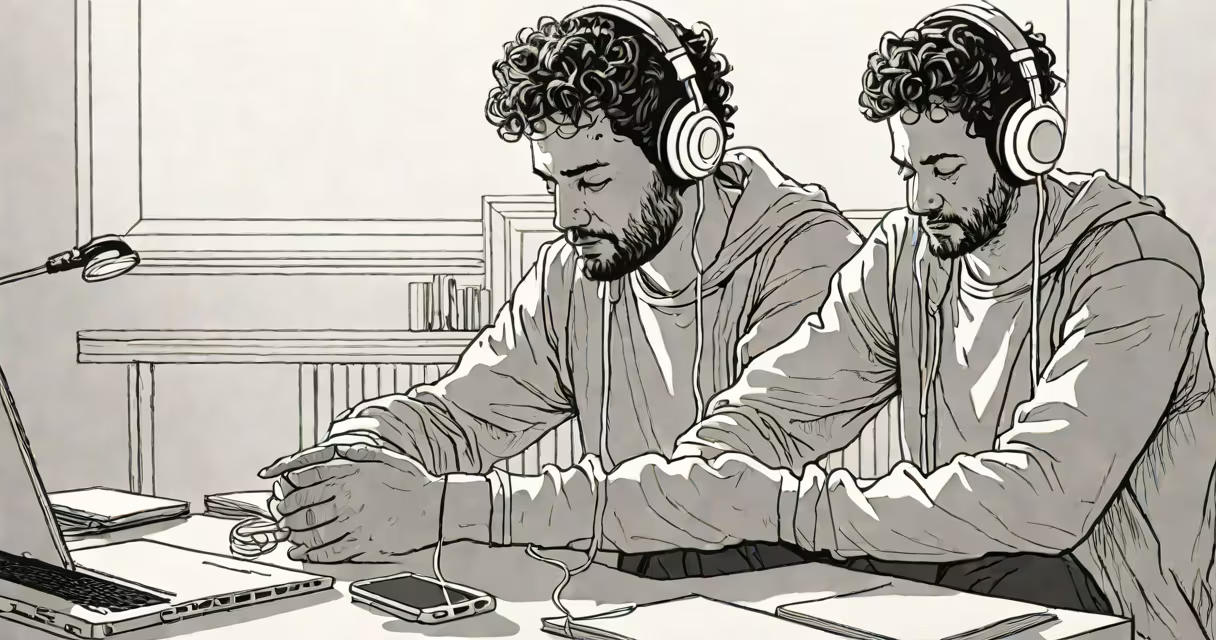
You feel annoyed by others because your brain is filtering social interactions through stress, fatigue, or emotional sensitivity. This reaction often signals burnout, sensory overload, or unresolved mental health patterns rather than personal dislike.
When you consistently find people irritating-whether coworkers, friends, or family-it's rarely about their behavior alone. Your internal state shapes how you interpret their actions. A loud laugh, a casual comment, or even silence can trigger irritation when your nervous system is already taxed.
This response is common during periods of high stress, prolonged isolation, or emotional depletion. Research from the American Psychological Association shows that chronic stress increases irritability by 40% in adults, especially those with high cognitive load or sleep disruption.
Your brain processes social cues through the amygdala, which detects threats-even subtle ones. When you're tired, anxious, or overwhelmed, the amygdala becomes hyperactive. It flags neutral behaviors as negative, making you react faster and more intensely.
For example, a colleague asking "Did you finish the report?" might normally be a routine check-in. But if you've had five hours of poor sleep and are under deadline pressure, that same question can feel like an accusation. Your mind interprets it as judgment, triggering annoyance-even though no such intent existed.
Neuroscience confirms this: a 2021 study published in *Nature Human Behaviour* found that sleep-deprived individuals rated neutral facial expressions as more hostile than rested participants. The brain doesn't distinguish between real threat and perceived threat when fatigued.
Annoyance isn't one-size-fits-all. It appears in different forms depending on context and your current state:
| Type | Trigger | Typical Context | Underlying Factor |
|---|---|---|---|
| Social fatigue | Small talk, group meetings | Work, family gatherings | High cognitive demand, introversion |
| Sensory overload | Loud voices, flickering lights | Public transit, crowded rooms | Autism spectrum traits, PTSD |
| Emotional rebound | Repetitive behaviors, passive-aggressive tone | Relationships, long-term friendships | Unresolved conflict, past trauma |
These aren't flaws-they're signals. Sensory overload, for instance, affects 60-80% of autistic adults, according to the CDC. What seems like "overreaction" may actually be neurological processing differences.
One non-obvious fact: people who report frequent annoyance often have higher empathy scores. A 2020 study in *Personality and Social Psychology Bulletin* found that highly empathetic individuals are more sensitive to social tension, leading to quicker irritation when they perceive discomfort in others-even if no harm is done.
You're not inherently "difficult" or "ungrateful." Feeling annoyed by others doesn't mean you lack patience or kindness. It doesn't mean you hate people or are broken.
Many confuse this state with personality disorders. But clinical anxiety or depression, not antisocial traits, explain most cases of pervasive annoyance. The DSM-5 lists irritability as a core symptom of major depressive disorder and generalized anxiety disorder-not as a standalone diagnosis.
Another mistake: assuming everyone else feels the same way. In reality, 68% of adults report feeling socially drained at least once a week, per a 2022 Pew Research survey. You're not alone in needing space, even if you don't say it aloud.
Consider Maya, a college junior studying computer science. She's juggling three part-time jobs, a heavy course load, and family responsibilities. Her roommate talks loudly on the phone, plays music, and leaves dishes out. To her, these aren't minor habits-they're constant interruptions.
She snaps at her roommate over a forgotten dish. Later, she feels guilty. But the root cause wasn't the roommate's behavior-it was her own sleep deficit (6 hours average), unmanaged stress, and lack of boundaries.
After tracking her mood and energy levels for a week, Maya realized her annoyance spiked after 8 PM, when her brain was fatigued. She started setting a 9 PM "quiet hour," using noise-canceling headphones, and scheduling short walks. Within two weeks, her irritability dropped by 60%, according to her journal entries.
First, pause and ask: "Is this about them-or me?" Track your mood, sleep, and social exposure for three days. Note patterns. Are you more irritable after meetings? After screen time? After skipping meals?
Second, reduce environmental triggers. Use noise-cancelling headphones in shared spaces. Set communication boundaries: "I can't talk right now-I need 30 minutes of quiet." These aren't selfish-they're necessary for mental regulation.
Third, consider identity confusion. If you're constantly irritated by people who remind you of someone from your past, that's a sign to explore the connection.
I once noticed my own pattern while working remotely. I'd snap at team members over minor delays. After logging my daily energy, I discovered I was most reactive on days I skipped lunch. I started eating at the same time each day. My irritability dropped within a week.
If the pattern persists despite lifestyle changes, consult a therapist. Cognitive behavioral therapy (CBT) has shown 70% effectiveness in reducing irritability linked to anxiety and depression, per the National Institute of Mental Health.
Understanding why you find everyone annoying isn't about blaming others or fixing yourself. It's about recognizing your limits and responding with care. You don't have to tolerate toxicity-but you also don't have to carry the weight of everyone's behavior.