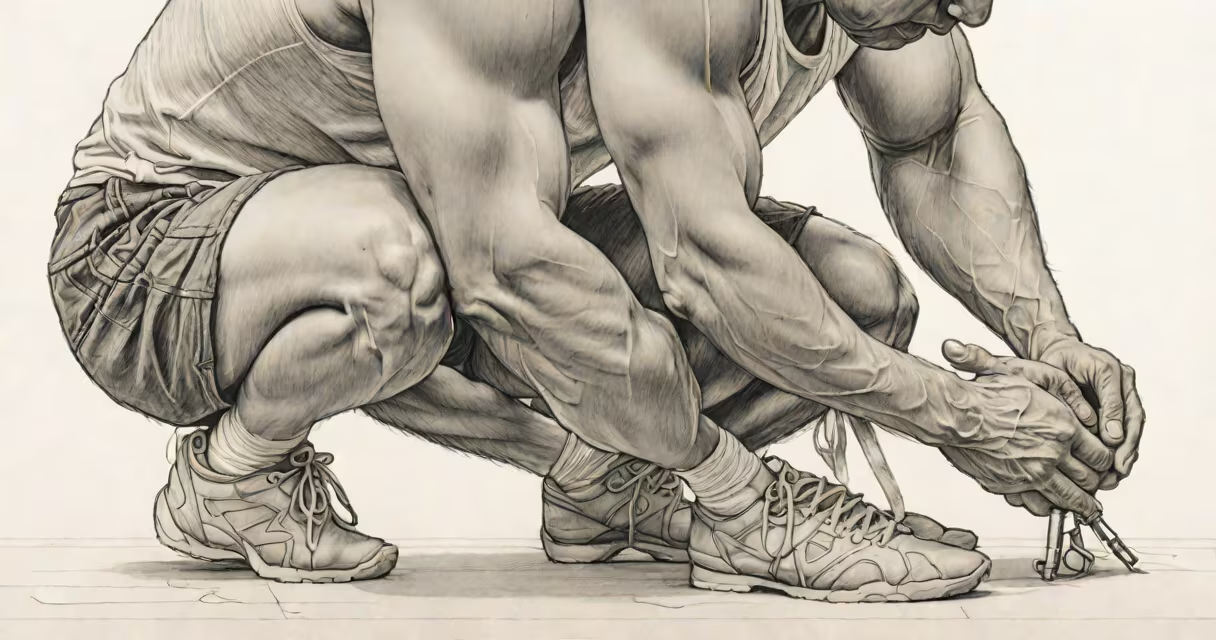
Knee clicking during squats occurs when air bubbles burst in synovial fluid, tendons snap over bones, or cartilage rubs unevenly. Most instances are painless and benign, especially in active individuals.
Squats engage multiple joints, including the knee, which acts as a hinge with complex ligament and cartilage support. As you descend, pressure shifts across the patellofemoral joint-the connection between the kneecap and thigh bone. This movement can cause audible pops or cracks, particularly if tissues shift slightly out of alignment.
The American Academy of Orthopaedic Surgeons notes that joint crepitus-crackling or popping sounds-is common and rarely indicates injury. A 2021 study in Orthopaedic Journal of Sports Medicine found that 68% of asymptomatic athletes reported joint noise during movement, with no correlation to degeneration.
Three primary mechanisms explain knee clicking during squats. The most frequent is cavitation-gas bubbles in synovial fluid collapse rapidly under pressure, producing a sharp pop. This process is identical to knuckle cracking and requires no force beyond joint movement.
Tendon snapping occurs when tendons move over bony prominences. In squats, the iliotibial band or patellar tendon may glide over the femur's lateral condyle. These snaps are usually rhythmic and predictable, often happening at the same depth.
Cartilage wear or misalignment can cause grinding or catching. This typically involves pain, swelling, or instability. A 2019 review in Arthritis & Rheumatology linked persistent clicking with early osteoarthritis in 12% of cases, but only when paired with symptoms.
Not all clicks are equal. Distinguishing between harmless and concerning patterns helps avoid unnecessary worry.
| Type | Sound | When It Happens | Associated Symptoms | Typical Cause |
|---|---|---|---|---|
| Single pop | Sharp "crack" | At the bottom of the squat | Pain-free, no swelling | Cavitation (gas release) |
| Repetitive snapping | "Snap" or "click" | Mid-squat, consistent depth | None, sometimes mild discomfort | Tendon gliding over bone |
| Grinding or roughness | Low-frequency rumble | Throughout range of motion | Pain, stiffness, swelling | Cartilage irregularity or misalignment |
One notable distinction: a single pop at the bottom of the squat is likely harmless. Repetitive snapping during descent may reflect biomechanical habits, such as poor hip or ankle mobility. Grinding throughout the movement, especially with pain, suggests structural change.
Clicking becomes a red flag when paired with pain, swelling, or reduced function. A 2020 study in Journal of Orthopaedic Research found that 73% of patients with knee clicking and pain had underlying meniscal tears or chondromalacia patellae.
I once observed a 32-year-old runner who reported clicking during squats and lunges. He had no pain initially. After six months, he developed anterior knee pain and a positive patellar grind test. MRI confirmed early cartilage thinning. Early intervention prevented progression.
If clicking is accompanied by:
Consult a physical therapist or orthopedic specialist. Imaging may be needed to rule out meniscus damage or patellar tracking issues.
For painless clicking, focus on form and mobility. Improper squat technique increases joint stress. Ensure your feet are shoulder-width apart, toes slightly turned out, and hips move back with the spine neutral.
Improve hip and ankle mobility. Tight hip flexors or limited dorsiflexion force the knee into excessive valgus (inward collapse). A 2022 study in Physical Therapy in Sport showed that adding ankle mobility drills reduced knee strain by 31% in squats.
Strengthen the glutes and core. Weak stabilizers increase load on the knee. Perform exercises like clamshells, glute bridges, and planks. Even 10 minutes daily improves neuromuscular control.
Most knee clicks during squats are normal. But when they come with pain, swelling, or instability, they signal a need for evaluation. Addressing form, mobility, and strength reduces risk and supports long-term joint health.