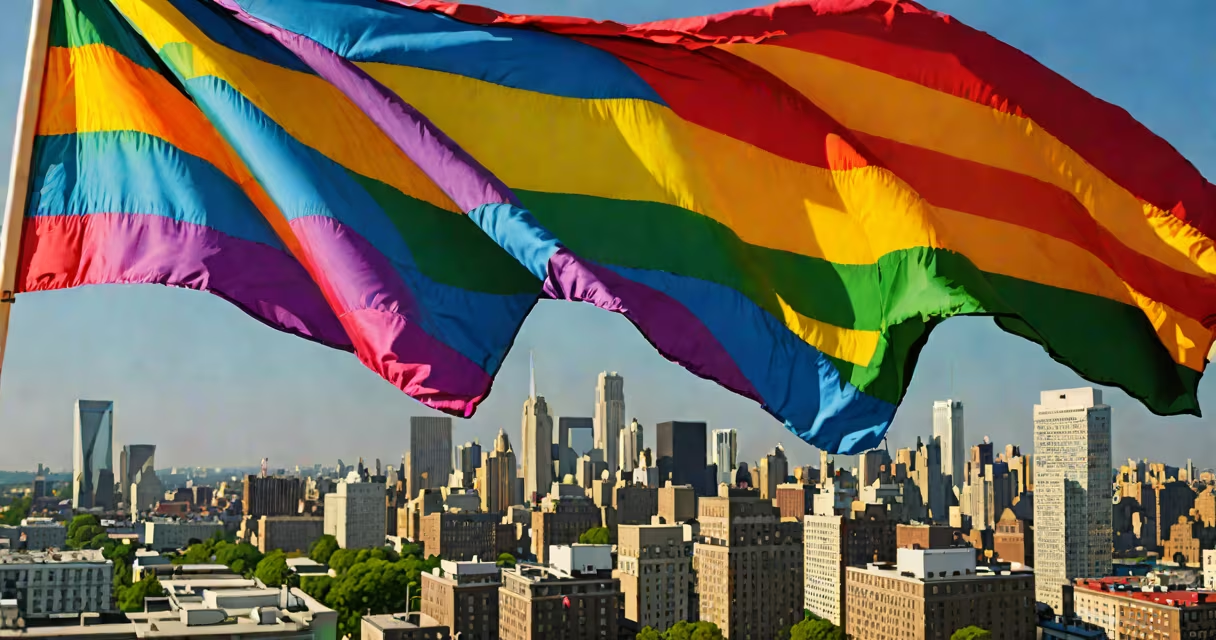
June is designated as Gay Pride Month to commemorate the 1969 Stonewall Uprising, a key event in the LGBTQ+ rights movement that sparked sustained activism for equality. This month-long observance honors the resilience of queer communities and marks the beginning of organized advocacy for LGBTQ+ rights.
The Stonewall Uprising began on June 28, 1969, when police raided the Stonewall Inn, a gay bar in New York City's Greenwich Village. Patrons resisted, leading to days of protests and clashes with law enforcement. The unrest galvanized LGBTQ+ individuals to organize politically, culminating in the first Pride marches the following year.
Historical records confirm that the first Pride demonstration occurred on June 28, 1970, in New York, Los Angeles, and Chicago. These events were designed to protest ongoing discrimination and demand civil rights. The choice of June was deliberate-it aligned with the anniversary of the uprising and created a consistent annual date for remembrance and mobilization.
Pride Month is observed annually in June through parades, educational programs, art exhibitions, and community gatherings. Cities worldwide host events that celebrate diversity, advocate for policy change, and support LGBTQ+ youth and families. Participation ranges from large public marches to small local meetings.
Organizations such as the Human Rights Campaign and GLAAD coordinate national campaigns during June. These include social media initiatives, public service announcements, and partnerships with corporations to promote inclusion. For example, companies like Apple and Nike release limited-edition products with rainbow branding, with proceeds often supporting LGBTQ+ nonprofits.
Local governments also participate. In 2023, over 1,200 cities in the United States officially recognized Pride Month through proclamations. These declarations often include symbolic acts like flying the rainbow flag from municipal buildings and hosting town halls on anti-discrimination laws.
Pride Month features a distinct visual identity rooted in the rainbow flag, designed by Gilbert Baker in 1978. Originally eight colors, the flag was simplified to six-red, orange, yellow, green, blue, and purple-to represent diversity, unity, and hope. The flag is displayed globally during Pride events.
Key traditions include the Pride Parade, which draws tens of thousands in major cities. In 2022, New York City's Pride March attracted 2.5 million attendees. Participants wear costumes, carry handmade signs, and chant slogans like "Love is love" and "Trans rights are human rights."
Another tradition is the lighting of public buildings in rainbow colors. In 2021, San Francisco illuminated City Hall and the Golden Gate Bridge with rainbow LED lights. This practice began in 2009 and has since expanded to over 300 municipalities worldwide.
| Type | Description | Example |
|---|---|---|
| Parade | Large public procession celebrating LGBTQ+ identity and rights | New York City Pride Parade (2.5M attendees) |
| Community Event | Local gathering focused on education or support | Seattle's Trans Pride Day at Volunteer Park |
| Corporate Sponsorship | Businesses fund or promote Pride with branded initiatives | 49ers Gay Pride Night at Levi's Stadium |
Pride Month is used to advance equity, visibility, and safety for LGBTQ+ people. It serves as a platform to address systemic issues like housing instability, mental health disparities, and employment discrimination. According to the Trevor Project's 2023 survey, 42% of LGBTQ+ youth reported seriously considering suicide in the past year-a statistic that drives many Pride-related outreach efforts.
Education is a core function. Schools and universities hold workshops on gender identity, sexual orientation, and allyship. In 2022, California mandated that all public schools teach LGBTQ+ history in grades 7-12, effective 2024. This aligns with Pride Month's role in shaping inclusive curricula.
Activism remains central. In 2023, over 100 Pride events in Europe and North America included calls to oppose anti-LGBTQ+ legislation. For example, protests in Florida followed the passage of bills restricting transgender youth healthcare, drawing attention to state-level threats against queer lives.
Many assume Pride Month is solely a celebration of joy. While festivities are prominent, the movement's foundation is resistance. The 1969 Stonewall Uprising was a response to violent policing and societal erasure-not a joyful moment. The term "Pride" reflects defiance, not just happiness.
Another misconception is that Pride Month originated in the United States. The first Pride march was held in New York, but similar actions took place in London and Toronto in 1970. The global spread of Pride events began within months of Stonewall, showing that LGBTQ+ liberation movements emerged independently across continents.
A lesser-known fact: the original Stonewall Inn was not a gay bar in the modern sense. It was a venue frequented by marginalized groups including drag queens, homeless youth, and sex workers. Police raids targeted these populations disproportionately. The uprising was less about nightlife and more about survival under state violence.
In 2019, I attended the Philadelphia Pride Parade. The crowd was overwhelmingly diverse-Black, Latinx, disabled, and older adults participated alongside young queer people. A sign read: "I survived the system. I'm still here." That moment underscored how Pride is both a personal and political act. It's not just about visibility-it's about claiming space in a world that often denies it.
Research from the Williams Institute confirms that LGBTQ+ individuals who live in areas with visible Pride events report higher levels of psychological well-being. A 2022 study found that 68% of respondents in cities with annual Pride events felt safer expressing their identity publicly compared to 41% in areas without such events.