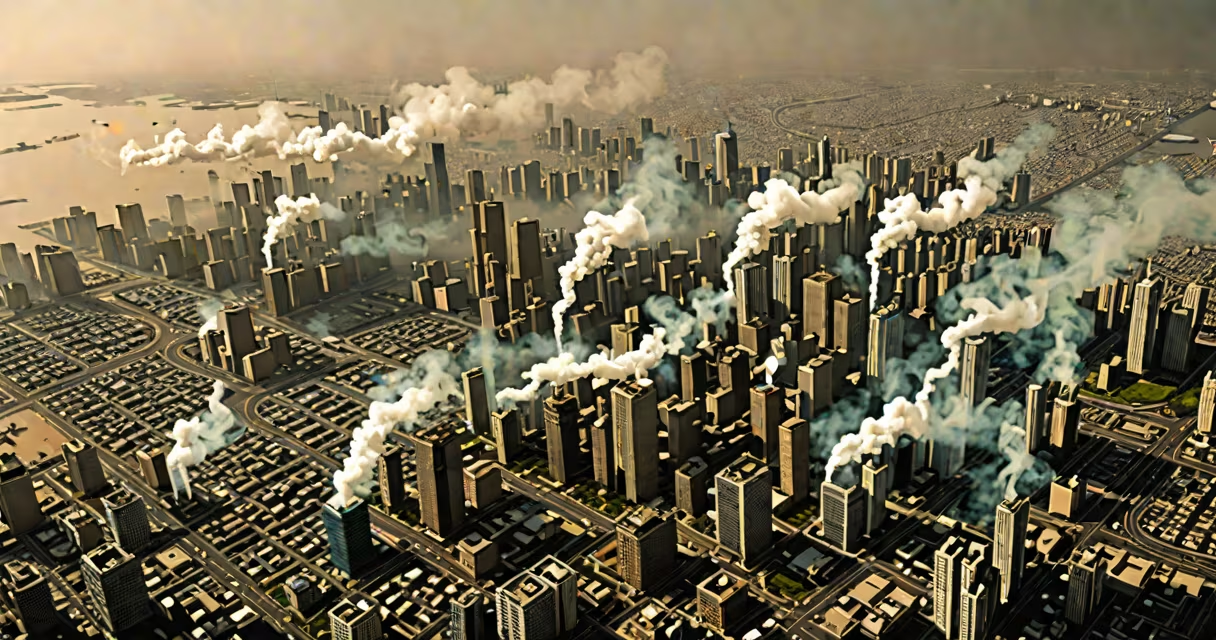
The worst pollution in the world is measured by prolonged exposure to hazardous airborne particulates, primarily PM2.5, with urban centers in South Asia exceeding World Health Organization safety thresholds by more than tenfold. These levels cause measurable harm to respiratory systems and increase mortality rates.
PM2.5 refers to fine particulate matter smaller than 2.5 micrometers in diameter-small enough to penetrate deep into lungs and enter the bloodstream. The WHO sets a safe annual average limit of 5 µg/m³. In cities like New Delhi, concentrations regularly exceed 150 µg/m³ during winter months, peaking above 300 µg/m³ in December 2023, according to IQAir's real-time monitoring network.
Industrial activity, vehicle emissions, construction dust, and seasonal crop burning combine to create persistent pollution events. In Dhaka, Bangladesh, rapid urbanization and unregulated factory operations contribute to daily PM2.5 averages near 100 µg/m³, well above the WHO's recommended level. A 2022 study published in *The Lancet Planetary Health* linked long-term exposure to such levels with a 20% higher risk of premature death from cardiovascular disease.
Global pollution rankings rely on data from ground sensors, satellite observations, and atmospheric modeling. The Air Quality Index (AQI) translates pollutant concentrations into color-coded categories: green (good), yellow (moderate), red (unhealthy), and maroon (hazardous). An AQI above 300 qualifies as "hazardous," which occurs in parts of India and China during peak pollution seasons.
Satellite instruments like NASA's TROPOMI measure nitrogen dioxide (NO₂) and sulfur dioxide (SO₂) from space. These gases indicate fossil fuel combustion and industrial output. In 2021, TROPOMI detected SO₂ hotspots over the Sistan and Baluchestan region of Iran, tied to illegal copper smelting operations that release toxic fumes into surrounding communities.
Real-time data platforms such as IQAir and Breezometer aggregate sensor readings from over 10,000 locations worldwide. These tools provide hourly updates and historical trends. For example, in January 2024, Lahore, Pakistan, recorded a 24-hour average PM2.5 of 218 µg/m³-classified as "extremely unhealthy" by the EPA's AQI scale.
Three dominant contributors drive the worst pollution in the world: coal-fired power plants, diesel vehicles, and open waste burning. Coal accounts for nearly 40% of global CO₂ emissions and is a major source of PM2.5 and mercury. In China's Hebei province, 12 million tons of coal were burned annually in 2022 to supply steel mills, contributing to regional haze that affects Beijing and Tianjin.
Diesel engines emit high levels of nitrogen oxides and particulates. In Europe, despite regulations, older trucks and buses still dominate freight transport. A 2023 report from the European Environment Agency found that diesel vehicles contributed to 60% of urban NO₂ exceedances in cities like Paris and Rome.
Open waste burning remains widespread in low-income regions. In Nigeria, informal dumpsites burn plastic and electronic waste to recover metals. This releases dioxins and furans-persistent organic pollutants classified as carcinogens by the International Agency for Research on Cancer (IARC).
| City | Annual PM2.5 (µg/m³) | WHO Safety Limit | Excess Multiplier |
|---|---|---|---|
| New Delhi, India | 142 | 5 | 28x |
| Dhaka, Bangladesh | 107 | 5 | 21x |
| Lahore, Pakistan | 134 | 5 | 27x |
| Ulaanbaatar, Mongolia | 64 | 5 | 13x |
These numbers reflect long-term averages. Seasonal spikes often push values higher. In New Delhi, winter inversions trap pollutants near the surface, trapping cold air beneath a warm layer that prevents dispersion. This phenomenon, known as thermal inversion, can maintain PM2.5 levels above 200 µg/m³ for weeks.
Many assume that pollution is solely a problem in developing nations. However, the U.S. Environmental Protection Agency reported that 40% of Americans live in areas with unhealthy ozone levels. In 2022, Los Angeles County recorded 15 days with ozone concentrations exceeding the federal standard of 70 ppb.
Another misconception is that indoor air is safer. In reality, cooking with biomass fuels-wood, dung, or crop residue-exposes 3 billion people globally to indoor PM2.5 levels comparable to outdoor urban pollution. A 2021 study in *Environmental Science & Technology* found that households using solid fuels had indoor PM2.5 averages of 250 µg/m³-higher than most outdoor urban sites.
Some believe that air purifiers eliminate all risk. High-efficiency filters (HEPA) reduce indoor PM2.5 by up to 90%, but they do not address gaseous pollutants like formaldehyde or benzene. Without ventilation, indoor VOC levels can accumulate to dangerous levels, especially in newly renovated homes.
In November 2023, New Delhi experienced a pollution emergency. Over five days, the city's AQI peaked at 425-classified as "hazardous." Schools closed, hospitals reported a 40% spike in respiratory admissions, and emergency services advised vulnerable populations to stay indoors.
Root causes included crop stubble burning in Punjab, vehicle emissions from 11 million registered cars, and industrial discharges from nearby factories. The government activated the Graded Response Action Plan (GRAP), which includes banning construction, restricting traffic, and shutting down coal plants. Despite these measures, pollution remained above 200 µg/m³ for seven consecutive days.
During this period, a local clinic in East Delhi documented 17 cases of acute bronchitis among children under 10. One child, aged 6, required oxygen therapy after arriving at the ER with labored breathing. His parents reported he had spent 12 hours outdoors playing in a park near a busy highway.
This incident illustrates how the worst pollution in the world isn't abstract-it directly impacts health, education, and daily life. The WHO estimates that air pollution contributes to 7 million premature deaths annually. That's more than HIV, malaria, and tuberculosis combined.
Individual actions matter. Using public transit reduces personal carbon footprint by up to 30%. Avoiding single-use plastics cuts downstream waste incineration. Supporting clean energy policies helps phase out coal plants.
When pollution levels rise, wearing N95 masks reduces inhalation of PM2.5 by 95%. A 2023 trial in Beijing showed that residents who wore N95s during high-pollution days had lower blood pressure and improved lung function compared to those who did not.