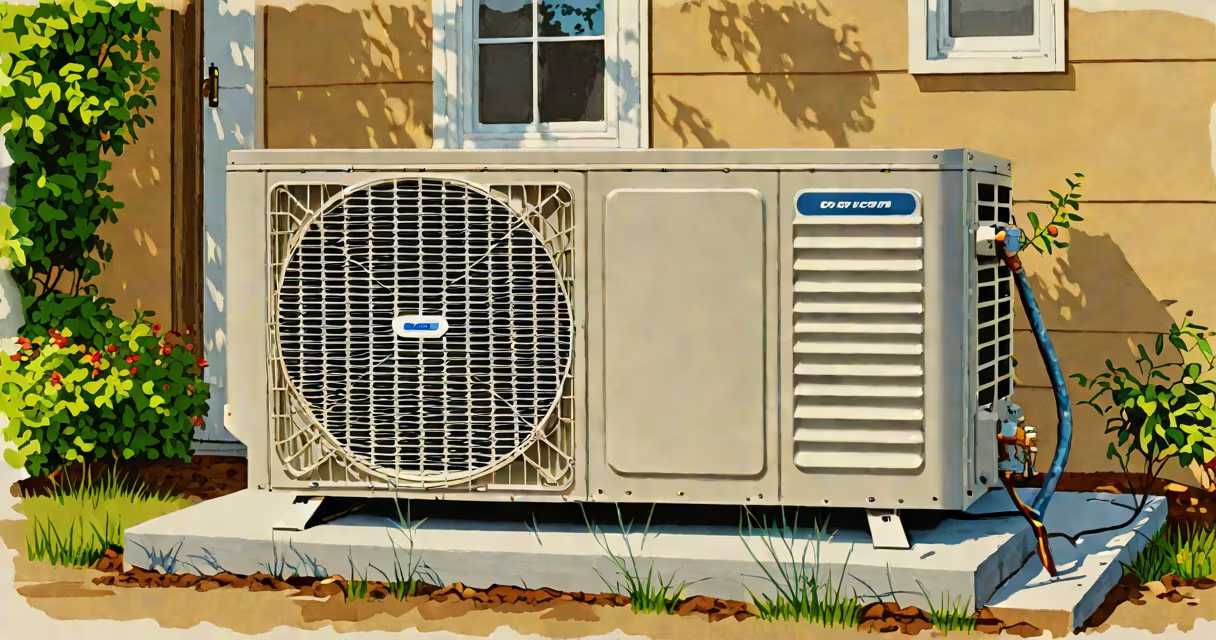
A 3 ton 2 stage air conditioner is a residential HVAC system with a cooling capacity of 36,000 BTU per hour and two operating speeds-low and high-for improved efficiency and comfort. It adjusts compressor output based on indoor temperature demands, reducing energy use during mild weather.
The term "ton" refers to cooling capacity, with one ton equaling 12,000 BTU/hour. A 3 ton unit removes 36,000 BTUs of heat per hour. This size typically serves homes between 1,800 and 2,500 square feet, depending on insulation, climate, and window exposure. The "2 stage" designation means the compressor runs at low speed (about 65-70% capacity) most of the time, reserving full power for extreme heat.
These systems improve indoor air quality by running longer at lower speeds, which increases dehumidification. They also reduce temperature swings and noise compared to single-stage units. The U.S. Department of Energy notes that 2 stage systems can reduce energy consumption by up to 30% versus standard single-stage models under typical conditions.
A 3 ton 2 stage air conditioner uses a variable-speed compressor that switches between low and high output. In low mode, the system maintains steady temperatures with minimal cycling. High mode activates only when outdoor temperatures exceed 85°F or indoor demand surpasses the low setting's capability.
When the thermostat detects a need for cooling, the system starts at low speed. If the room doesn't reach setpoint within 15 minutes, it ramps up to high speed. This staged approach prevents frequent on-off cycles, which waste energy and strain components. The compressor operates at 60-70% of maximum capacity during 80% of cooling hours in moderate climates.
For example, in a 2,200 sq ft home in Atlanta, Georgia, a 3 ton 2 stage unit ran at low speed 78% of the cooling season. It switched to high speed only during peak summer days above 95°F. Over one cooling season, this reduced runtime by 22% compared to a single-stage equivalent.
These systems consist of an outdoor condenser unit, an indoor evaporator coil, a variable-speed compressor, and a smart thermostat. The compressor is the core component enabling dual operation. Modern models use scroll compressors with electronic expansion valves for precise refrigerant flow control.
Two primary configurations exist:
| Type | Compressor Speed | Best For | Energy Use |
|---|---|---|---|
| Single-stage | Full speed only | Small homes, mild climates | Higher |
| 2 stage | Low (65%) and high (100%) | Mid-sized homes, variable climates | Lower |
| Variable-speed | Continuous adjustment (20-100%) | Larger homes, high humidity areas | Lowest |
While 2 stage systems offer better efficiency than single-stage units, they do not match the performance of variable-speed models. Variable-speed compressors adjust continuously, maintaining airflow and humidity control more precisely. However, 2 stage units remain cost-effective for many homeowners seeking significant savings without full variable-speed investment.
3 ton 2 stage air conditioners are common in homes with central ductwork, especially in regions with hot summers and mild winters. They're ideal for homes in USDA Climate Zones 2 through 4, including parts of Texas, Florida, and the Carolinas.
They are particularly effective in humid climates because low-speed operation allows longer contact time between air and the cold evaporator coil. This increases moisture removal-up to 20% more than single-stage units-reducing mold risk and improving comfort. According to the American Society of Heating, Refrigerating and Air-Conditioning Engineers (ASHRAE), proper dehumidification lowers perceived temperature by 3-5°F, enhancing thermal comfort.
For example, a homeowner in Houston reported a 30% drop in relative humidity levels during summer months after upgrading from a single-stage 3-ton unit to a 2 stage model. Indoor humidity dropped from 68% to 52% at 75°F, improving air quality and reducing musty odors.
Many assume a 3 ton unit is oversized for homes under 2,000 sq ft. This is incorrect if the home has high ceilings, poor insulation, or large glass areas. Oversizing leads to short cycling, which reduces dehumidification and increases wear. Proper load calculation using Manual J by ACCA is required to confirm correct sizing.
Some buyers believe 2 stage systems require special thermostats. While compatibility matters, most modern programmable thermostats support 2 stage operation. Ensure the thermostat has a "cooling stage" setting and communicates with the furnace or air handler via a C-wire or auxiliary power source.
In a 2,100 sq ft split-level home in Charlotte, North Carolina, a 3 ton 2 stage air conditioner replaced a failing 10 SEER single-stage unit. The original system ran 12 hours daily during July and August, averaging 14 cycles per day. After replacement, the new unit ran 9 hours daily with only 6 cycles per day.
Electricity usage dropped from 1,200 kWh/month to 890 kWh/month. At $0.14/kWh, this equated to $43 monthly savings. The homeowner noted quieter operation and fewer hot spots in the upstairs bedrooms. The system maintained 72°F at 80% humidity during peak afternoon heat-conditions previously unachievable with the old unit.
During installation, the technician verified refrigerant charge using superheat and subcooling readings. Incorrect charge caused a 15% reduction in cooling efficiency. This highlights the importance of certified HVAC technicians for proper setup.
Proper sizing, professional installation, and regular maintenance ensure optimal performance. A 3 ton 2 stage air conditioner delivers consistent cooling, lower energy bills, and improved indoor comfort-especially in warm, humid environments.