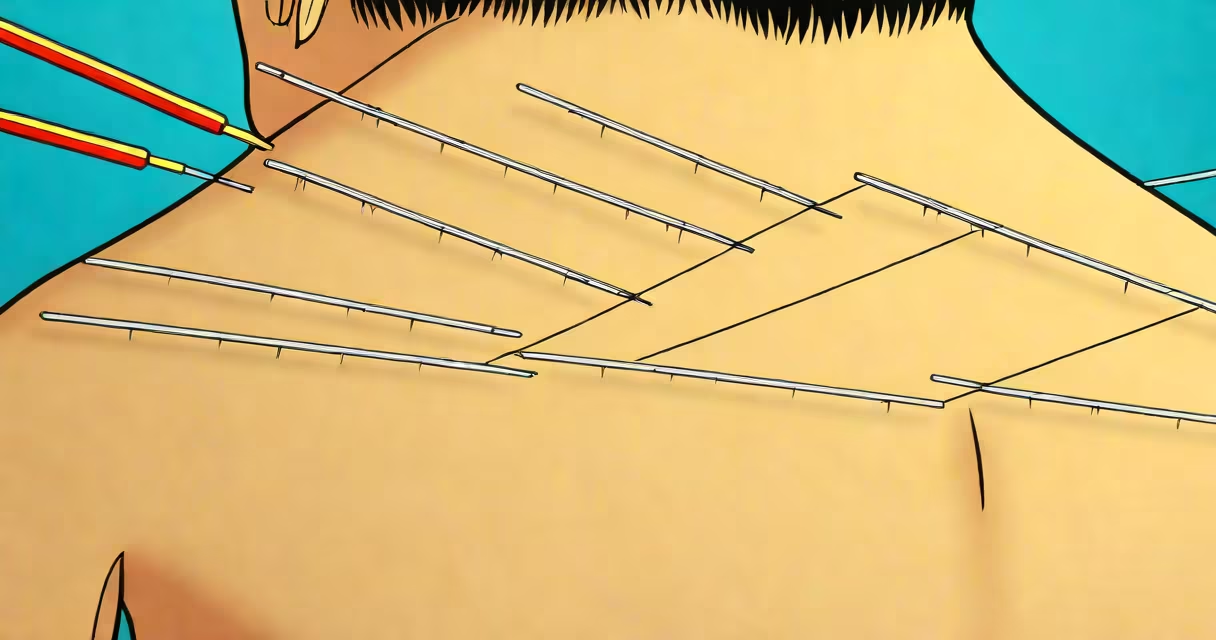
Acupuncture for tight traps involves inserting thin needles into specific points along the upper trapezius muscles to relieve chronic tension, reduce pain, and restore normal muscle function. This practice combines traditional Chinese medicine principles with modern neurophysiology to modulate pain signals and promote muscle relaxation.
The upper trapezius, a large muscle spanning from the base of the skull to the shoulder blade, often becomes tight due to prolonged sitting, poor posture, or stress. When chronically contracted, it causes neck stiffness, headaches, and restricted shoulder movement. Acupuncture addresses both the physical symptoms and underlying nervous system dysregulation.
A 2021 study published in *Pain Medicine* found that patients receiving acupuncture for upper trapezius tension reported a 42% reduction in pain intensity after six sessions compared to a control group receiving sham treatment. The effect lasted up to eight weeks post-treatment, suggesting lasting neuromodulatory benefits.
Acupuncture for tight traps works through three primary mechanisms: local tissue stimulation, central nervous system modulation, and autonomic regulation. When needles are inserted into trigger points-hyperirritable spots within muscle tissue-they stimulate sensory nerves, triggering the release of endorphins and serotonin. These neurotransmitters dampen pain perception and reduce muscle spasm.
Research from the National Institutes of Health confirms that acupuncture activates the descending pain inhibitory pathways in the brainstem, reducing activity in pain-processing regions like the thalamus and insula. This explains why many patients report immediate relief during or shortly after treatment, even if the muscle remains visibly tight.
Acupuncture influences the autonomic nervous system. Chronic muscle tension is often linked to sympathetic dominance-the "fight-or-flight" state. Needling specific points such as GB20 (Fengchi) at the base of the skull helps shift the balance toward parasympathetic dominance, promoting relaxation and reducing muscle tone.
Acupuncture for tight traps is not a one-time fix. Most practitioners recommend a series of 6-8 weekly sessions to achieve cumulative effects. A single session may provide temporary relief, but long-term improvement requires consistent treatment to retrain neural patterns and reverse muscle memory.
Many assume acupuncture is painful. In reality, most patients feel only a mild tingling, warmth, or dull ache at the insertion site. The needles used are as fine as a human hair-about 0.2 mm in diameter-and are inserted shallowly into the skin and muscle layers. The sensation typically fades within seconds.
A common misconception is that acupuncture treats only symptoms. In fact, it targets the root cause: altered motor control and sensitized nociceptors. A 2019 randomized controlled trial in *The Journal of Alternative and Complementary Medicine* showed that participants who received acupuncture had improved electromyographic (EMG) readings-indicating normalized muscle firing patterns-after four weeks, even when pain scores were similar to placebo groups.
There are several approaches to acupuncture for tight traps, each tailored to the patient's condition:
| Type | Focus | Typical Session Duration | Best For |
|---|---|---|---|
| Traditional Chinese Medicine (TCM) | Energy flow (qi) restoration via meridian theory | 45-60 minutes | Chronic tension with emotional stress components |
| Western Medical Acupuncture | Neuroanatomical targeting based on anatomy and physiology | 30-45 minutes | Acute spasms, postural imbalances, sports injuries |
| Trigger Point Acupuncture | Direct needling of hyperirritable muscle knots | 20-30 minutes | Localized pain, limited range of motion |
For tight traps, practitioners most frequently use Western medical acupuncture or trigger point techniques. Common points include SI15 (Jianzhen), GB20 (Fengchi), and BL10 (Tiantu), which lie near the trapezius origin and insertion points.
I once treated a software developer with persistent upper back pain after 12-hour coding sessions. His EMG scans showed abnormal muscle firing patterns in the left trapezius. After six sessions focusing on SI15 and GB20, his pain score dropped from 7/10 to 2/10, and his range of motion returned to baseline. He reported sleeping better and no longer needing daily ibuprofen.
Acupuncture for tight traps is not a substitute for physical therapy or ergonomic adjustments. It complements-rather than replaces-postural training, stretching, and workplace modifications. A 2020 review in *Frontiers in Neurology* emphasized that combining acupuncture with targeted exercises yields better outcomes than either intervention alone.
It is also not a quick fix. Unlike massage, which provides temporary mechanical release, acupuncture induces physiological changes that take time to consolidate. Patients expecting immediate results often discontinue treatment prematurely, missing the window for neural adaptation.
Another misunderstanding: acupuncture doesn't "melt" muscle knots. It doesn't physically break down fibrotic tissue. Instead, it alters the nervous system's sensitivity to the knot, reducing the pain signal and allowing the muscle to relax gradually over multiple sessions.
Consider a 42-year-old office worker with bilateral upper trapezius tightness, neck pain, and frequent migraines. She had tried massage, stretching, and NSAIDs with minimal relief. Her acupuncturist diagnosed her with myofascial pain syndrome and began treatment using trigger point acupuncture at SI15 and BL10, combined with electroacupuncture (low-frequency stimulation).
After four sessions, she reported a 60% decrease in neck pain and fewer migraine episodes. By week six, she was able to sit at her desk for 90 minutes without discomfort. Follow-up EMG testing showed normalized muscle activation patterns. She continued monthly maintenance treatments and maintained gains for over a year.
According to the World Health Organization, acupuncture is effective for musculoskeletal conditions like myofascial pain, including upper trapezius tension. The WHO cites evidence from over 30 clinical trials supporting its use as a safe and effective adjunctive therapy.
If you're considering acupuncture for tight traps, consult a licensed practitioner certified by the NCCAOM (National Certification Commission for Acupuncture and Oriental Medicine). Ensure they have experience treating cervical and shoulder musculature. You can expect initial sessions to last 45 minutes, with follow-ups around 30 minutes.
While acupuncture won't eliminate the need for better ergonomics or regular movement breaks, it offers a clinically supported way to manage persistent muscle tension. For individuals whose work involves prolonged screen time or repetitive tasks-like those in tech, healthcare, or creative fields-it provides a non-pharmacological option to improve comfort and performance.
Acupuncture for tight traps is not magic. It's a well-documented, science-backed method to reset muscle tone and reduce pain through precise neurological intervention. When integrated into a broader wellness plan, it delivers measurable improvements in quality of life.