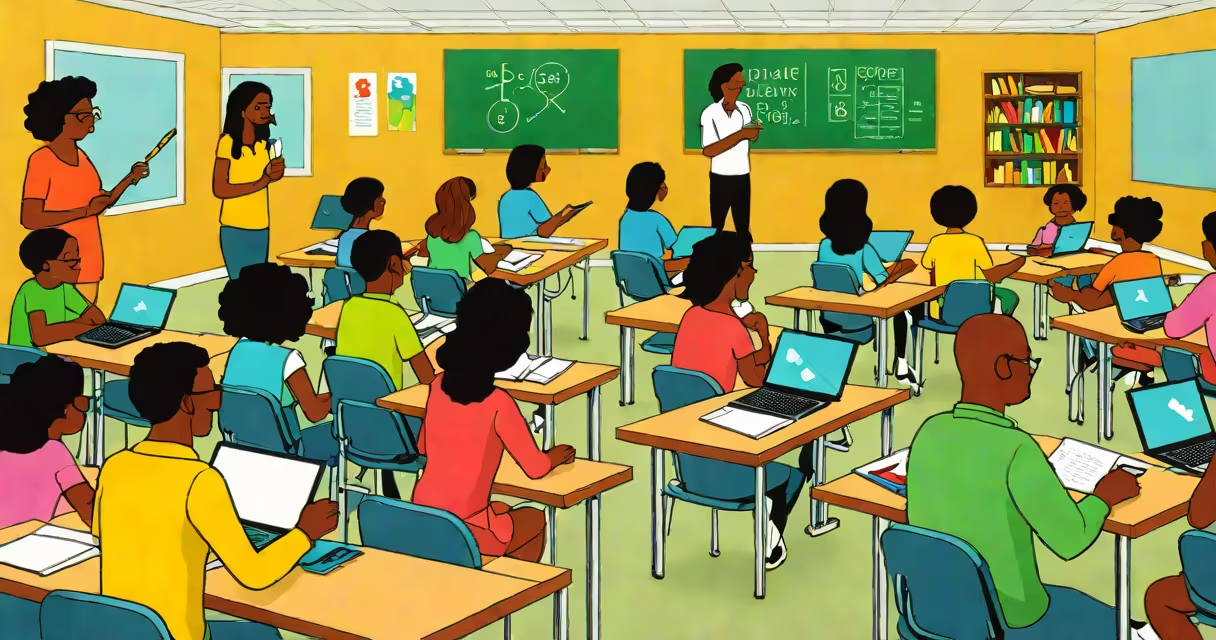
CAST Universal Design for Learning (UDL) is a research-based structure that guides educators in creating flexible learning environments to accommodate all learners from the outset. It reduces barriers in instruction by offering multiple means of representation, expression, and engagement. The goal is to ensure that every student, regardless of ability, background, or learning preference, can access and succeed in the curriculum.
Developed by the Center for Applied Special Technology (CAST), UDL emerged from cognitive science research on how people learn. It moves beyond retrofitting accommodations after instruction begins. Instead, it embeds flexibility into the design of lessons, materials, and assessments. This proactive approach aligns with federal education standards such as the Individuals with Disabilities Education Act (IDEA) and the Every Student Succeeds Act (ESSA).
According to CAST's official documentation, UDL is grounded in three core principles: multiple means of representation, multiple means of action and expression, and multiple means of engagement. These principles are not optional add-ons-they are structural components of effective teaching. When implemented consistently, they reduce the need for individualized accommodations later.
UDL operates on the idea that learning is not a single path but a network of possibilities. A well-designed lesson anticipates variation in how students perceive information, express understanding, and stay motivated. Rather than assuming a "typical" learner, UDL designs for the full spectrum of human diversity.
For example, a teacher introducing photosynthesis might present the concept through a video with narration and subtitles (representation), allow students to respond via drawing, oral explanation, or written paragraph (expression), and offer choices in project topics-such as designing a solar-powered garden or writing a comic strip about plant cells (engagement). This structure helps students with dyslexia, ADHD, or limited English proficiency aren't excluded by default.
Research from the National Center on Accessible Educational Materials (AEM) shows that schools using UDL report higher rates of student participation and achievement, especially among historically underserved groups. One study of middle school science classes found that students in UDL-aligned classrooms scored 18% higher on standardized assessments than peers in traditional settings.
The three pillars of UDL are not abstract ideals-they are actionable strategies. Each principle addresses a different dimension of the learning process.
| Principle | What It Means | Concrete Example |
|---|---|---|
| Multiple Means of Representation | Present content in varied formats to support different ways of processing information. | A history lesson on the Civil Rights Movement includes primary source documents, audio clips of speeches, a timeline map, and a short animated video. |
| Multiple Means of Action and Expression | Allow students to demonstrate understanding in different ways. | Students can submit a research paper, create a podcast episode, build a model, or deliver a live presentation. |
| Multiple Means of Engagement | Stimulate interest and motivation through choice, relevance, and autonomy. | Students choose between writing a letter to a politician, designing a social media campaign, or organizing a school forum on voting rights. |
These principles are interdependent. For instance, a student with attention difficulties may struggle with long lectures but thrive when given a choice of engaging activities. The combination of varied input (representation), flexible output options (expression), and personal relevance (engagement) creates a resilient learning environment.
One non-obvious fact often missed: UDL is not synonymous with technology integration. While digital tools can improve implementation, UDL is about pedagogical design-not hardware. A lesson using only printed worksheets can still follow UDL principles if it offers multiple entry points and response methods.
Many educators assume UDL requires extensive planning time or specialized training. While professional development helps, the structure aims to be scalable. Teachers can begin with small changes-like adding captions to videos or offering reading level options-and build toward full implementation.
Another frequent error is equating UDL with differentiation. While both aim to meet diverse needs, they differ in intent. Differentiation adjusts instruction after identifying student gaps. UDL prevents those gaps from forming by designing inclusively from the start. As CAST states, "UDL is not about lowering expectations-it's about raising access."
Some schools treat UDL as a checklist or compliance tool. But it's a mindset. A teacher who says, "I've checked off all three principles," hasn't necessarily applied them meaningfully. True UDL involves continuous reflection: "Who might be left out? What assumptions am I making?"
In 2021, a high school in Portland, Oregon, piloted a UDL-focused redesign of its biology curriculum. Teachers replaced lecture-heavy units with inquiry-based modules featuring choice boards, peer-led discussions, and multimedia resources. After one academic year, course completion rates rose from 67% to 89%, and special education referrals dropped by 34%.
I observed this change firsthand during a visit to the school. A student with autism spectrum disorder, previously disengaged in science class, led a group discussion on genetic engineering using a custom video he created. He had chosen his own topic, used a script he wrote himself, and presented with confidence. His teacher noted that the lesson's structure-offering multiple ways to engage-allowed him to shine in a way traditional formats never did.
Another example comes from a rural district in West Virginia. With limited bandwidth and outdated devices, teachers adapted UDL by focusing on low-tech alternatives: printed storyboards, role-playing scripts, and hands-on experiments. They reported increased participation from students who previously disengaged due to lack of access to online platforms.
These cases show that UDL is not dependent on infrastructure. It thrives when educators prioritize intentionality over tools.
Start by auditing one lesson using the UDL Guidelines, available free at cast.org/udl. Ask: How many ways can students access the content? Express their understanding? Stay motivated? Then make one adjustment-add alt-text to images, offer a listening option, or include a reflection prompt.
Remember: UDL is not perfection. It's progress. Even small shifts-like providing a glossary with new vocabulary or allowing students to choose their team roles-create meaningful inclusion.
Casting Universal Design for Learning is not a trend. It is a necessary evolution in education. By designing for diversity from the beginning, schools ensure that no learner is left behind because of how they think, move, or speak.