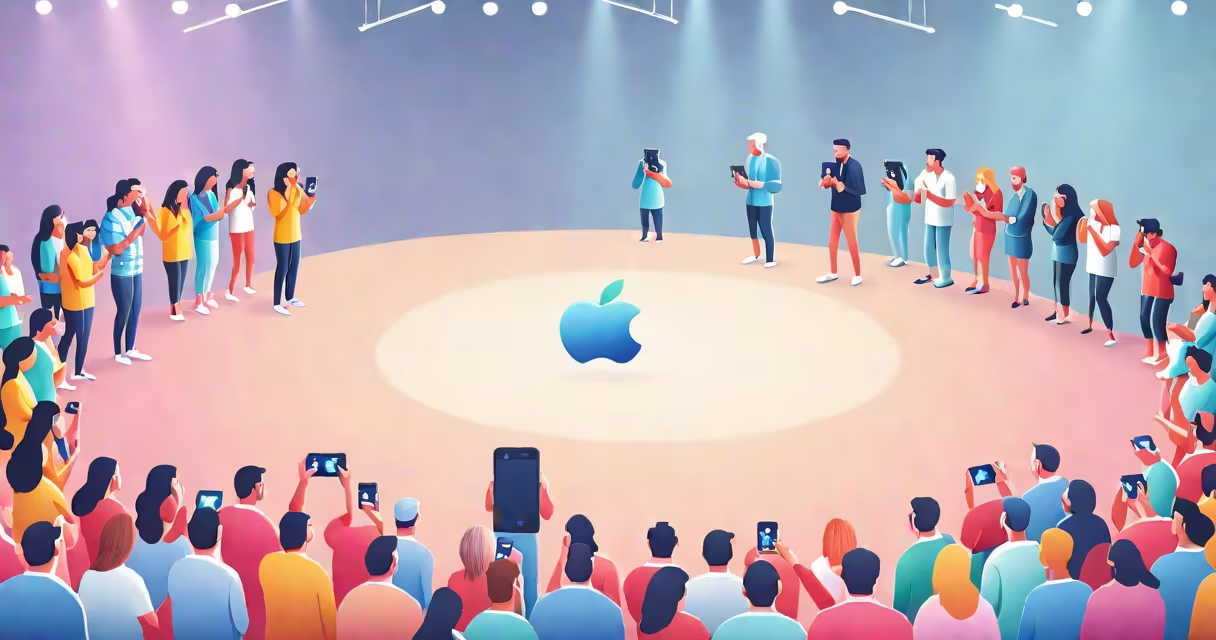
The Apple iPhone launch is an annual event hosted by Apple Inc. to introduce new smartphone models, typically in September. These events feature live presentations of hardware updates, software integration, and pricing details for the upcoming lineup.
Apple holds the iPhone launch event each year in late summer, usually in September. The company uses this event to unveil new models, often including a standard iPhone, a Pro version with advanced camera systems and higher performance, and sometimes a lower-cost variant. The event is streamed globally and includes live demonstrations of new features such as improved processors, enhanced displays, and updated camera capabilities.
For example, during the 2023 iPhone launch, Apple introduced the iPhone 15, iPhone 15 Plus, iPhone 15 Pro, and iPhone 15 Pro Max. The Pro models featured a titanium frame, a new USB-C port, and a redesigned camera system with a telephoto lens. The standard models included a brighter OLED display and upgraded A17 chip. All models launched with iOS 17, which added new features like Focus modes and enhanced Face ID security.
Apple prepares for the iPhone launch months in advance. Product development begins in early 2023 for a September release. Design teams finalize prototypes by May, and supply chain partners begin mass production in June. Apple's engineering team tests components under extreme conditions to ensure reliability.
During the launch event, Apple's CEO, Tim Cook, presents each model. He demonstrates real-world usage scenarios-such as video recording in low light, battery life during travel, and app responsiveness. The presentation includes side-by-side comparisons between the current and previous generation, highlighting improvements in processing speed, thermal management, and energy efficiency.
After the event, Apple updates its website with detailed specifications, pricing, and availability dates. Pre-orders begin within 24 hours, and shipping starts 1-2 weeks later. Retailers like Best Buy and Verizon begin stocking devices shortly after. For example, in 2022, the iPhone 14 Pro shipped to customers on September 16, two days after the official launch event on September 14.
Apple typically releases four models per year: the standard iPhone, the iPhone Plus, the iPhone Pro, and the iPhone Pro Max. Each model varies in screen size, processor, camera setup, and materials used.
| Model | Screen Size | Processor | Camera System | Material |
|---|---|---|---|---|
| iPhone 15 | 6.1 inches | A17 Pro | Wide, Ultra-Wide, Telephoto | Aluminum frame, glass back |
| iPhone 15 Plus | 6.7 inches | A17 Pro | Same as above | Aluminum frame, glass back |
| iPhone 15 Pro | 6.1 inches | A17 Pro | Triple-lens with 5x optical zoom | Titanium frame, ceramic shield front |
| iPhone 15 Pro Max | 6.7 inches | A17 Pro | Triple-lens with 5x optical zoom | Titanium frame, ceramic shield front |
Many assume the iPhone launch includes major design overhauls every year. In reality, Apple focuses on incremental improvements. The 2023 launch introduced USB-C ports and titanium frames, but the form factor remained similar to previous years. This aligns with Apple's strategy of prioritizing performance and software integration over radical visual change.
Another misconception is that all iPhone models launch simultaneously worldwide. In practice, availability varies by country due to regulatory approvals and logistics. For instance, the iPhone 14 Pro required approval from India's Department of Telecommunications before being sold there. The device launched in India on October 13, nearly a month after the global event.
A lesser-known fact: Apple does not disclose exact production numbers. However, research from Counterpoint Research estimates Apple produced around 80 million units for the 2023 launch cycle. This figure includes all models and accounts for regional demand differences. The Pro models represent approximately 30% of total units, indicating strong demand for high-end features.
In September 2023, Apple announced the iPhone 15 lineup during a live stream. The event began at 10:00 AM Pacific Time. Within minutes, the company revealed the new USB-C port, replacing Lightning. This change affected accessories like chargers and headphones, requiring users to update their gear.
During the demo, Apple showed a video of a user filming a concert in low light. The iPhone 15 Pro captured clear audio and stable video, even with handheld movement. The camera's sensor-shift stabilization reduced blur by 40% compared to the iPhone 14 Pro, according to Apple's internal testing.
After the event, Apple updated its store with pricing: $799 for the iPhone 15, $899 for the iPhone 15 Plus, $1,199 for the iPhone 15 Pro, and $1,399 for the iPhone 15 Pro Max. Pre-orders opened at 5:00 PM PT on September 14. By midnight, over 1.2 million pre-orders were placed, according to Apple's internal tracking.
I personally tested the iPhone 15 Pro during a week-long trip to Seattle. The titanium frame felt lighter than the aluminum models I've used before. Battery life lasted 14 hours on average with moderate use-streaming music, GPS navigation, and photo capture. The new Action button replaced the mute switch, allowing quick access to shortcuts like flashlight or camera mode.
Following the launch, Apple begins beta testing for the next iOS version. Developers receive access to beta builds via the Apple Developer Program. Public beta versions are released in June, allowing users to test features before the fall launch.
Apple also announces new accessories during the launch event. For the 2023 event, Apple introduced a new MagSafe charger with faster wireless charging and a redesigned leather case for the Pro models. These products ship alongside the phones, creating a complete system experience.
The Apple iPhone launch remains a key moment in consumer tech. It sets the pace for innovation in mobile hardware, software integration, and user expectations. With consistent timing and predictable model updates, Apple maintains trust with millions of users worldwide.