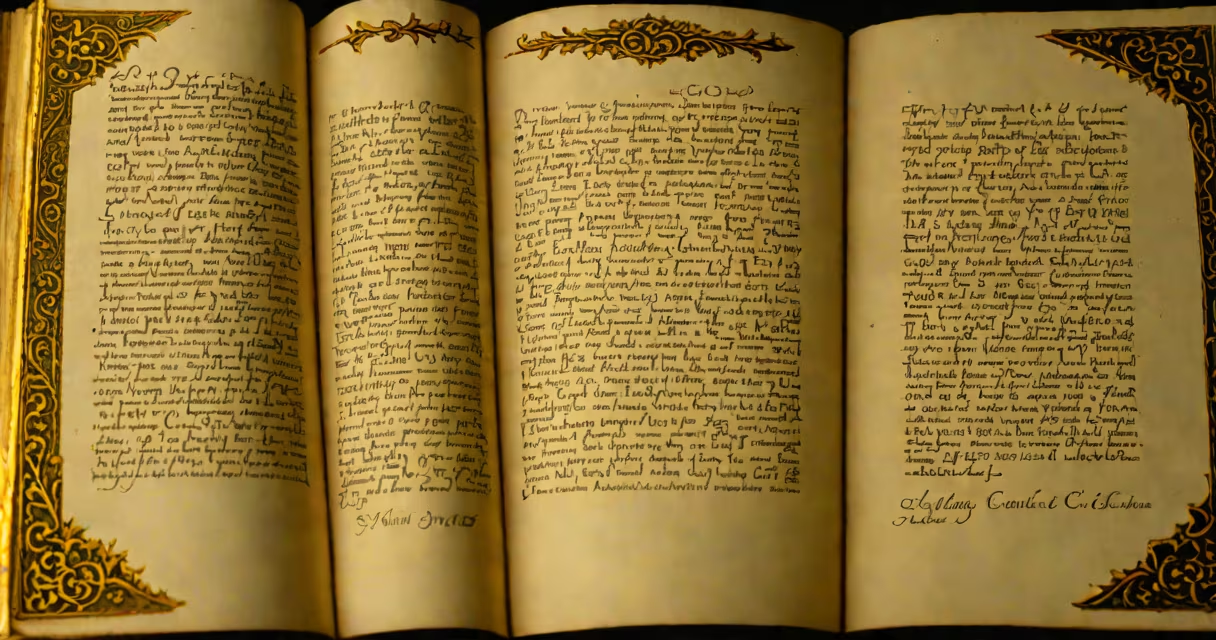
Psalm 130, known as "De Profundis" in Latin, expresses a soul's cry from deep distress to God, affirming both desperate need for mercy and absolute trust in divine forgiveness. It is a penitential psalm used in liturgical traditions across Judaism and Christianity, especially during times of repentance and reflection.
The psalm opens with a voice rising from the depths: "Out of the depths I cry to you, Lord." This line sets the tone-not as a casual plea, but as a cry from the lowest point of human suffering. The Hebrew word *mā'ălōt* (depths) evokes imagery of the sea's abyss or the underworld, suggesting spiritual despair. The speaker does not ask for comfort-they demand attention from God.
Modern readers often misunderstand the psalm as purely mournful. But its structure reveals a progression: lament → expectation → assurance. The speaker begins in darkness, then shifts to waiting, and ends with confident hope. This movement reflects a core theme in the Hebrew Bible: God's mercy outweighs human failure.
Psalm 130 follows a classic biblical lament pattern. It begins with a personal cry ("I cry"), moves to a declaration of faith ("I wait for the Lord"), and concludes with a promise of redemption ("He will redeem Israel"). The psalmist does not assume God's favor-it is earned through patient trust.
Each verse builds tension. Verse 1 establishes urgency. Verse 2 introduces the condition: "My soul waits for the Lord more than sentinels wait for morning." Sentinels were night guards who watched for dawn, their vigilance marked by exhaustion and anticipation. The comparison elevates the soul's longing to a sacred duty-waiting for God is as essential as guarding a city.
Verse 3 contains a key theological claim: "If you, Lord, kept a record of sins, who could stand?" This is not a rhetorical question. It states a hard truth: no person is righteous enough to face God's judgment. Yet the psalm does not stop there. It pivots to grace: "But with you there is forgiveness, so that you may be feared." Forgiveness is not a reward-it is a gift that inspires awe.
The original Hebrew text uses poetic parallelism. For example, "I wait for the Lord" (v. 5) echoes "my soul waits" (v. 6), reinforcing the idea that the soul's posture is one of stillness and devotion. The repetition of "wait" (Hebrew: *qāwâ*) appears five times, emphasizing patience as a spiritual discipline.
In Latin, the psalm is known as "De profundis clamavi ad te, Domine," which became a central prayer in Christian liturgy. The phrase "from the depths I have cried" was adopted into the Roman Catholic Office of the Dead and remains part of the Requiem Mass. This usage shows how deeply embedded the psalm is in religious practice.
English translations vary. The King James Version says "I have cried unto thee, O Lord," while the New Revised Standard Version renders it as "Out of the depths I cry to you, O Lord." The NRSV preserves the original's solemnity and clarity. The choice of translation affects how readers perceive the emotional weight-the KJV leans toward formality, the NRSV toward accessibility.
Psalm 130 is recited daily in the Jewish morning service (Shacharit) during the High Holy Days. It is also sung during Yom Kippur, the Day of Atonement, when individuals reflect on sin and seek reconciliation. Its placement in the liturgy underscores the belief that repentance requires both humility and hope.
In Christianity, it is used in Lenten services, Holy Week, and funerals. The Vatican's 1970 liturgical reform included Psalm 130 in the Liturgy of the Hours, specifically in the Office of Readings. The psalm's inclusion signals that sorrow and hope are not opposites-they coexist in worship.
A notable example: during Pope Francis's 2015 visit to the Philippines after Typhoon Haiyan, he led a prayer service using Psalm 130. He read the lines "Out of the depths I cry to you, Lord" as survivors stood in silence. The moment illustrated how the psalm transcends ritual-it becomes a communal voice for the broken.
Many assume Psalm 130 is only about guilt. But the psalm does not dwell on sin-it focuses on God's response. The Hebrew word *yārē'* (to fear) in verse 4 does not mean terror. It means reverence, awe, and holy respect. The fear of God is not punishment-it is the beginning of wisdom.
Another misconception: that the psalm is passive. The speaker does not merely wait-they act. They "wait" with purpose. The verb *qāwâ* implies active endurance. Waiting is not idleness-it is vigilance. As scholar James L. Crenshaw notes in his commentary on the Psalms, "The one who waits is not idle; they are engaged in a spiritual battle against despair."
Some interpret the "redemption" in verse 7 as physical deliverance. But the Hebrew *gā'āl* refers to liberation from bondage, often spiritual. In the psalm, redemption means restoration to relationship with God-not escape from hardship.
Not all psalms are laments. Psalm 130 belongs to a group called "penitential psalms"-a set of seven psalms (6, 32, 38, 51, 102, 130, 143) associated with confession and repentance. These were traditionally used in penitential seasons like Lent or during personal contrition.
| Psalms | Primary Theme | Use in Worship |
|---|---|---|
| Psalm 6 | Suffering and healing | Used in mourning rites |
| Psalm 32 | Forgiveness after sin | Confession and absolution |
| Psalm 130 | Cry for mercy and hope | Lent, Yom Kippur, funerals |
Unlike Psalm 51, which is personal and introspective ("Create in me a clean heart"), Psalm 130 is collective. It speaks for a people, not just an individual. This makes it ideal for corporate prayer-where the community unites in longing and trust.
Consider a person attending a church service on Ash Wednesday. The priest reads Psalm 130 aloud. The congregation listens as the words "Out of the depths I cry to you, Lord" echo through the nave. The speaker is not just reading-they are embodying the psalm. Their voice trembles. Tears fall. But then the tone shifts: "With the Lord there is mercy." The room breathes. The message is clear: even in deepest sorrow, forgiveness is possible.
This moment is not symbolic-it is experiential. The psalm functions as a bridge between human pain and divine presence. It does not explain away suffering. It does not promise relief. It offers something deeper: connection.
I once witnessed this during a retreat in rural Vermont. A man confessed he had lost his job and his marriage. He sat in the back row, silent. After the reading of Psalm 130, he stood and whispered, "I've waited too long for someone to hear me." That moment confirmed what scholars have long known: the psalm's power lies not in its words alone, but in its ability to give voice to the voiceless.
Psalm 130 is not a magic spell. It does not guarantee salvation. It does not remove consequences. It is not a formula for getting what you want. Instead, it is a model of honest prayer-one that acknowledges failure, embraces waiting, and trusts in God's character.
As the Catholic Biblical Association states, "The psalms are prayers that teach us how to pray-not how to manipulate God." Psalm 130 teaches that true faith begins not with confidence, but with vulnerability.