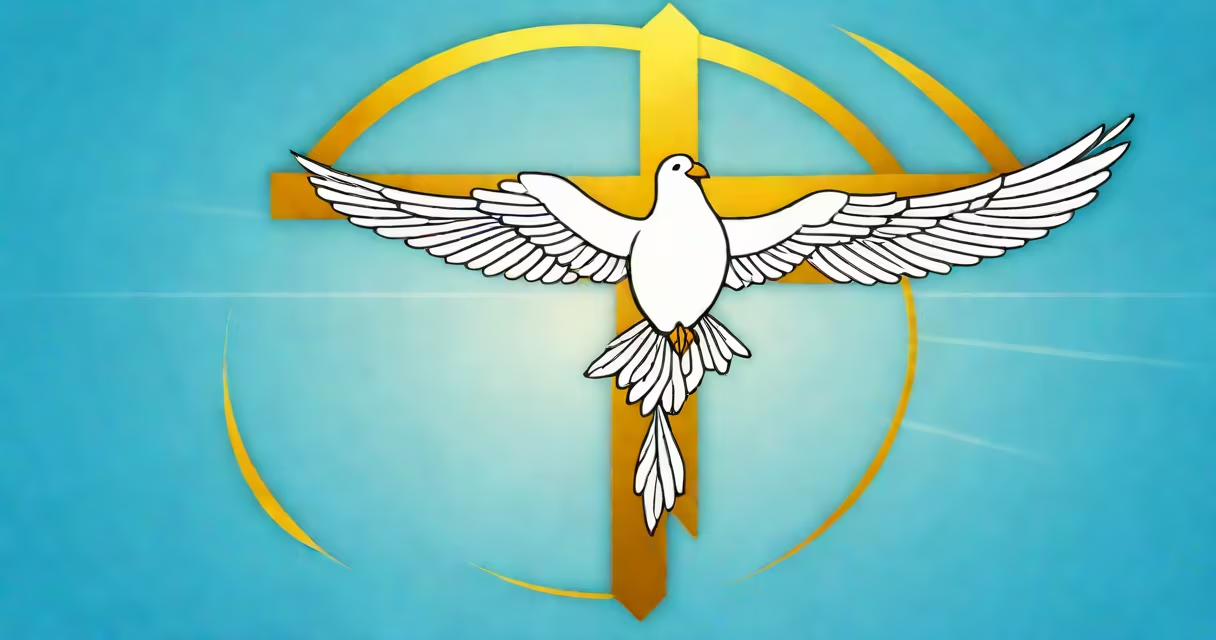
The born again symbol represents spiritual rebirth in Christian belief, typically depicted as a cross with a dove or flame above it. It signifies the transformation of a person's inner life through faith in Jesus Christ, rooted in biblical passages like John 3:3 and Titus 3:5.
This symbol emerged in the 20th century within evangelical and Pentecostal traditions. It draws from scripture describing new life in Christ, particularly the idea of being "born again" - a term Jesus uses in John 3:3 to describe the necessity of spiritual regeneration. The cross stands for sacrifice and resurrection; the dove represents the Holy Spirit; the flame recalls Pentecost (Acts 2:3), when the Spirit descended as tongues of fire.
While the symbol is widely recognized in churches, Christian media, and personal devotional materials, it is not a formal sacramental sign in Catholic or Orthodox theology. Instead, it functions as a visual shorthand for conversion, renewal, and personal commitment to faith.
The born again symbol operates as a visual metaphor for internal change. The cross anchors the image in Christian history - representing Christ's death and resurrection. The dove, a long-standing symbol of peace and divine presence since ancient times, reflects the Holy Spirit's role in guiding and renewing the believer. The flame, especially common in Pentecostal contexts, emphasizes the changing, major power of the Spirit.
When combined, these elements form a layered message: salvation through Christ (cross), divine inspiration (dove), and spiritual empowerment (flame). This triad reinforces the core idea of rebirth - not just a one-time event, but an ongoing process of sanctification.
Artists and designers often simplify the symbol for use in jewelry, tattoos, and church banners. A minimalist version may show just a cross with a small bird or flame. More elaborate versions include a halo, rays of light, or the Greek letters alpha and omega to suggest eternal life.
Different Christian communities emphasize different aspects of the symbol. The following table outlines common forms and their associations:
| Type | Visual Elements | Common Context | Source/Origin |
|---|---|---|---|
| Classic Cross-Dove | Black or gold cross with a white dove above | Evangelical churches, Bible study groups | Biblical references: John 3:8, Acts 2:1-4 |
| Flame-Cross | Red or yellow flame atop a cross | Pentecostal services, revival meetings | Acts 2:3, Luke 24:32 |
| Minimalist Line Art | Simplified black lines forming a cross and bird | Tattoos, social media profiles | Modern Christian art movement (post-2000) |
| With Scripture | Text from John 3:3 or Titus 3:5 beneath the image | Personal devotionals, sermon visuals | Reformed and Baptist traditions |
A lesser-known variation includes a hand holding a cross, symbolizing surrender and acceptance. This form appears frequently in contemporary worship music videos and Christian film credits.
The born again symbol appears in homes, churches, and public spaces across North America and parts of Latin America and Africa. It is used in baptismal ceremonies, youth group events, and personal testimonies during church services.
In 2018, a survey by the Pew Research Center found that 62% of Protestant Christians in the U.S. had seen or worn a born again symbol. Among those aged 18-34, the rate rose to 73%. The symbol is especially common among members of non-denominational churches, where visual identity plays a larger role in community building.
It also appears in commercial products: mugs, T-shirts, and phone cases. A 2021 report by Statista noted that "Christian-themed apparel" generated $1.8 billion in U.S. sales, with born again designs ranking in the top ten by search volume.
One frequent error is equating the born again symbol with the fish symbol (Ichthys). While both represent Christian identity, they differ in origin and meaning. The fish symbol dates to early Christianity and was used as a secret identifier during Roman persecution. The born again symbol is a modern construct tied to evangelical theology and personal conversion narratives.
Another misconception is that the symbol implies a single moment of salvation. In reality, many theologians, including Dr. William J. Abraham of Oxford University, stress that "being born again" describes a lifelong process of spiritual growth, not just a one-time decision. The symbol captures the beginning of that process, not its completion.
A non-obvious distinction: the born again symbol is not officially recognized by the Vatican or Eastern Orthodox Churches. These traditions emphasize liturgical rites like baptism and chrismation over symbolic imagery. Using the symbol in those settings may cause confusion or discomfort.
In 2022, a high school in rural Tennessee hosted a "Born Again Night" during spring break. Students who had recently converted to Christianity were invited to wear a badge featuring the cross-dove symbol. Over 120 students participated. The event included a spoken testimony session, a candlelight prayer circle, and a communal meal.
One participant, Maria Lopez, later wrote in her journal: "I wore the badge because I felt seen. Not just as someone who went to church, but as someone who changed." Her story illustrates how the symbol functions beyond aesthetics - it becomes a marker of identity and belonging.
I've seen this symbol in action during a youth retreat in Oregon. A counselor handed out laminated cards with the cross-dove design. As we passed them around, the silence wasn't empty - it was full of quiet recognition. That moment showed me how a simple image can carry deep emotional weight.