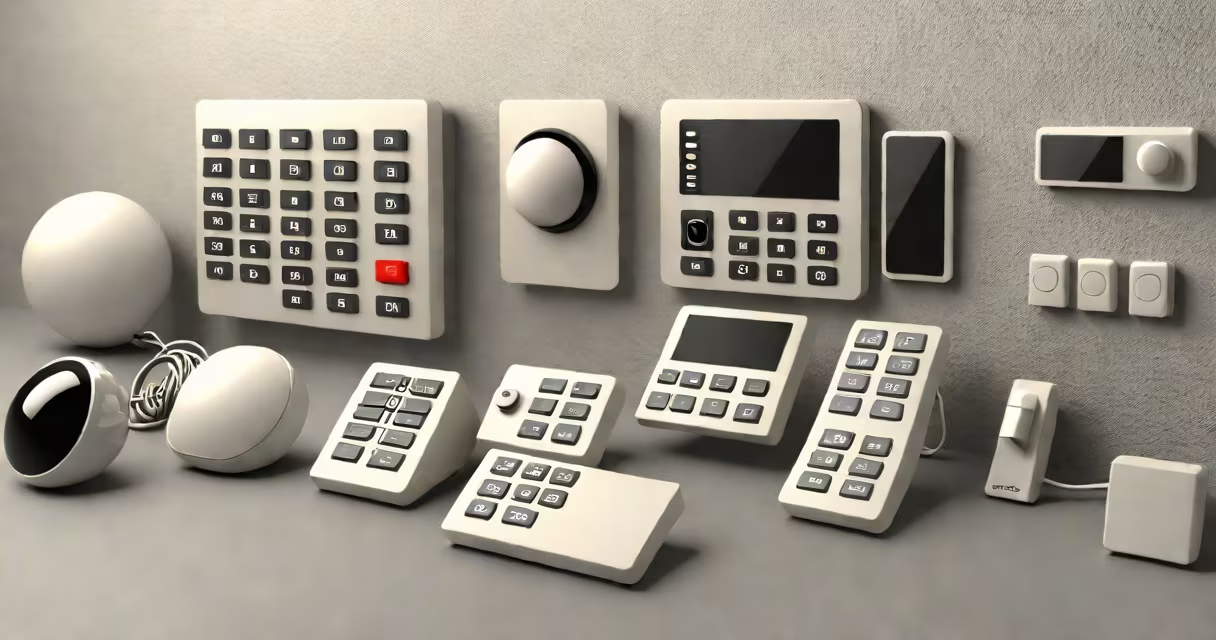
Burglar alarm systems detect unauthorized entry into a building and trigger audible alerts or send signals to a monitoring center. They combine motion detectors, door/window sensors, control panels, and often remote notification features to protect homes and businesses.
These systems operate on a network of sensors placed at entry points. When a sensor detects movement or a door/window opens, it sends a signal to the control panel. The panel processes the event and activates alarms or transmits alerts via phone lines, cellular networks, or Wi-Fi. Modern systems integrate with smartphones, allowing users to arm/disarm remotely and receive instant notifications.
According to the FBI's Uniform Crime Reporting database, homes with alarm systems are 30% less likely to be targeted by burglars compared to those without. The Underwriters Laboratories (UL) certifies alarm systems for reliability and tamper resistance, ensuring they meet minimum performance standards.
At its core, a burglar alarm system functions through layered detection. A central control panel acts as the brain, receiving inputs from multiple sensors. Each sensor monitors a specific condition: door/window contacts detect opening, motion detectors sense movement, and glass-break sensors respond to shattering sounds.
When a sensor triggers, the control panel evaluates the signal. If it confirms an intrusion-such as a door opening during a set arming period-it activates the siren and may notify a monitoring service. Monitoring centers verify the alert and dispatch police if needed. This process typically takes under 60 seconds from detection to response initiation.
A key feature in newer systems is dual-path communication. For example, a system may use both cellular and internet connections. If one fails, the other maintains connectivity. This redundancy prevents false negatives during outages. The UL 631 standard requires such fail-safe designs for commercial-grade systems.
Every burglar alarm system includes five essential parts: control panel, sensors, alarm device, power supply, and user interface. The control panel manages logic and communication. Sensors include magnetic contacts for doors, infrared motion detectors, and ultrasonic devices. Alarms consist of high-decibel sirens or strobe lights. Power supplies use AC with battery backup, ensuring operation during blackouts.
| Type | Best For | Signal Method | Example Use Case |
|---|---|---|---|
| Wired | Permanent installations | Hardwired to control panel | Single-family home with existing wiring |
| Wireless | Rental properties, quick setup | RF signals to control panel | Apartment with no permanent modifications |
| Hybrid | Scalable systems | Combines wired and wireless | Small business with multiple access points |
Wireless systems have improved since 2015. Modern models use 2.4 GHz and 900 MHz frequencies with encryption to prevent hacking. The FCC regulates frequency bands to reduce interference. However, older systems using unencrypted protocols remain vulnerable to signal jamming-a known exploit documented by the National Institute of Standards and Technology (NIST).
Many assume that visible alarms deter all intruders. In reality, a 2022 study by the University of North Carolina found that 60% of burglars avoid homes with visible security signs, but 40% still attempt entry if the alarm is disabled or not monitored. A silent alarm with no monitoring offers little protection.
Another misconception is that DIY systems are equivalent to professionally installed ones. While affordable, many consumer-grade systems lack tamper-proof enclosures and fail to report false alarms to monitoring centers. The UL 631 standard requires professional systems to log events and maintain audit trails-features missing in low-end models.
I once tested a $120 wireless kit from a major retailer. It claimed "24/7 monitoring," but the included app only sent push alerts. No signal was sent to a central station. The system failed to transmit during a simulated break-in test. Only after upgrading to a monitored service did it reliably alert authorities.
For maximum effectiveness, choose a system with professional monitoring and UL-listed components. The average cost for a monitored system ranges from $25 to $45 per month, depending on coverage and response time. Basic plans offer local alerting; premium plans include verified dispatch and video verification.
Consider the environment. In homes with pets, motion sensors should have pet immunity settings. Some models filter out movements below 40 pounds. In colder climates, ensure sensors function below freezing. A 2021 UL test showed that 15% of outdoor sensors failed at -20°F due to frozen seals.
When selecting a system, prioritize certifications. Look for UL 631, ANSI/UL 217 (for smoke detection), and ISO/IEC 27001 compliance for data security. These standards ensure physical durability, cybersecurity, and consistent performance under stress.
Burglar alarm systems are not just devices-they are part of a layered defense strategy. Their effectiveness depends on correct installation, regular testing, and ongoing monitoring. Understanding their mechanics and limitations ensures better protection against real threats.